
Nov 27, 2026
Advantages of Using Beryllium Copper Plate in Offshore and Marine Applications
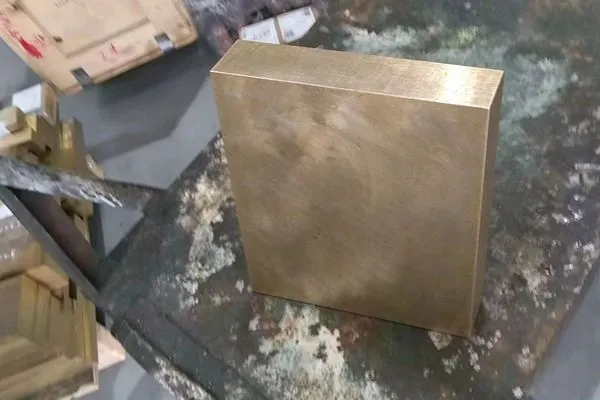
The unique combination of properties in beryllium copper plate makes it highly valuable for offshore applications. C17200 beryllium copper plate has tensile strength 1,170-1,380 MPa, hardness 36-42 HRC, electrical conductivity 22-28% IACS, will not wear out when it vibrates after ageing. It is also non-magnetic and non-sparking, which is useful in hazardous locations. Strong materials don’t perform well in salt water, shock or situations where they can’t easily be maintained. So I look at the alloy and supply specifics, including testing, tracing and tempering, before any item goes on a ship or platform.
What C17200 Beryllium Copper Plate Is and How It Behaves in Service
What Is C17200 Beryllium Copper Plate?
C17200 is listed by UNS as a precipitation hardenable copper-beryllium alloy. It is also called Alloy 25, CuBe2, and CDA 172 by people wanting to buy it. It contains 1.8% to 2.0% beryllium, at least 0.20% combined cobalt and nickel, and the balance copper. Copper carries electricity. Copper carries heat. Beryllium makes things stronger as they age. ASTM B194 covers copper-beryllium plate, sheet, strip and rolled bar. So I usually encourage purchasers to make sure they’re looking at the latest version. We supply C17200 beryllium copper plate in thicknesses from 5 mm to 100 mm, widths from 100 mm to 1000 mm, and lengths from 1000 mm to 3000 mm. We can also trim to your specific measures. Request records on chemistry, mechanics, conductivity, hardness and traceability for all on the list.
Key Properties That Matter at Sea
The performance of C17200 beryllium copper plate is contingent on its thickness, prior processing, and temper. Solution-annealed plate is soft and easy to work or machine. The same alloy is aged by precipitation to 36-42 HRC. Tensile strength is 1,170-1,380 MPa and its 0.2% yield strength is 1,000-1,275 MPa. It has a conductivity of 22-28% IACS which is less than pure copper but still good for contacts, grounding pieces and instrument gear. In the hard state, elongation is down to 1 to 8 percent, therefore I design with such low ductility. This alloy is better suited for brazing and mechanical fastening; welding can alter its properties and emit hazardous fumes.
Corrosion Behavior and Its Limits
Copper based alloys have been used in maritime environments for a long time and C17200 beryllium copper plate can withstand a lot of weather and sea conditions. I still handle it delicately. Stagnant seawater, cracking, acid contamination, and rapid flow can all affect the corrosion rate, therefore each design must be evaluated on its own. Most importantly galvanic coupling. According to ASTM G82, a galvanic series can be used to predict which metal will corrode when two metals come into contact with an electrolyte . That risk can be reduced using isolation washers, sealants, and drainage pathways. A supplier certificate merely demonstrates that the specs were satisfied, not how well the finished part performs. For crucial assemblies the following step should be salt-spray, fatigue or service-condition testing.
Core Advantages of C17200 Beryllium Copper Plate for Offshore Equipment
Strength and Fatigue Resistance Under Vibration
Offshore equipment is always shaking from things like pumps, generators, wave loading and handling shocks. C17200 beryllium copper plate develops tensile strength over time, up to 1,170-1,380 MPa, thus load can’t break through. Thus springs, clamps and retainers are able to preserve their shape and contact force. Things that flex or toggle a lot, such connector hardware or current-carrying springs, need to be fatigue resistant. The consistent contact force keeps the joined elements strongly in place between maintenance visits. This is vital when the crew requires a helicopter or supply boat to reach the platform. Stress level, notches, surface finish and surroundings can still influence fatigue life. I recommend testing sample parts with real loads before producing all of them.
Conductivity, Hardness, and Dimensional Stability
IACS is 22-28% conductivity, not as good as pure copper, but good enough for switchgear contacts, grounding pieces, and instrument hardware that has to take mechanical strain. It's uncommon to find other copper alloys that have both the ability to conduct electricity and are 36-42 HRC hard. The hardness eliminates wear, galling and dents at points where parts move against, clamp or switch against each other repeatedly. Dimensional stability helps too: after the correct amount of time the C17200 beryllium copper plate maintains assemblies straight, meaning contacts preserve their shape and wear plates stay flat. I always ask for the hardness readings on the certificate, as it is a batch check that tells me if the ageing cycle has reached the objective.
Low-Magnetic and Non-Sparking Behavior
C17200 beryllium copper plate is non-magnetic, therefore it will not interfere with compasses, sensors and other devices that are sensitive to magnetic fields. The alloy is widely used for non-sparking tool blanks due to the reduced risk of sparking. It is also applicable to hazardous environments such as ATEX compliant chemical plants, oil and gas sites and mining locations. "non-sparking" doesn't always mean "spark-proof" therefore you should examine each part against site safety requirements and local law. Buyers wanting a written report on these properties should request one which includes the material certificate. With a statement and test data together, safety reviewers have something concrete to put on file.
Choosing the Right Alloy, Temper, and Thickness
C17200 Compared with C17500 and Pure Copper
Check the different grades before you buy. JYDS sells the following parts C17200 (CuBe2), C17500 (CuCo2Be), C17510 (CuNi2Be) C17500 and C17510 give up some strength for higher electrical and thermal conductivity, most of the time. This means that they can be employed where heat or current flow occurs first. They need to conduct electricity, thus copper is better and cheaper for busbars etc. C17200 Beryllium Copper Plate is designed for use in high strength contacts, springs, wear surfaces and parts that are repeatedly loaded and unloaded. Plate is not the same as sheet, strip or rod for thickness, stiffness or material yield. Using rod for round pieces and plate for large flat blanks delivers better yield. Rank the materials in terms of strength, conductivity, formability, service life, availability and total cost before making a choice.
Temper Selection for C17200 Beryllium Copper Plate
That’s the way it should be when you’re producing something. Temper. Annealed plate is soft and can be machined with normal carbide tools. C17200 beryllium copper plate, aged to 36-42 HRC, is ideal for springs, worn parts and high load connections. Carbide tools and coolant are still necessary for machining toughened plate. Many of our clients machine first then age which makes it easier to cut. Things do distort a little as they age so I would propose allowing finishing allowance on crucial flat or sealing faces and working out some way to ease stress with the provider. Be cautious about thick parts. Take hardness readings at the surface and at the mid-thickness to verify that the ageing process penetrated to the core. The plate is available in half-hard, fully hardened, or annealed tempers.
Thickness, Size, and Tolerances
The thickness is to be determined according to the weight, load, stiffness, permissible deflection, current path and machining allowance. From 5 mm to 100 mm thick, from 100 mm to 1000 mm wide and from 1000 mm to 3000 mm long. If you would like it thicker please let us know. The production method includes hot rolling, cold rolling, solution heat treating and precise ageing. The surfaces may be cleaned, pickled, polished or mill finished. We cut drawings with a band saw, a water jet or a CNC milling machine. We also examine thickness and flatness by grinding. In the RFQ, you should state the surface condition, tolerance and flatness as each of these will influence the machining time and final yield. And a good cut of blank saves time and money in the shop.
Offshore and Marine Applications for C17200 Beryllium Copper Plate
Electrical and Instrumentation Parts
Maritime Electrical Equipment: Switchgear contacts, current carrying springs, grounding parts, generator or motor control parts in maritime electrical systems are made of C17200 beryllium copper plate. You also need a material that can hold contact stress and not corrode for underwater connectors and sensor retainers as well. Machine operators can stamp flat contacts, clips and brackets from a single piece of plate stock. This prevents the joints from working loose as the machine vibrates. The conductivity of IACS is 22–28%; it is ideal for control and signal pathways and moderate current. However, heavily loaded bars should be compared against copper alternatives. Same requirements apply for marine automation and equipment for renewable energy. Before signing off on the design, verify that each component of the design can meet the pressure, temperature, seawater exposure, and other project requirements.
Mechanical, Wear, and Hazardous-Area Components
Various mechanical uses include precision bushings, clamps, washers, wear plates and custom machined parts for offshore platforms, maritime automation systems and various LNG, oil and gas assemblies. Non-sparking tool blanks may also be used. Plate yields better material than bar for wrench and shovel blanks. Solid plate is safe to handle, however grinding or machining the material releases microscopic particles. Beryllium OSHA standard 29 CFR 1910.1024 Beryllium OSHA standard limits exposure to beryllium and mandates controls such as dust collection, wet machining and safety gear. Buyers sending plate down the line to workshops should request that a safety data sheet and cutting instructions be included with the plate.
Precision Machined Parts and Mold-Grade Quality
When manufacturing moulds the quality of the plates are manufactured to high standards and the same inspections are in place for marine parts. Each lot of C17200 beryllium copper plate is 100% ultrasonic fault detected and tested for hardness, tensile strength and conductivity. It is also dimensionally calibrated. Cyclic loading can induce cracks to initiate at internal voids or inclusions, hence ultrasonic testing is critical for both mould inserts and fatigue loaded parts. The tiny, even grain structure also achieves an SPI A-1 mirror finish, revealing a microstructure that is dense and pore free. Every shipment comes with an EN 10204 3.1 certificate, which describes how the batch was manufactured.
How to Specify, Buy, and Verify C17200 Beryllium Copper Plate
Writing a Clear RFQ
A good RFQ means less back and forth email. When ordering C17200 beryllium copper plate, specify: UNS C17200, ASTM B194, temper, thickness, width, length, tolerances, flatness, surface condition, hardness target, conductivity, inspection scope, packaging, and destination. Say the permissible range for hardness, for example, 36-42 HRC. Say whether the material matures before or after it is machined. Separate orders of cut-to-size or custom orders from stock plate as processing influences pricing, lead time, minimum quantity and yield. Obtain a quotation with a detailed cost breakdown for materials, cutting, machining, testing, certification, packaging, goods and customs. Heat-number traceability within a set specification guarantees identical batches and reduces the risk of supply for repeat orders.
How to Evaluate a C17200 Beryllium Copper Plate Supplier
Looking at a C17200 beryllium copper plate supplier I want a real factory, a documented quality system, stock and experience exporting. Dongguan Jiaye Dingsheng Precision Casting & Forging Co., Ltd. operates JYDS. The company has been producing items since 1997, has its own vacuum melting equipment, and is ISO 9001:2015 certified. The materials are RoHS and REACH compliant. We have almost 500 tonnes in stock. In stock items ship in 3-5 days, created to order takes 15-20 days, queries addressed in 2 hours. We are close to Shenzhen and Hong Kong ports, so shipping is easy. We provide export package anti-rust and moisture-proof, CIF, FOB or DDP by sea, air or express. Ask any supplier about their processes for MOQ, labelling, dealing with nonconformances, and beryllium.
Common Mistakes and a Simple Selection Process
The four biggest blunders that cause the most issues are: naming an alloy by its name without tempering it; worrying about conductivity instead of strength; using corrosion resistance as an excuse to skip maritime design; and mixing metals without separating them first. If C17200 is in contact with aluminium, steel or stainless steel in salt water without insulation or drainage, galvanic corrosion will occur. A certificate simply shows that a lot fits the specifications, but this does not mean that the finished part will work. Test prototypes for wear and tear, salt spray, pressure and service conditions to learn this. I propose a simple order: First describe the environment and service life; then list the most important properties; then choose the shape, temper and thickness. Finally look over the documents and samples. Finally compare the total cost, maintenance and number of replacements.
Conclusion
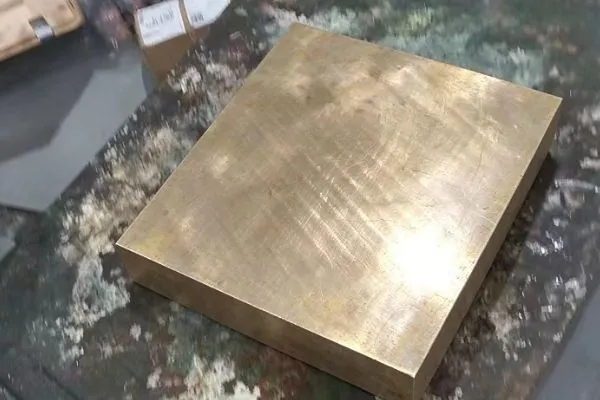
C17200 Beryllium Copper Plate is ideal for marine and offshore components that require strength, hardness, conductivity, fatigue resistance and stable contact force at the same time. The alloy tensile strength reaches 1170–1380 MPa and hardness 36-42 HRC after ageing. Its conductivity is still 22-28% IACS and it neither becomes magnetic nor sparks. Corrosion works well in many marine situations, but it must be evaluated in locations with calm water, fissures, galvanic contact and quick flow. C17200 is stronger than C17500 or pure copper, although it is not as excellent an electrical conductor. The quality is supported by results in temper, machining order, thickness shape, as well as ultrasonic testing, hardness tests and trackable certificates. When machining, controls are placed on beryllium dust. The final selection should consider engineering calculations, applicable standards, and supplier documentation, as well as representative testing.
FAQ
1. Can C17200 beryllium copper plate be used in seawater?
Most of the time, yes. It can stand up to a lot of marine environments and some uses in salt water. Water that doesn't move, cracks, galvanic contact, and fast flow can change the results, so test them in real-life situations before giving the go-ahead.
2. How does C17200 differ from C17500?
After being aged, C17200 hardens to 36–42 HRC, making it stronger and harder. The conductivity is higher with C17500, but the strength is lower. If current or heat flow is the most important thing, choose C17500. C17200 is better for springs, wear parts, and loaded contacts.
3. Which documents come with each order?
Each shipment comes with an EN 10204 3.1 certificate that lists the materials' composition, hardness, conductivity, and batch tracking.
4. Can the plate be machined after aging?
Yes. Plate machines that have been hardened and have carbide tools and coolant. Beryllium particles are kept in check by wet machining and dust filtration.
Request a C17200 Beryllium Copper Plate Quote from JYDS
Just send JYDS your plans or drawings, and our engineers will help you choose the best C17200 beryllium copper plate temper, thickness, and cutting plan for your marine or offshore project. We make C17200 beryllium copper plates and keep more than 500 tons in stock. We can ship stock items in 3–5 days and respond within 2 hours. To get your quote right away, email js01@jstongcai.com.cn or go to becualloy.com.
References
1. ASTM International, ASTM B194 Standard Specification for Copper-Beryllium Alloy Plate, Sheet, Strip, and Rolled Bar, 2015
2. ASM International, ASM Handbook Volume 2: Properties and Selection: Nonferrous Alloys and Special-Purpose Materials, 1990
3. J. R. Davis (ed.), Copper and Copper Alloys, ASM Specialty Handbook, 2001
4. Occupational Safety and Health Administration, Occupational Exposure to Beryllium and Beryllium Compounds, 29 CFR 1910.1024, 2017
5. ASTM International, ASTM G82 Standard Guide for Development and Use of a Galvanic Series for Predicting Galvanic Corrosion Performance, 2014
6. European Committee for Standardization, EN 10204 Metallic Products: Types of Inspection Documents, 2004
Online Message