
Nov 18, 2026
C17200 Beryllium Copper Rod: Conductivity and Strength Explained
The maximum tensile strength of any copper alloy is found in a C17200 beryllium copper rod, while yet maintaining useful conductivity. The tensile strength in the TH04 temper is between 1,280 and 1,480 MPa. Age-hardened material has an electrical conductivity of 22% IACS or greater and a thermal conductivity of 105-135 W/(m·K). Pure copper conducts better but is soft. Steel bears the load, is magnetic, and sparks. Final figures depend on temper, age, diameter, and test procedure. Each lot requires a certificate proving them. I prepared this guidance for customers who want those figures confirmed before the rod goes on stock.
What Is a C17200 Beryllium Copper Rod?
Composition and Common Names
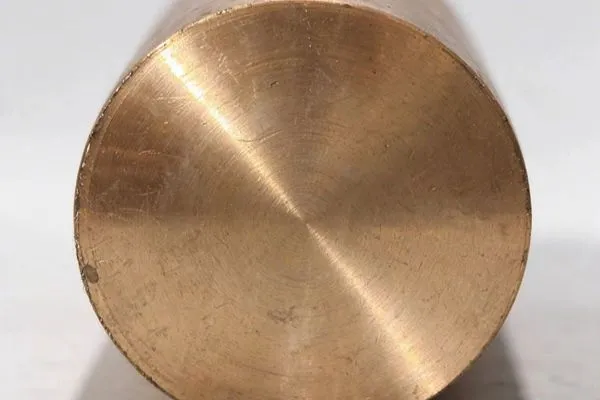
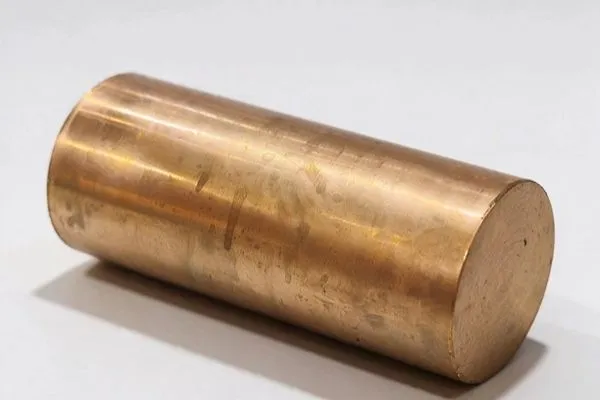
Alloy 25 or CuBe2 is another name for UNS C17200. It is a precipitation-hardenable copper alloy containing 1.80-2.00 percent beryllium and a minimum of 0.20 percent cobalt + nickel. Copper is the balance. At elevated temperature, beryllium goes into solution in copper and, on aging, precipitates tiny strengthening particles, which are the source of the alloy’s strength. JYDS melts the alloy in a vacuum induction furnace in-house for minimum gas content and consistent lot chemistry. A controlled melt C17200 beryllium copper rod is also dense and non-porous, which is critical when a shop is machining items to tight tolerances. Always check the UNS number while ordering, not just the moniker.
Standards, Sizes, and Certificates
C17200 Beryllium Copper Rod is in conformance with ASTM B196, ASTM B441, AMS 4533, AMS 4534, and AMS 4651. We also work to EN 12167, are ISO 9001:2015 certified, and provide RoHS- and REACH-compliant material. Diameter ranges from 2.5 mm to 200 mm and normal lengths range from 1,000 mm to 3,000 mm; we cut to custom lengths. Each batch is supplied with an EN 10204 3.1 Mill Test Certificate showing chemistry, hardness, and conductivity. The distributor may rely on the rod manufacturer's certificate for composition data, as detailed in the documentation. Order it with your quotation so that you can match the lot number to the bundle tag upon delivery.
How It Differs from C17300, Pure Copper, and Brass
C17300 is the free-machining version, so it suits high-volume automatic turning. The conventional option when strength, fatigue life, and spring force are the most important factors is a C17200 beryllium copper rod. 100% IACS is achieved with pure copper, although it is soft. Brass is cheaper and machines easier, but doesn't equal the spring performance or wear resistance, and can't substitute C17200 when a client calls out that grade on the design. C17200 is non-magnetic and non-sparking, unlike steel. Before making any substitute, check the composition restrictions of both grades. Choose the alloy to meet the prevailing need, not only price.
C17200 Beryllium Copper Rod Properties: Conductivity and Strength
Tensile Strength and Hardness by Temper
The strength increases in the annealed to age-hardened and cold-worked regimes. Material toughened by aging reaches around 1105-1380 MPa. TH04, cold-worked and aged temper, achieves 1280–1480 MPa. Hardness is the same route. TH04 is specified in ASTM B196 with an acceptable hardness range of 37 – 44 HRC for rod and bar, depending on diameter. The 36 – 42 HRC window commonly cited applies to the TF00 (AT) temper. I would use the usual window for inbound inspection. I would consider any values above this range as mill data, not a purchasing requirement. Ask us to list both the specification limits and the actual mill readings separately on the quotation so that your incoming inspection does not mistakenly reject compliant material.
Electrical and Thermal Conductivity in a C17200 Beryllium Copper Rod
Conductivity is expressed as % IACS, where annealed pure copper is 100%. Age-hardened C17200 has 22% IACS or higher and thermal conductivity of 105–135 W/(m·K). That is below pure copper. The difference is the price of more strength. For connection pins, contacts, and welding tips, this level still conducts current and heat effectively while the rod resists deformation. We test every batch using eddy current. The test also analyzes the heat treatment, since a low value might indicate incomplete aging. Ask for the % IACS value and temper on the certificate since the number changes with condition.
Fatigue, Wear, and Temperature Limits
In addition to tensile values, the alloy has excellent fatigue resistance and high stress relaxation resistance, which is important for springs and contacts that cycle thousands of times. It is also wear-resistant in bushings and bearings. It is resistant to saltwater and industrial corrosion. It is non-magnetic and will not ignite on impact. One limit is determined by heat; lengthy service over around 350°C weakens the material. Such loss of electrodes and mold inserts is prevented by water cooling or a cooler design. If an electrode is wearing down quicker than it should, before you blame the alloy, look for overaging or missing cooling.
How C17200 Heat Treatment Controls Final Performance
Solution Annealing and Aging
The procedure begins with solution annealing: the rod is heated until the beryllium is dissolved in the copper, and then it is cooled rapidly. At this moment, the rod is still soft. Then aging causes the strengthening particles. The normal schedule for a C17200 beryllium copper rod is 600°F (315°C) for 2 to 3 hours. Strength, hardness, and conductivity are shifted by temperature, duration, section size, and preceding cold work of aging. Little change in dimensions occurs during aging; thus, many shops machine in the soft condition and then age. This arrangement reduces tool wear and minimizes distortion.
The Four Tempers: TB00, TD04, TF00, and TH04
JYDS stocks all four tempers. TB00 (A) Solution annealed, softest. Suitable for intricate machining before hardening. TD04(H) is cold drawn, medium hardness, and has excellent dimensional stability. TF00 (AT) is heat-treated and age-hardened, suitable for parts requiring high strength without cold work. The cold-worked and age-hardened TH04 (HT) has the maximum strength, up to 1,480 MPa, and a typical hardness of 37–44 HRC, making it suitable for demanding duty. A distributor stocking all four may respond to most drawing callouts with no waiting for an import. Sort by temper code, not “hard” or “soft,” to avoid warehouse mix-ups.
Records That Prove the Temper
The temper code on a tag, by itself, shows nothing. Request heat-treatment record, hardness result, eddy current conductivity, and tensile result for the lot. Together, they certify that the C17200 beryllium copper rod has met the condition you requested. They also exhibit batch drift: if hardness or conductivity changes between two shipments, the certifications reflect it before your client does. We preserve traceability at a batch level from the raw material to the final rod, and we replace or re-machine any rod with a documented quality or dimension difference. I would advise ordering a short trial first and then re-testing against the certificate numbers.
C17200 Beryllium Copper Rod Applications and Alloy Selection
Where C17200 Beryllium Copper Rod Is Used
It is used in mold shops for injection mold inserts, core pins, ejector sleeves, and hot runner sections where heat conductivity and hardness are combined. Aerospace and Defense teams use it for bushings and bearings when non-magnetic properties are required. Electronics manufacturers convert it into connector springs, switch contacts, and relay components. It is selected by oil and gas purchasers for their drilling components and for hammers, wrenches, and chisels employed with combustible gas or dust. Resistance welding shops make it into electrode holders and spot welding tips. The usual list also includes high-current connections and precise instrument gears.
C17200 Versus C17500 and C17510
JYDS also has C17500 (CuCo2Be) and C17510 (CuNi2Be) with lower hardness and greater conductivity. Our analysis shows C17500 to be around 50% IACS and 20-25 HRC. Aged C17200 is 36-42 HRC. The tougher C17200 resists upsetting under heat and force for heavy-duty welding on thick or high-strength steel. If heat removal or current flow is more important, C17500 may be a better choice. Process engineers are often the ultimate authority on material, so provide them the certificate and sample early. One provider may quote you the two choices side-by-side.
Choosing the Right Rod for the Duty
When you define a C17200 beryllium copper rod, start with load, current, operating temperature, wear, and service life. TF00 or TH04 commonly suits springs and repeated-cycle items that require strong yield strength and fatigue life. The connector pins consider conductivity, contact force, and surface quality. Electrodes should be thermally conductive and resistant to softening. Heavy machined parts may be started in TB00 and aged later. Also include the diameter, length, straightness, roundness, and finish. We operate to EN 12167 Class B tolerances and verify diameter and straightness to ASTM B196 standards to avoid automated lathes jamming from out-of-tolerance bars.
Buying C17200 Beryllium Copper Rod: Supply, Quality Control, and Safety
Stock, Lead Time, and Shipping
JYDS has more than 100 tons of C17200 rod in standing stock. Stock goods are sent within 3-5 days, and bespoke orders within 15-20 days. That quickness is critical for a U.S. distributor whose client calls it C17200 and cannot wait weeks for an import. We are near Shenzhen port and Hong Kong port, and we pack with export-standard anti-rust, moisture-proof material. We can offer CIF, FOB, or DDP via sea, air, or express courier. If the stock length is not suitable, we may provide customized cutting, size modification, and CNC finishing. We answer each question within 2 hours.
Inspection Steps Before Shipping
Each lot is verified by optical emission spectroscopy for 1.80-2.00% beryllium and for nickel, cobalt, and iron content. Hardness is evaluated on the Rockwell or Vickers scale, and tensile testing is performed under ASTM E8. Eddy current testing validates % IACS and demonstrates that aging was effective. Ultrasonic testing is used to detect interior porosity, voids, and inclusions, and a dimensional audit is performed to measure diameter and straightness. These precautions safeguard a distributor against the worst situation: a batch that wanders in chemistry or hardness and strains a lengthy supply relationship. Re-test a sample of each batch of C17200 beryllium copper rod when it arrives and compare with the certificate on your side.
Safe Handling and Compliance
The whole solid rod may be stored and moved safely. The worry is dust and fumes from cutting, grinding, polishing or welding. For example, OSHA’s beryllium regulation, 29 CFR 1910.1024, provides a tolerable exposure limit of 0.2 µg/**m³** as an 8-hour average. Whole-bar handling in a warehouse does not trigger the complete requirements, but machining that causes dust requires exposure assessment, ventilation, HEPA filtering, and protective equipment. We can provide a Safety Data Sheet upon request and can guide your safety lead through these topics. Also, check state and municipal regulations, as they differ.
Conclusion
The C17200 beryllium copper rod has a tensile strength of up to 1480 MPa in TH04 and a conductivity of at least 22% IACS after aging. No combination of pure copper, brass, and steel can equal this. The final mechanical properties depend on temper and heat treatment, the normal plan being aging at 2 to 3 hours at 315°C. The four tempers do distinct tasks, from machining in TB00 to severe duty in TH04. C17500 is used when conductivity is more important than hardness, and C17300 is used for free-machining operations. Quality is based on batch certifications, examinations for conductivity and hardness, and a clear separation between the specified TH04 window of 37-44 HRC and the mill values. OSHA 1910.1024 makes a distinction between the safe handling of unbroken rod and machining dust.
FAQ
1. What conductivity should I expect from C17200?
Age-hardened C17200 reaches at least 22% IACS, with thermal conductivity of 105–135 W/(m·K). The value shifts with temper, so I list % IACS and the temper together on every certificate.
2. Which temper gives the highest strength?
TH04, the cold-worked and aged condition, reaches 1,280–1,480 MPa in tensile strength. ASTM B196 accepts TH04 hardness at approximately 37–44 HRC. The 36–42 HRC range is for the TF00 (AT) temper.
3. Is a C17200 beryllium copper rod safe to machine?
The solid rod is safe to store and handle. Cutting and grinding create dust, so use ventilation and HEPA filtration, and assess exposure under OSHA 1910.1024.
4. What documents come with each batch?
Each batch ships with an EN 10204 3.1 Mill Test Certificate showing chemistry, hardness, and conductivity, plus RoHS and REACH compliance documents.
5. Why does a rod soften in service?
Long service above about 350°C softens the alloy. Matched cooling, such as water-cooled electrode holders, prevents the loss.
Request a C17200 Beryllium Copper Rod Quote from JYDS
Send your diameter, length, temper, and annual volume to JYDS at js01@jstongcai.com.cn, and we will reply within 2 hours. As a C17200 beryllium copper rod manufacturer with 25+ years of experience, 100+ tons in stock, 3–5-day dispatch, and an EN 10204 3.1 certificate with every batch, we can support a trial order or an annual supply program.
References
1. ASM Handbook, Volume 2: Properties and Selection: Nonferrous Alloys and Special-Purpose Materials, ASM International, 1990
2. ASM Handbook, Volume 4: Heat Treating, ASM International, 1991
3. ASM Specialty Handbook: Copper and Copper Alloys, ASM International, 2001
4. Occupational Exposure to Beryllium and Beryllium Compounds, Final Rule (29 CFR 1910.1024), U.S. Occupational Safety and Health Administration, 2017
5. EN 10204: Metallic Products – Types of Inspection Documents, European Committee for Standardization, 2004
6. ASTM E8/E8M: Standard Test Methods for Tension Testing of Metallic Materials, ASTM International, 2022
Online Message