
Nov 24, 2026
C17500 Beryllium Cobalt Copper Rod in Thermal Management: Design Considerations
If you want to use a C17500 beryllium cobalt copper rod to handle heat well, you should make sure that its conductivity and strength are right for the heat path, load, and duty cycle. The alloy has an electrical conductivity of 45–60% IACS and a thermal conductivity of 200–245 W/m·K. When it is aged, the tempers reach 690–900 MPa. A C17500 beryllium cobalt copper rod can hold more strength than pure copper and pull heat away from welding tips, mold cores, and parts that carry current because of this mix. First check the temperature, current, contact pressure, and service life. Then check each certified value one at a time.
Customers who have to approve a material before the first rod ships are the ones I wrote this guide for. We have worked with beryllium copper alloys for more than 25 years at JYDS. The questions below are based on the ones that buyers ask us most often when they are looking for a C17500 beryllium cobalt copper rod.
Composition and Material Properties of C17500 Beryllium Cobalt Copper Rod
Chemistry and Standards
This is an alloy made of copper, cobalt, and beryllium. It is also known as CuCo2Be, Alloy 10, CW104C, and DIN 2.1285. It has between 0.4% and 0.7% beryllium, 2.4% to 2.7% cobalt, and the rest is copper. Rods and bars are covered by ASTM B441, and drawings often show SAE J461 and SAE J463. The alloy is RWMA Class 3 for welding. The rod meets the RWMA Class 3 thresholds of at least 45% IACS and at least 90 HRB (AWS J1.3), which is a better way to say it than the official way of saying it. If someone wants to buy a C17500 beryllium cobalt copper rod, they should ask for a material test certificate that shows the heat number, the amount of cobalt and beryllium, and the standard that applies.
Strength, Hardness, and Conductivity
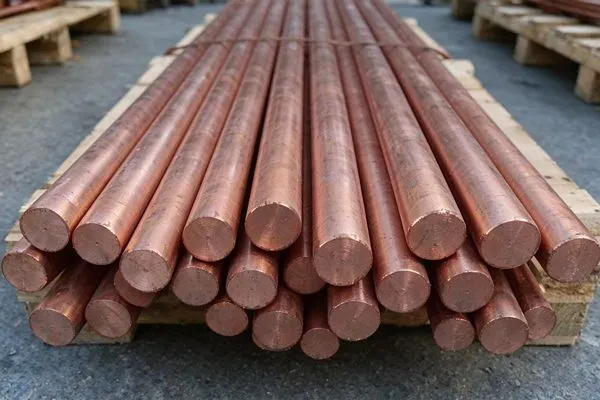
Cobalt is responsible for the precipitation hardening reaction of the alloy. A rod of C17500 beryllium cobalt copper can reach up to 900 MPa in tensile strength after aging. Depending on the temper, the hardness varies from HRB 90 to 100, which corresponds to around HRC 20 to 30. These figures are lower than C17200 which may achieve roughly HRC 45. However, the conductivity rises to 45–60% IACS, while it is only 20% or so for C17200. It also stabilises the grain structure at elevated temperature . That means the rod remains firm and conductive after being heated and cooled multiple times. Hence this alloy is widely employed in welding, where the electrodes are subjected to many temperature cycles throughout each shift.
Thermal Conductivity vs. Electrical Conductivity
Electrical conductivity and thermal conductivity are related but are expressed in separate units on a datasheet. Electrical conductivity (%IACS) can be readily checked with an eddy current probe. Thermal conductivity of the alloy is 200–245 W/m·K based on reference data, not test on individual lot. I use the batch IACS reading as a practical check that all is well and at the same time to confirm the hardness. If a design depends on removing heat, these values matter. A C17500 rod that tests at 45% IACS but fails to reach 90 HRB is not a proper Class 3 electrode material. The same applies in reverse (meeting hardness but failing conductivity).
Thermal Management Design Considerations for C17500 Beryllium Cobalt Copper Rod
Define the Heat Path First
Make a map of where heat comes from, where it goes, and where it goes away before you compare catalog numbers. Write down the source of heat, the coolant or heat sink, the working temperature, the current, the mechanical load, and the maximum temperature rise that you are willing to handle. A C17500 beryllium cobalt copper rod works best when it has a wide cross-section and a short path from the source to the coolant. That means a water-cooled hole close to the tip of the welding electrode. It means putting the insert as close to the hot spot as the part will allow in a mold. It's only helpful for high conductivity when heat can get to the coolant.
Rod Diameter, Contact Area, and Joints
Equally important as the alloy itself is the diameter and contact area. A thicker rod can move more heat, but if the joint is bad, that gain can be lost. Check the flatness, surface finish, and contact pressure of each point where a C17500 beryllium cobalt copper rod meets steel, aluminum, ceramic, or another copper alloy. This is because small gaps between the metals act as insulation. Also, thermal expansion is important. For this reason, a press fit that is tight when cold can load the housing when it gets hot. Allow for expansion and take into account any stress that is still there from the machining. These effects can be seen faster in prototype parts than in calculations done on paper.
Thermal Cycling and Testing
Many designs fail when they are heated and cooled over and over, so test for it. Check for oxidation, stress relaxation, contact pressure, and distortion after the metal has been machined. Cobalt helps the alloy keep its hardness and conductivity even after being cycled, but I still think you should do a test run on the real machine before making a lot of them. Record the temperature or wear on the tip, and then check the hardness and conductivity of a used part again. These two readings show how long the chosen temper lasts during the duty cycle. If either number changes, you should fix either the temper or the geometry before placing a bigger order.
Temper Choice and Alternatives to C17500 Beryllium Cobalt Copper Rod
Temper and Manufacturing Condition
The temper changes how the rod works and machines. The alloy can be bought in four different conditions: solution annealed (TB00), age hardened (TF00), cold drawn (TD04), and quarter hard and age hardened (TH04). Annealed rod is softer and works well for heavy shaping. Cold-drawn rod is stronger, more straight, and more accurate in its measurements. Age-hardened rod in TF00 or TH04 comes to you ready to be machined or put together; you don't have to do any heat treatment. That's important for mold shops that want all of their molds to be the same hardness and for electrode makers that can't accept a Class 3 rod that is too soft. Also, say what the surface looks like and reject any pits, cracks, inclusions, or laminations.
C17500 vs. C17200
C17200 or C17500 is the question that everyone asks. C17200 is designed to reach hardness up to HRC 44–45, but it only conducts about 20% to 22% IACS. Some hardness is lost when C17500 is used, but 45–60% IACS is gained. If the part mostly holds weight, like a spring or bushing, C17200 might work. C17500 beryllium cobalt copper rods work better when the part needs to carry current or pull heat, like in an electrode holder or a hot runner nozzle seat. Many buyers keep both grades in stock and give them out based on duty. In either case, you should ask for certified values in the exact temper, since the name of the alloy doesn't really mean what they are.
C17510, Pure Copper, and Copper Chromium Zirconium
The copper-nickel-beryllium counterpart, C17510, is also covered by ASTM B441. However, the balance between its conductivity and strength is variable, so you should compare certified figures to select the one that is ideal for your temper. Pure copper is the best conductor of electricity, yet it bends and wears out quickly under pressure. Copper chromium zirconium is widely used for welding because of its great resistance to softening. This makes it a good material to compare with electrodes. Compare temperature performance, cost, availability, conductivity, strength, hardness, machinability and high temperature performance. Also, trust test data more than reputation. If the drawing asks for RWMA Class 3 or better, ensure that any replacement fits the Class 3 standards before you make the change.
Application-Specific Design Recommendations
Resistance Welding Electrodes and Holders
If you are spot welding high-resistance alloys or stainless steel, you need to take into consideration the duty cycle, tip wear, current density, electrode force and current flow. C17500 is often employed in electrodes, seam welding wheels, and electrode holders since it retains its hardness and conductivity after numerous heat/cool cycles. Each lot of electrodes shall be tested for at least 45% IACS and at least 90% HRB. They must also be checked for straightness and concentricity, as a rod that is not centred will result in unequal tip contact. The qualities of the electrode play a role in stable weld nuggets. The best approach to determine the life of an electrode is to run a pilot on your welding line with your cap geometry.
Injection Molds and Die-Casting Tooling
Injection moulds have thermal hot spots, where heat gets trapped. These include thin cores and hot runner nozzle seating A C17500 beryllium cobalt copper rod insert draws heat from the molten plastic. This decreases cycle times and prevents warping. It conducts heat faster than ordinary tool steel and can withstand injection loads better than pure copper. The alloy is also utilised in the production of non ferrous casting moulds and plunger tips for die casting. You want to see the provided hardness (HRC 20-30 is easier to manufacture) and the consistency of hardness through the bar (a thin insert can flex if the stock is not even). Once the mould is approved, it costs a lot to change the material, therefore try a little insert first.
Electrical Hardware and Other Parts
Heavy duty connectors, switch and relay parts and fuse clips have to be able to withstand a specified level of current, have a strong contact force, not rust and be compatible with different platings. A C17500 beryllium cobalt copper rod is not softened at high current densities and is not readily corroded, but it must be shielded from strong oxidising agents. You may machine it or make parts out of it. It works great while it's cold too. It can also be utilised for high flux electromagnets, current carrying shafts and aircraft landing gear bushes. Check tolerances of the assembly early. A defective surface quality, or a change in diameter, increases contact resistance. Before full use a short test is made to check if the contact is reliable and that the dimensions stay the same.
Specifying, Testing, and Buying C17500 Beryllium Cobalt Copper Rod
What to Put in Your Specification
Most disputes can be avoided with clear purchase specs. When people buy a C17500 beryllium cobalt copper rod, I ask them to define the following things.
- Material and form: State UNS C17500, round rod, ASTM B441, and the RWMA Class 3 thresholds. Add diameter (we supply 2.5 mm to 200 mm), length (1000–3000 mm or custom cut), tolerance, and straightness, so the mill and your machine shop read the drawing the same way.
- Temper and testing: Name TB00, TF00, TD04, or TH04, and set minimum values, such as 45% IACS and 90 HRB for electrode stock. Say whether you want conductivity and hardness results for every lot, and agree on retest rules before production begins.
- Commercial terms: Give annual demand, destination, packaging needs, and certificate type. Price per kilogram moves with alloy cost, diameter, tolerance, temper, testing, quantity, and freight, so complete details produce a more accurate quote.
Also, these details make it easy to compare a trial order to orders that are placed again in the future.
Quality Checks and Documents
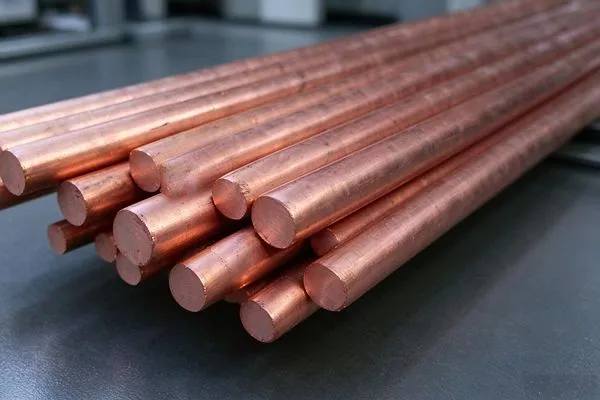
Every JYDS shipment is chemically analysed by OES, tested for internal porosity or inclusions by ultrasound, hardness and tensile strength under ASTM E8 and E18 and measured to make sure it satisfies the criteria. All batches come with an EN 10204 3.1 mill test certificate containing chemical, hardness and conductivity data. Our quality system is ISO 9001:2015 certified. We can supply RoHS and REACH documents upon request. Cobalt is included in the OECD’s voluntary due diligence guidance. If you require a conflict minerals statement in 3TG format, you can request it when you receive the estimate and the format can be agreed upon before the shipment. Label and isolate Class 3 lots to prevent them from being combined with other products.
Choosing a Supplier and Final Selection Steps
“Look past price. Ask a C17500 beryllium copper supplier about their sample policy, their copper melting and testing methods, how it can be monitored, and how they regulate tolerances. JYDS stocks around 500 tonnes of material and does their own vacuum induction melting. 3-5 days to ship stock products 15-20 days to ship custom orders 24 hours to request a quote. Our company is near to Shenzhen and Hong Kong ports. We offer FOB, CIF, DDP terms by ship, air or express. Our rods are put in anti rust, moisture proof export packing. Making your own steps is straightforward. Write down the temperature, the current, the load, and the life. Set the minimums. Pick the temperature and the size. Run a sample and pilot. Order the full thing. OSHA beryllium guideline says you can't get more than 0.2 micrograms per cubic metre for 8 hours thus you should machine solid rod with wet cutting and ventilation.
Conclusion
C17500 beryllium cobalt copper rod is a suitable choice for a product that needs to conduct heat or electricity but preserve its shape. Its chemistry of 0.4 to 0.7% beryllium and 2.4 to 2.7% cobalt provides it 45 to 60% IACS and 690 to 900 MPa after aging. This is a middle ground between pure copper and C17200. To create a suitable design, you should begin with the heat path and make a trial run to verify the diameter, joints, expansion and thermal cycling. The temper is important to the machinability of the alloy, both in terms of the finish quality and ease of machining. What is more essential than the name of the alloy is the conductivity and hardness of each lot, particularly as they relate to the Class 3 limits of the RWMA. Different tests are needed for welding electrodes, mould inserts and electrical parts. Most problems can be avoided by having explicit specifications and batch certificates and testing samples before placing major purchases.
FAQ
1. Is a C17500 beryllium cobalt copper rod better than C17200 for heat removal?
Yes. The C17500 has 45–60% IACS, and the C17200 has about 20% IACS. C17200 is harder, so it's good for parts that hold weight.
2. Do I need to heat treat the rod after delivery?
No, not for TF00 or TH04. Both tempers come fully age-hardened and ready to be machined or assembled.
3. Can I machine C17500 safely?
Yes. Follow the rules for beryllium exposure in your area and make sure you use wet machining and good ventilation to keep dust down.
4. What should I send for a quotation?
Send the size, length, temper, standard, tolerance, surface needs, quantity or annual demand, type of certificate, where it's going, and how it will be used.
Request a C17500 Beryllium Cobalt Copper Rod Quotation from JYDS
Email JYDS at js01@jstongcai.com.cn with your drawing, temperature, quantity, and operating conditions, and we'll get back to you in two hours. We can help you find the right temper and size of C17500 beryllium cobalt copper rod for your needs. We have more than 25 years of experience with beryllium copper, more than 500 tons in stock, and EN 10204 3.1 certificates on every batch. You can find out more at becualloy.com.
References
1. ASTM International, ASTM B441 Standard Specification for Copper-Cobalt-Beryllium Alloys (UNS No. C17500) and Copper-Nickel-Beryllium Alloys (UNS No. C17510) Rod and Bar, 2012
2. American Welding Society, AWS C1.1M/C1.1 Recommended Practices for Resistance Welding, 2019
3. ASM International, ASM Handbook, Volume 2: Properties and Selection: Nonferrous Alloys and Special-Purpose Materials, 1990
4. ASM International, ASM Specialty Handbook: Copper and Copper Alloys, 2001
5. Occupational Safety and Health Administration, Occupational Exposure to Beryllium and Beryllium Compounds, Final Rule, 2017
6. OECD, OECD Due Diligence Guidance for Responsible Supply Chains of Minerals from Conflict-Affected and High-Risk Areas, 2016
Online Message