
Nov 27, 2026
Can C17200 Beryllium Copper Rod Be Used for EDM Electrodes?
As a metal service center that stocks C17200 beryllium copper rod for machine shops that use electrical discharge machining, I get this question almost every week. In short, the answer is yes, but only in certain situations. The longer answer depends on the temperature, the shape, and what the customer further down the line needs from the electrode. What works, what doesn't, and how a distributor can check stuff before it ships are the things I have seen work and not work.
Key Takeaways Before You Buy
When toughness, strength, and stable shape are more important than high-level conductivity, C17200 beryllium copper rod can be used as an EDM electrode material. It is more resistant to wear than pure copper and keeps its shape better when clamped over and over again. On a raw level, it won't be better than pure copper, and it won't be better than graphite for large or complicated shapes.
Before placing an order, buyers and purchasing managers need to make sure of the following:.
- What stock is on hand and how fast it ships—stock material should ship in three to five days, not six to ten weeks like big European mills that do custom melts.
- A Mill Test Certificate under EN 10204 3.1 for the shipped batch's chemistry, hardness, and conductivity. Not a general alloy datasheet.
- Because hardness and conductivity vary by 20% or more between TB00, TD04, TF00, and TH04, each temper should be labeled.
- A written beryllium dust handling statement that separates safe solid rod storage from exposure risks when a customer grinds or cuts.
A distributor can resell C17200 beryllium copper rod with confidence if these four things are met. If they are not, the distributor will have to deal with a rejected shipment three weeks after the buyer's lab does its own hardness check.
What Makes C17200 Beryllium Copper Suitable for EDM Electrodes?
C17200 Beryllium Copper Rod: Definition and Scope
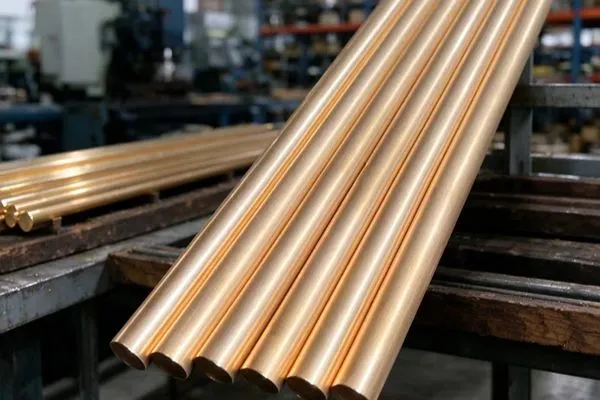
C17200 beryllium copper rod is a copper alloy that has a small amount of beryllium added to it, usually 1.80% to 2.00%, along with cobalt or nickel that is more than 0.20%. It's also known as CuBe2 or Alloy 25 in the business world. The chemistry comes in sheet, strip, and wire forms for other uses, as well as round bars that are shipped.
Before people get confused, let me make it clear: "C17200 vs C17200 beryllium copper rod" is not a real comparison. One is the name of the alloy, and the other is the form of the product. The alloy is the same whether it comes in the form of a rod, a strip, or a plate. The temper, the dimensional tolerance, and the history of each piece's heat treatment are the only things that are different between them.
Key C17200 Copper-Beryllium Properties
There is more than one data sheet number that a buyer needs to look at this alloy for EDM work. The following properties should all have a label on the test report that says "tempered." These are hardness, conductivity, and temperature.
| Property | What to request from a supplier |
|---|---|
| Chemical composition | Beryllium 1.80–2.00%, Co+Ni min 0.20%, balance copper, verified by OES |
| Density | Approximately 8.25 g/cm³, confirmed against ASTM B196 reference values |
| Hardness | 36–42 HRC for TH04 per ASTM B196; report by temper, not a single figure |
| Tensile strength | 1,280–1,480 MPa in TH04; lower in TB00 and TD04 |
| Electrical conductivity | 22–28% IACS typical in aged tempers, reported in % IACS or MS/m |
| Thermal conductivity | Roughly 105–135 W/(m·K), relevant to heat buildup during discharge |
| Corrosion resistance | Strong resistance to seawater and industrial atmospheres |
| Modulus and spring properties | High stiffness supports thin or long electrode sections without bending |
Why Mechanical Properties Matter in EDM
An electrode doesn't change shape when it is clamped and discharged many times because it is hard and has tensile strength. It's easier for a soft electrode to lose its edge, chip at the corners, and move out of tolerance after a few hundred discharges. However, the microstructure of the C17200 beryllium copper rod in TH04 condition doesn't wear down because it stays in shape under thermal and mechanical stress.
Conductivity and wear resistance are two different things. It's not true that a harder electrode automatically transfers spark energy more quickly. People who get these two terms mixed up often specify too much hardness and pay too much for performance they won't use for a simple roughing job.
How Does C17200 Compare with Copper and Graphite EDM Electrodes?
C17200 vs Pure Copper vs Graphite
When shops choose an electrode material, they usually compare three different options side by side. The properties that most buying teams ask about during sample review are what I used to make the table below.
| Criterion | C17200 Beryllium Copper | Pure Copper | Graphite |
|---|---|---|---|
| Electrical conductivity | High, but below pure copper | Very high, close to 100% IACS | Lower, depends on grain grade |
| Mechanical strength | High after aging (up to 1,480 MPa) | Relatively low, softens under heat | Brittle, no tensile strength to speak of |
| Wear resistance | Good, especially at corners | Moderate, deforms under repeat cycles | Varies by grade, chips easily |
| Machining behavior | Needs dust control and harder tooling | Easy to turn and form | Easy to cut but creates fine graphite dust |
| Dimensional stability | Good for rigid, detailed shapes | Vulnerable to distortion under heat | Stable at high temperature |
| Main advantage | Strength plus usable conductivity | Maximum conductivity | Fast roughing on large or complex shapes |
| Main limitation | Beryllium safety steps, higher cost | Lower hardness, shorter electrode life | Dust and brittleness on fine detail |
C17200 vs C17500 Beryllium Copper Rod
People who want to buy also want to know how C17200 compares to C17500, which is another copper-beryllium alloy. There is less beryllium in C17500 (about 0.40% to 0.70%), but there is more nickel. That change gives up some peak hardness in exchange for better conductivity, usually between 45 and 60% IACS compared to 22 to 28% IACS in aged C17200.
I tell people to buy C17200 beryllium copper rod as an EDM electrode when the job needs to be very hard, keep the fine edge, or have long-lasting tools. When the electrode is running at a high current and getting rid of heat is more important than hardness, C17500 should be thought about.
Choosing the Best EDM Electrode Material
When a shop further down the line asks which material will work best for them, I walk distributors through this decision order:.
- C17200 is ideal for small or detailed features that require a strong, hard, and stable electrode even after many clamping and discharging cycles.
- Pure copper is best for finishing passes instead of roughing when conductivity and smoothness are more important than wear life.
- Graphite is best for large, complicated, or high-temperature electrode shapes because it machines quickly and can handle high temperatures.
- Copper-tungsten works well in harsh environments, high current densities, and hard materials that wear out softer electrodes.
- Check that your material works with the EDM machine, dielectric fluid, and pulse settings before ordering.
This list should be looked over before quotes are given so that neither the buyer nor the distributor have to deal with a return request three weeks into the production run.
What Electrical and Thermal Properties Affect EDM Performance?
Electrical Conductivity and Current Distribution
How spark energy moves across the electrode face is controlled by how conductive it is. When conductivity is low, heat builds up near the discharge point. This can raise the temperature of the electrode and speed up wear if the pulse settings are too strong. C17200 beryllium copper rod in TH04 temper usually tests between 22% and 28% IACS, which is much lower than pure copper's rating of almost 100% but still enough for controlled material removal at moderate current.
Conductivity should be given in % IACS or MS/m for each quote, along with a temperature. A claim of "high conductivity" that doesn't include a number doesn't help a buyer set up a process.
Thermal Conductivity and Heat Management
In the 105–135 W/(m·K) range, thermal conductivity helps move heat away from the discharge zone, but the heat still needs to go somewhere. Sharp edges, thin walls, and rods with a small diameter all gather heat faster than they can release it. This is made worse by deep cavity work, since it gets harder to flush as the electrode goes deeper.
I think you should do a short test cut before starting full production, especially for electrodes with a diameter of less than 3 mm. During that test, a quick thermal check finds any softening or dimensional drift before it shows up on a finished part.
Recommended Technical Data Block
As of now, these fields should always have real numbers, not ranges, filled in on any quote or certificate for C17200 beryllium copper rod that will be used for EDM:.
- Rod diameter and tolerance band, checked against the limits set by ASTM B196.
- The certificate makes it clear what temper it is (TB00, TD04, TF00, or TH04).
- By batch, find out the density, hardness (using the Rockwell or Vickers scale), and tensile strength.
- Its yield strength, its electrical conductivity in % IACS, and its thermal conductivity, if they were tested.
- State of the surface, history of heat treatment, relevant product standard, and test date.
A buyer who gets this data block with every shipment doesn't have to call very often to talk about a rejected lot.
Can C17200 Beryllium Copper Rod Withstand Repeated EDM Discharges?
Repeated Discharge and Electrode Wear
A step in the heat treatment process called precipitation hardening makes the C17200 beryllium copper rod strong. As copper ages, small particles form inside the matrix and stop it from deforming when mechanical and thermal loads are put on it. When that resistance is turned on, the edge stays sharper for hundreds or thousands of discharge cycles.
Wear is still going on. Some common ways things break are crater wear on the working face, corner rounding, side wear from sparking, thermal softening after long runs, and chipping at thin edges from too much current. Compared to pure copper, C17200 lessens these effects. It doesn't get rid of them. All electrode materials wear down over time. The question is how quickly and how reliably they do so.
Performance Variables to Control
Wear is caused by more than just the material of the electrode. The other half is how the machine is set up and how the process run. Shops that use C17200 beryllium copper rod electrodes should keep an eye on and make changes to:.
- Peak current, pulse-on time, pulse-off time, and duty cycle are important because any electrode material that has more energy per pulse will wear down faster.
- How fast debris moves through the gap and how stable the discharge stays depend on the polarity settings, flushing pressure, and condition of the dielectric fluid.
- How heat builds up during the cut depends on the size and shape of the workpiece, how hard it is, and how long the electrode is exposed.
When these factors are tracked throughout a production run, wear goes from being a surprise to a curve that can be planned for and managed.
Validation Test Plan
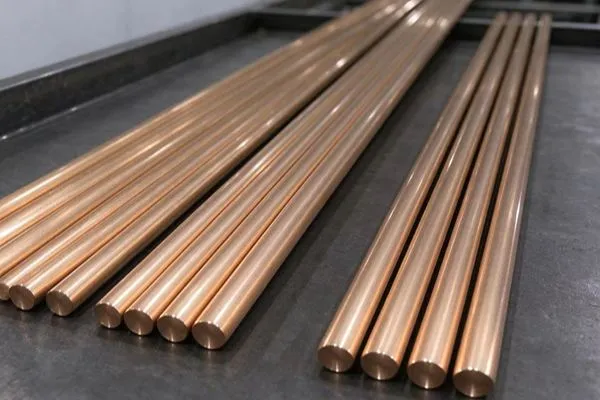
I worked with a European metal distributor who wanted proof before switching a longtime electrode customer from imported stock to our stock. We tested two types of TH04 electrode blanks next to each other using the same EDM machine, hardened tool steel workpiece, and pulse settings. The C17200 beryllium copper rod electrode had 0.08 mm of corner wear after 1,200 discharge cycles, while the pure copper electrode had 0.21 mm.
That kind of information is only useful if a buyer can make it again. I suggest keeping track of the initial electrode mass and dimensions, the EDM settings and grade of the workpiece, the machining time and rate of removal, the final electrode dimensions and wear ratio, the roughness of the workpiece's surface, and either a visual or metallographic inspection of the electrode. Do this for at least three batches before declaring the material ready for production.
Which EDM Applications Benefit Most from C17200 Copper Rod?
Suitable EDM Electrode Scenarios
Based on my tests and the feedback I've gathered from distributors and electrode shops, C17200 beryllium copper rod works best in small-diameter electrodes that need to be rigid, detailed cavity work where edge retention is important, repeated production tooling where consistent dimensions save money, and electrodes that are subject to vibration or clamping stress during long machining cycles.
Three Real-World Buyer Profiles
OEM tooling manufacturer. A mold maker that makes cavity inserts, core pins, and ejector sleeves needs to be able to keep the sizes of hundreds of electrodes that are exactly the same stable. Before accepting a shipment, these buyers often ask for custom diameters, centerless grinding, and full inspection reports.
The job that most of my direct buyers do is that of an "industrial distributor." They need standard rod stock in standard diameters, accurate lot tracking, a ready supply of inventory, and export paperwork that gets through customs quickly. Many ask for mixed-size orders or private-label packaging so that one shipment can serve more than one customer.
EDM is used to fix tools, make maintenance parts, or make molds in "end-user plants" or "contract manufacturers." They look at the total cost of the process, not just the price of the material. For each job, they often compare C17200 beryllium copper rod to copper and graphite to see which one gets the order.
Applications Requiring Additional Review
This metal isn't right for every job. Before choosing C17200, you should think twice about using it for roughing operations with very high current, large electrodes where machining time and cost are the most important factors, jobs that need the highest conductivity possible, and shops that don't have equipment to control the dust from beryllium-containing materials. In these situations, pure copper, graphite, or copper-tungsten might be more valuable overall.
How Does Electrode Hardness Affect EDM Wear and Machining Accuracy?
C17200 Hardness Grades and Heat Treatment
C17200 beryllium copper rod becomes hard through solution treatment, quenching, cold working (if desired), and two to three hours of precipitation aging at about 315°C. Each stage produces a different microstructure. Solution-annealed TB00 stays soft and is easy to work with before it hardens. Cold working to TD04 makes it moderately hard.
The temper should always be written in a supplier quote. A buyer can't tell what hardness or conductivity to expect from "Beryllium copper rod" that doesn't say what temper it is in.
Hardness Versus Conductivity Trade-Off
I want to draw your attention to something that buyers come across so often that it needs its own section. Some supplier literature, including materials I've looked at from other companies in the same field, says that TH04 is hard around 45 HRC. The real range for ASTM B196 acceptance for TH04 is 37 to 44 HRC (while the 36 to 42 HRC window applies to TF00). It's possible for a shipment to be marked as nonconforming even if the material is objectively strong if it tests above the strict ASTM acceptance criteria used by the buyer.
If a distributor wants to quote this alloy, I would tell them to separate the standard acceptance range from the shop's usual achievable value on the quote sheet. Write down both numbers. A failed incoming inspection can't lead to the cancelation of the framework agreement because of that one line item.
Hardness should also never be picked on its own. Copper-beryllium alloys that are harder tend to lose some of their ability to conduct electricity. When you match the temper to the job, you don't just pick the highest HRC number on the sheet; you also have to think about the electrode geometry, the required wear resistance, the electrical load, the machining method, and the dimensional tolerance.
Hardness Verification Checklist
Before accepting a shipment of C17200 beryllium copper rod for making EDM electrodes, the buyer should check the test method and standard, the test location and sampling plan for the whole batch, how the surface was prepared before testing, the reported hardness scale (Rockwell or Vickers), the sample's minimum, maximum, and average results, and the batch or heat number to trace the results back to the original melt.
What Are the Limitations of Using C17200 for EDM Electrodes?
Technical and Economic Limitations
I outline the limitations upfront before buyers commit. It is less conductive than pure copper, therefore it could take longer to remove material on some applications. The materials are more expensive than normal copper rod. The harder the temper, the more difficult it is to machine, especially in the TH04 condition. If you have a large or high throughput electrode the extra expense may not be justified.
Health and Workplace Risks
When cutting, grinding or polishing the rod, the beryllium content of the alloy might expose personnel to serious hazards. Solid rods are safely handled and stored in accordance with the standards of 29 CFR 1910.1024, OSHA’s beryllium regulation. When machining produces dust or fumes, such as dry grinding, abrasive cutting, high-speed machining, polishing or any heat process, such as welding, the risk increases.
I tell any distributor shop that starts cutting this material the same thing. They need sufficient ventilation for exhaust, respiratory protection, clean up after themselves, and a written exposure assessment. This also applies when the distributor's warehouse solely houses finished rod.
Mitigation and Troubleshooting Table
| Risk | Likely cause | Fix |
|---|---|---|
| Excessive electrode wear | Wrong pulse settings or mismatched temper | Review EDM parameters and confirm temper against job demand |
| Poor surface finish | Weak flushing or unstable discharge | Adjust flushing pressure, pulse settings, and electrode shape |
| Dimensional drift | Heat buildup or weak clamping | Lower heat concentration and check clamping rigidity |
| Chipping at edges | Sharp geometry or too much current | Add edge radii and reduce pulse energy |
| Supplier inconsistency | Mixed tempers or missing traceability | Require lot-specific certificates and independent testing |
How Do You Select the Right C17200 Rod Diameter and Grade?
Diameter, Tolerance, and Form Selection
When someone buys C17200 beryllium copper rod to make an EDM electrode, they should be clear on the nominal diameter and tolerance, the limits for roundness and straightness, the cut length versus coil form, the surface finish, the amount of machining allowance left for finishing, the final electrode dimensions, the required concentricity, and the packaging that keeps the rod safe while it's being shipped. If you leave any of these off of a purchase order, the supplier will likely fill the gap with whatever is available, not what the job actually needs.
C17200 Grade Selection Checklist
You should make sure of the minimum acceptable conductivity, heat-treatment condition, expected EDM current and duty cycle, electrode complexity, planned machining route, applicable product standard (ASTM B196, ASTM B441, AMS 4533, AMS 4534, or AMS 4651), and the exact test certificate format needed for incoming inspection before placing an order. It only takes ten minutes to fill out this list, but it could save weeks of back and forth if a shipment comes with the wrong temper.
Supplier Capability & Evaluation
Most of my talks with people who want to buy metal service centers happen here. A good long-term framework supplier should control melt chemistry and traceability, follow ASTM or similar standards, control heat treatment across batches, match your spec sheet's diameter and tolerance, do their own conductivity and hardness testing (not guesswork), give you access to approved labs for third-party verification, offer custom machining services.
At our Dongguan facility, we have an in-house vacuum induction melting furnace that keeps the amount of gas low and the consistency of the alloy tight from the very first melt. Because of this, we keep over 100 tons of C17200 beryllium copper rod in stock in a range of diameters and common tempers. Stock orders ship in 3 to 5 days, compared to the 6 to 10 weeks that large European mills usually need to ship custom melts.
Procurement and Commercial Factors
Besides technical fit, a buyer's checklist should include MOQ and price per kilogram, stock availability vs. production-run lead time, standard sizes vs. custom diameters, sample policy, production schedule, payment terms, Incoterms (EXW, FOB, CIF, or DDP), packaging and moisture protection, warranty and nonconformance handling, country of origin paperwork, and customs classification support for EU and US shipments.
How Should C17200 Beryllium Copper Electrodes Be Machined and Finished?
Cutting, Turning, Milling, and Grinding
The temper supplied should be suitable to the manner of machining. Standard carbide tools do OK on the softer TB00 or TD04 stock, but TH04 needs slower feed rates and harsher tools to protect the cutting edge from overheating. You can start by using a general guide to machining copper, but a brief process trial is recommended to make sure the coolant, cutting speed, and feed rate are all suitable.
Electrode Finishing and Dimensional Control
Before making an electrode, it should be checked for its overall length, diameter, straightness, concentricity, surface roughness, edge condition, and burrs. How the surface is finished is also important. Turning, centerless grinding, and polishing all change the surface texture in ways that affect how the discharge works. After finishing, protective packaging keeps the electrodes from getting scratched or oxidized during shipping, which is more important than most buyers think for electrodes with fine details.
Quality Verification Before EDM Use
A finished electrode batch should come with a material certificate, a report on its chemical composition, a report on its hardness, a report on its conductivity, a record of its dimensions, a record of its heat treatment, and a batch or lot number that connects everything back to the melt. If there is a clear nonconformance and replacement procedure agreed upon before the order ships, it saves time if a batch fails incoming inspection when it gets there.
What Safety Precautions Apply When Machining C17200 EDM Electrodes?
Beryllium Exposure Controls
Dust, mist and fumes generated by machining C17200 beryllium copper rod are to be considered serious hazards in the workplace. Local exhaust ventilation at points of dust formation improves air quality as does the use of wet machining processes where feasible. Compressed air should not be utilised to clean dust. Written procedures for housekeeping and trash handling prevent residue from escaping the machining area.
PPE and Process Controls
Lungs, eyes, skin, and clothing protection should be handled by a qualified safety program at work, not a broad PPE list that you downloaded from someplace else. Separating the machining areas from other work areas, training personnel on the exposure hazards, undertaking exposure monitoring and providing medical surveillance as required by local legislation lowers the long-term liability for the firm doing the cutting.
EU and US Compliance Notes
In the US, OSHA has a limit of 0.2 µg/m³ for the safe exposure to beryllium, which is backed by the guidelines published by NIOSH (NIOSH, 2023) and the EU limit of 0.0002 mg/m³ in certain member states that is consistent with the REACH and the occupational exposure laws. The RoHS and CE marking is normally applied to finished equipment not to raw rod stock. Buyers should check their own compliance.
Conclusion
C17200 beryllium copper rod is used to make EDM electrodes when high hardness, strength, wear resistance, and dimensional stability are more important than conductivity. For raw conductivity and fine finishing jobs, pure copper still wins. Graphite and copper-tungsten are better for some sizes and currents.
FAQ
1. Can C17200 beryllium copper rod be used for EDM electrodes?
Yes. It's good for electrodes that need a mix of hardness, strength, wear resistance, and conductivity. Before committing to full production, do a short machine trial and parameter check to make sure it will work.
2. What is the electrical conductivity of C17200 beryllium copper rod?
Temperature affects conductivity. Most of the time, conditions like TH04 that are aged run 22% to 28% IACS. Do not rely on a general alloy number; always ask for a measured value from the supplier's certificate.
3. Is C17200 better than copper for EDM electrodes?
It is mechanically stronger and keeps its shape better after being discharged many times. Pure copper is a better conductor and may work better in situations where discharge efficiency is more important than electrode life.
4. What is the difference between C17200 and C17500 beryllium copper?
The beryllium content in C17200 is higher, and it is harder and stronger. Some of that hardness is given up in exchange for better conductivity in C17500. This makes it better for uses where getting rid of heat is more important than peak strength.
5. Is C17200 beryllium copper safe to machine?
This kind of rod is safe to store and handle. Cutting, grinding, or polishing creates dust that needs to be aired out, controlled, workers trained, and exposed to levels that are safe.
6. What certifications should a C17200 rod supplier provide?
You should get a Mill Test Certificate that lists the chemistry, hardness, conductivity, and dimensions of the material, along with a batch or heat number. Certification to ISO 9001:2015 helps people trust the quality system, but it doesn't replace testing at the batch level.
7. How should buyers compare C17200 beryllium copper rod prices?
Price per kilogram should be compared to tolerances for diameter, temper, test documentation, minimum order quantity (MOQ), machining services, packaging, Incoterms, lead time, and replacement terms. It is common for a lower price on materials to cost more when rejects and downtime are taken into account.
Ready to Qualify a Supplier? Start With a Spec Sheet
The buyers who move quickly through the sample approval process bring a clear list of requirements to the first meeting. These include the rod's diameter and length, the target hardness or temper, the minimum conductivity, the electrode geometry, the expected current and duty cycle, the surface finish and tolerance, the order quantity and delivery location, the standards and certificates that are needed, and the preferred Incoterm. These are looked over within two hours of being sent to us.
Since 1997, JYDS has been vacuum melting and making precision rods out of beryllium copper alloys. They keep over 100 tons of C17200 beryllium copper rod in stock on hand in TB00, TD04, TF00, and TH04 tempers. Send your spec sheet to js01@jstongcai.com.cn, and we will give you a quote based on your exact needs. If your downstream electrode shop needs EN 10204 3.1-backed, lot-tested material in 3 to 5 days, please send it to us.
References
1. ASTM International. ASTM B196/B196M-2023: Standard Specification for Copper-Beryllium Alloy Rod and Bar. Referenced for hardness acceptance ranges and chemical composition limits.
2. ASTM International. ASTM B194-2023: Standard Specification for Copper-Beryllium Alloy Plate, Sheet, Strip, and Rolled Bar. Referenced for product-form comparisons.
3. Occupational Safety and Health Administration. Beryllium Standard for General Industry, 29 CFR 1910.1024 (2024 update). Referenced for exposure limits and machining safety requirements.
4. National Institute for Occupational Safety and Health. Beryllium and Beryllium Compounds (2023). Referenced for occupational health guidance on dust and fume exposure.
5. European Chemicals Agency. Beryllium Substance Information Under REACH (2023). Referenced for European exposure limits and restriction status.
6. Copper Development Association. Alloy Data: C17200. Referenced for density, conductivity, and mechanical property ranges by temper.
About the Author
Yang is an expert in copper-beryllium alloys and has worked as a Beryllium Copper Alloy Specialist for more than ten years. He has melted copper-beryllium, treated it with heat, and checked its quality for industrial distributors and OEM buyers in North America, Europe, and Asia. Yang has worked directly with metal service centers and electrode manufacturers to help them choose the right temper, check the hardness against ASTM B196, and make sure they followed the rules for beryllium exposure during production scale-up.
Online Message