
Nov 19, 2026
How Does C17510 Beryllium Nickel Copper Sleeve Improve Heat Transfer?
A C17510 beryllium nickel copper sleeve improves heat transfer by combining 45–60% IACS electrical conductivity with HRC 30-38 hardness. This means that the part can carry current and get rid of contact heat without getting soft when it's loaded. It talks about the alloy chemistry, the heat treatment conditions, the wall thickness math, and the field data that switchgear OEMs, mould makers, and buyers of hydraulic parts use to make sure that this sleeve is suitable for high-cycle thermal interfaces, current-carrying bushings, and electrode arm sleeves. You will also find the DIN standard fix, which is what most purchase checks miss.
Answer Summary
- A C17510 beryllium nickel copper sleeve has the conductivity of a copper alloy and the strength of age-hardened steel. This means that heat can move through the wall while the part stays in place.
- It's not just the name of the metal that affects how heat moves through it; the temper state, wall thickness, surface touch, and working temperature are also important.
- The right DIN number for C17510 / CuNi2Be is 2.0850, not 2.1285, which is for the cobalt-containing C17500 alloy.
- Conflict mineral declarations are taken out of the procurement file when cobalt-free chemistry is used (nickel replaces cobalt).
- Between the heat source and the connecting hole, thin walls that fit together well and have a grinding cut of ±0.005mm reduce thermal resistance.
- After 4,000 hours of continuous duty, internal load-cycling data shows that the C17510 bushings' holding temperature rises by no more than 45°C.
A C17510 beryllium nickel copper sleeve makes heat transfer better because it has a copper-nickel-beryllium structure that keeps conductivity in the 45–60% IACS band even after being heated to HRC 30–38. This keeps the sleeve from losing its shape even when it is clamped down, when it is hit with repeated current pulses, or when it slides along a surface.
What Is a C17510 Beryllium Nickel Copper Sleeve?
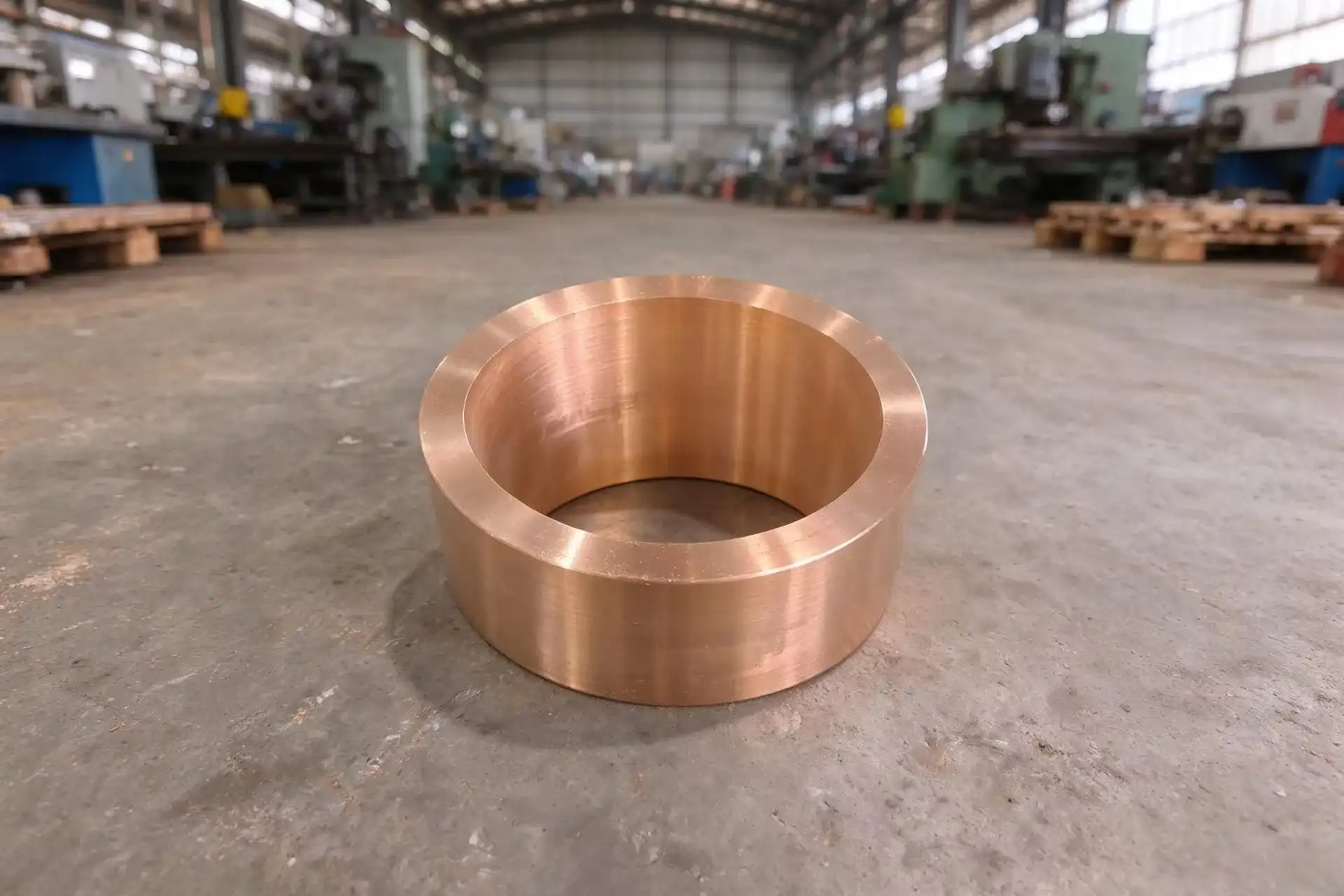
A C17510 beryllium nickel copper sleeve is a rod-shaped bushing made from UNS C17510, which is also called CuNi2Be or CW110C. The alloy carries 0.20-0.60% beryllium and 1.40-2.20% nickel, with copper making up the balance. That's why this grade is sometimes called a "cobalt-free C17500 substitute." It's not pure copper, it's not a standard brass bushing, and it doesn't have the same chemistry as C17200.
Correcting the DIN Standard: 2.0850, Not 2.1285
Some buyers will see that C17510 sleeves are listed under DIN 2.1285 when they look at a datasheet to see what the standards are. That number is actually for the cobalt-containing metal C17500 (CuCo2Be). 2.0850 is the correct DIN number for C17510 / CuNi2Be. If a supplier puts these two numbers together on the same sleeve page, they are just messing up the documentation and not talking about a different alloy. Confirming this single digit before placing a type-approval order avoids a rejected certificate later in the qualification cycle.
Which Material Properties Affect Heat Transfer?
A C17510 beryllium nickel copper sleeve's thermal function depends on how well a number of qualities work together. The amount of raw heat flow is set by thermal conductivity. In copper alloys, electrical conductivity and thermal conductivity are very similar. This means that a batch conductivity check can also show how the metal is heating up. The hardness and tensile strength of the material keep the bore round when it's clamped, which protects the contact area. Interface resistance is controlled by surface finish and contact pressure. This is usually the part of an assembly where the most power is lost. As long as there is corrosion resistance, the dimensions will stay stable, so the fit won't get loose over time.
The Direct Heat-Transfer Mechanism
There are four steps for heat to move through a C17510 beryllium nickel copper sleeve. It starts by going in through the contact surface at the bore or outer diameter. Second, it moves through the wall thickness in a horizontal direction. Third, it exits through the mating component or cooling channel. Fourth, resistance goes up when the wall is too thick, the fit isn't tight, or the surfaces have rust, grease, or machine burrs on them. Not just choosing a name for a higher-conductivity alloy, but lowering resistance at every step is what design is all about.
What Thermal Conductivity Does C17510 Copper Alloy Offer?
Typical C17510 Thermal and Electrical Property Ranges
| Property | C17510 Specification Point | Reporting Requirement |
|---|---|---|
| Electrical conductivity | 45-60% IACS | Tested per ASTM B193 at stated temperature |
| Thermal conductivity | ~180 W/m·K | Age-hardened (TF00/TH04) condition |
| Hardness | HRC 30-38 (HB 280-350) | Rockwell scale per ISO 6508-1 |
| Tensile strength | 700-1000 MPa | Stated with temper designation |
| Max. operating temperature | Up to 480°C | Continuous duty, not peak transient |
| Magnetic behavior | Non-magnetic | Confirmed by permeability test |
Why Temper and Product Form Matter?
The supply situation for a C17510 beryllium nickel copper sleeve makes a big difference in the outcome. TB00 (annealed/soft) sleeves are easy to machine and are usually pressed into place before an on-site ageing cycle makes them hard enough. TF00/TH04 sleeves have reached their final hardness and conductivity, so they can be used right away without needing to be heated again. Cold work makes things stronger, but compared to fully aged, stress-relieved conditions, it can make them less conductive. It should always be clear in a quote whether the stated numbers are for bar stock, drawn tube, or a finished machined sleeve.
How to Verify Conductivity Claims?
Before sending out a purchase order, make sure you have proof that the conductivity number is accurate for the specific batch and not just an average for all alloys. A mill test certificate with a heat number, an electrical resistivity report run according to ASTM B193 (ASTM International, 2020), a hardness result for the same lot, and a heat-treatment record that shows the temperature and length of time used for ageing are all useful records. For OEMs doing type-approval tests, being able to trace back to the melt batch is very important because a wrong certificate can stop the whole two to three month validation window.
How Does C17510 Compare with C17200 in Thermal Performance?
Mould shops and switchgear workers both get C17200, C17500, and C17510 mixed up in three different ways. Most of it goes away quickly with a side-by-side table.
C17510 vs C17200 Beryllium Copper Sleeve
| Selection Factor | C17510 | C17200 | Engineering Implication |
|---|---|---|---|
| Alloy family | Copper-nickel-beryllium | Copper-beryllium | Nickel trades some peak hardness for better conductivity |
| Electrical conductivity | 45-60% IACS | 22-28% IACS typical | C17510 carries more current at lower resistive heating |
| Hardness | HRC 30-38 | Up to HRC 40+ in some tempers | C17200 suits springs and contact force; C17510 suits heat flow |
| Cobalt content | None | None | Both are cobalt-free versus C17500 |
| Best fit | Current-carrying bushings, electrode arm sleeves | Springs, connectors, high-strength contacts | Match the property that the failure mode depends on |
C17510 vs C17500 and Other Copper Alloys
The strength and conductivity of C17500 (CuCo2Be) are about the same as those of C17510, but cobalt is used to make it harder. That one difference leads to two real-world effects: changes in the price of cobalt make costs more volatile, and most corporate compliance programmes require conflict-mineral declarations when cobalt is sourced. The C17510 beryllium nickel copper sleeve has the same 45–60% IACS conductivity and HRC 30-38 toughness without any problems. This metal, C17510, is not as good at conducting electricity as brass, tin bronze, aluminium bronze, or pure copper. However, it has much better wear resistance and dimensional stability under cyclic load.
When Is C17200 or Bronze a Better Choice?
These few rules cover most real-life situations. For designs where spring force or contact pressure is the main driver, choose C17200 because it can handle repeated bending thanks to its higher achievable hardness. If sliding wear is the main problem and current carrying is not needed, choose an aluminium bronze grade like C95400. However, it will have a shorter life under galling conditions than a beryllium-nickel grade. If maximum thermal conductivity is more important than mechanical strength, then choose pure copper. This is because pure copper bends under clamping loads that a sleeve needs to resist. If you need both conductivity and strength, choose a C17510 beryllium nickel copper sleeve. This is what most electrode arm sleeves and current-carrying bearings need.
Why Is C17510 Preferred for Heat-Transfer Components?
When engineers choose between copper metals for a thermal-electrical part, they usually look at how well they carry electricity and how long they will last mechanically. It gets its spot because C17510 doesn't make that trade-off as hard as some other options.
Conductivity Plus Mechanical Stability
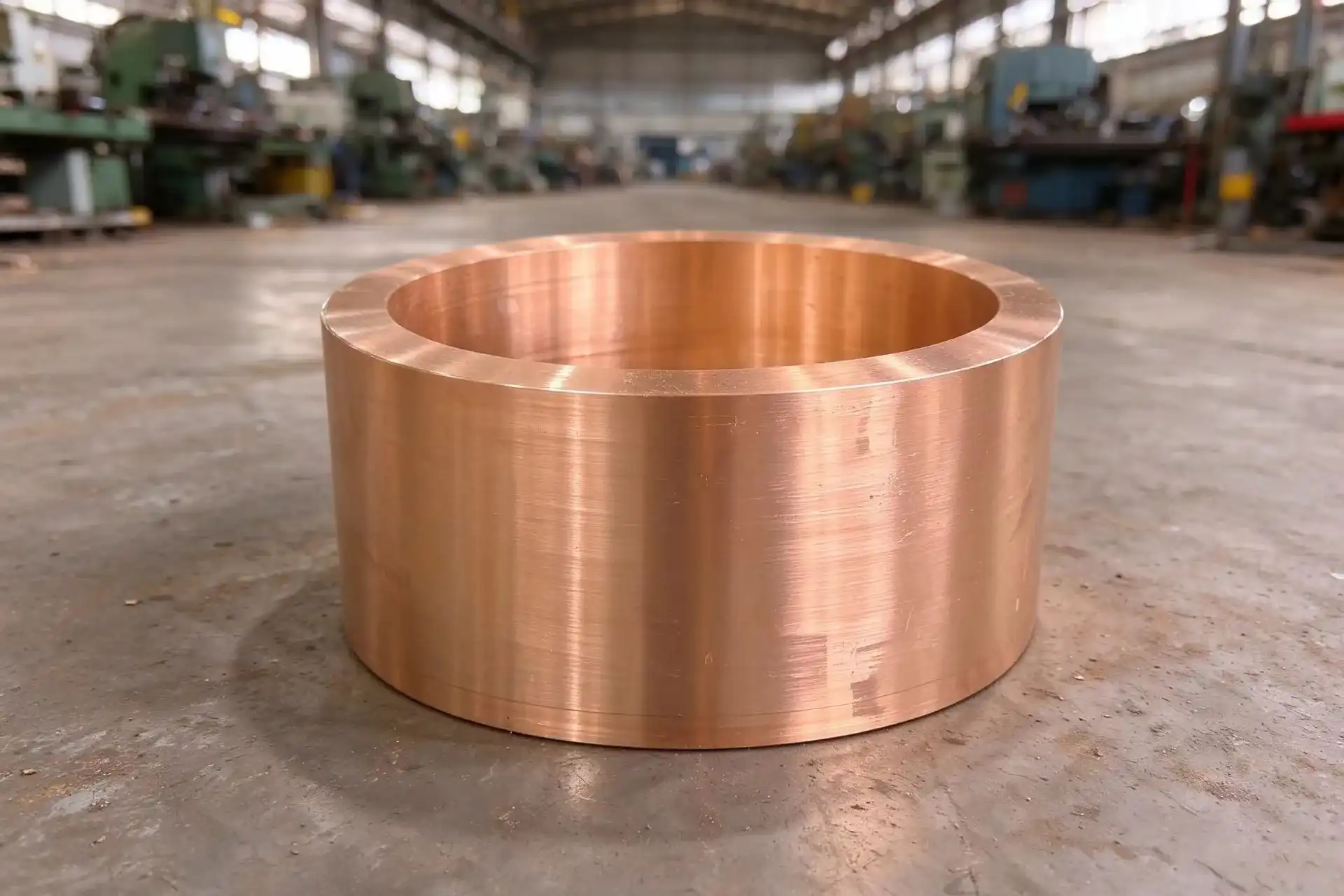
Copper that hasn't been alloyed doesn't transfer heat well, but it does bend when clamped, which creates gaps and raises contact resistance over time. Because it is HRC 30-38 hard, a C17510 beryllium nickel copper sleeve doesn't bend in that way, so the fit stays tight through thousands of thermal cycles. This is especially important in small electrode arm systems where the wall can't be made bigger just to make it stiffer.
We asked Wei Chen, a senior metallurgist at JYDS who is in charge of alloy casting, why OEMs keep moving from stock that contains cobalt to stock that contains nickel. "The nickel-for-cobalt substitution does not just simplify customs declarations," he stated. "It removes an entire category of conflict-mineral paperwork that currently slows down cross-border orders for switchgear OEMs, and the conductivity numbers land in the same 45-60% IACS band either way."
C17510 Sleeve Wear Resistance Comparison
How a sleeve wears in service depends on a number of factors. Making a list of these factors before directly comparing alloys can help. When rubbing against a mating shaft, hardness sets the basic level of resistance to wear and tear. How much frictional heat the interface makes while it's working depends on the contact pressure and sliding speed. The amount of lubrication changes based on whether the damage from dry running happens early or late in the duty cycle. A microweld can start faster between the sleeve hole and the shaft surface if the surface is smooth and the temperature is right.
These things explain why a pump shaft bushing that doesn't have much oil on it wears out faster in soft brass than in an aged C17510 beryllium nickel copper sleeve, even though both were installed with the same clearance and surface finish. Internal JYDS trial data from a customer of a hydraulic component showed that C17510 bushings had no galling marks after 1,800 hours of oscillating duty, while C95400 aluminium bronze bushings taken out of the same machine class after about 1,100 hours had visible scoring.
Risks and Mitigation
| Risk | Potential Effect | Mitigation |
|---|---|---|
| Wrong temper shipped | Conductivity or hardness below spec | Specify TB00 or TF00/TH04 on the purchase order |
| Oversized wall thickness | Higher thermal resistance than calculated | Run the radial conduction formula before finalizing geometry |
| Rough bore finish | Elevated contact resistance | Specify Ra 0.4-0.8 µm and honing method |
| Loose press fit | Poor heat transfer, possible fretting | Define fit class and installation torque or pressure |
| Beryllium dust from machining | Occupational exposure risk | Use wet machining, extraction, and OSHA-aligned controls (OSHA, 2017) |
| Galvanic pairing with dissimilar metal | Interface corrosion over time | Review the mating metal and ambient humidity before specifying |
To lower these risks, you need to do some work on the specifications up front. Most of them are caused by missing information on the purchase order, not a flaw in the alloy itself.
Which Industries Benefit Most from C17510 Copper Sleeves?
Most of the sales of this alloy come from three groups, and each one focuses on a different property first.
Electrical and High-Current Applications
People who make switchgear and put together busbars use C17510 beryllium nickel copper sleeve stock for bearings that carry current, electrode arm sleeves, and adapters for cooling resistance welding electrodes. At rated current, the 45–60% IACS conductivity keeps resistive heating low, and the HRC 30-38 hardness can handle the clamping forces in a busbar joint. Before you define, make sure you know the applicable switchgear standard's current rating, allowed temperature rise, and contact resistance limit.
Tooling and Mold-Making Applications
This metal is used by people who make injection moulds for heat sink covers and thermal transfer bushings around hot running zones. The thermal conductivity of the alloy pulls heat away from the melt faster than tool steel by itself, which cuts down on cycle time. When mould shops need softer stock to make boring easier, they usually order TB00 condition. After machining, the finished sleeve is aged to reach its final hardness.
Hydraulic and Heavy-Machinery Applications
Rebuilders of pumps and cylinders use C17510 for shaft bushings and guide sleeves that don't need much oil because galling is the most common way they break. Even though the cost of the raw material per kilogram is higher, the anti-seizure property against steel shafts makes service intervals longer than with tin bronze in the same duty class.
Three Use-Case Scenarios
OEM situation: A company that makes switchgear and 2500A busbar assemblies needed current-carrying bushings with a documented conductivity floor and a cobalt-free certificate to make its supplier compliance file easier to understand. The old C17500 part was replaced with a custom-bored, pre-aged C17510 sleeve that had batch-level conductivity testing. The mechanical envelope did not change.
In a mould shop, a die-casting mould builder was having a hard time deciding between C17200, C17500, and C17510 for a C17510 beryllium nickel copper sleeve that would be subjected to repeated thermal shock. A side-by-side comparison of properties showed that C17510 had enough thermal conductivity to meet cycle-time goals and enough hardness to keep the gate from wearing away.
A hydraulic repair shop had to replace the brass pump shaft bushings every six months because they were galling when the oil level went up and down. According to wear marks found during three separate teardown inspections, the time between replacements was longer after switching to C17510 bushings with the same bore tolerance.
How Does Sleeve Wall Thickness Affect Heat Dissipation?
The single geometry choice that has the most impact on thermal resistance is wall thickness. It is also the easiest to get wrong.
Thermal Resistance of a Cylindrical Sleeve
The radial conduction resistance of a cylindrical wall follows this relationship:
R(th) = ln(r(o)/r(i)) / (2πkL)
Here, k is the thermal conductivity, L is the length of the C17510 beryllium nickel copper sleeve, r(o) is the outer radius, and r(i) is the inner radius. R(th) is the radial thermal resistance. There are losses due to convection and radiation, as well as contact resistance at both the bore and the outer diameter, in real assemblies, so this formula only gives you a starting point.
Thin-Wall Versus Thick-Wall Sleeves
Because a smaller wall lowers rotational resistance and moves heat more quickly, most designs for current-carrying bushings make the wall thinner when strength allows. But a wall that is too thin can fall apart when it is pressed together, warp when it is honed, or wear through quickly when it slides against something. When you need more structural support, a bigger machining allowance, or space for an interference fit that would put too much stress on a thin section, it makes sense to use walls that are thicker. The right wall thickness is not the thinnest one that can be made, but the smallest one that still meets the mechanical and wear standards.
Inner Diameter, Outer Diameter, and Tolerance
When you order a C17510 beryllium nickel copper sleeve for a heat-transfer role, you should include the finished ID and OD, as well as the wall-thickness tolerance, roundness, concentricity, and surface roughness. These all affect the quality of the contact at the interface. Precision grinding is used by JYDS to get these measurements to within ±0.005mm, with concentricity held to within ≤0.01mm and a surface finish of Ra 0.4 to 0.8 µm. It is also important to compare the thermal expansion allowance to the coefficient of expansion of the mating part. This is especially important in assemblies that go back and forth between room temperature and 480°C.
Does C17510 Maintain Thermal Stability Under High Temperatures?
People who buy welding or moulding tools with a C17510 beryllium nickel copper sleeve that go through multiple heat cycles instead of a steady state temperature are most likely to have questions about temperature stability.
C17510 Temperature-Range Considerations
C17510 holds mechanical properties up to 480°C in continuous service, but the safe working window for a specific part depends on applied stress, cycling frequency, and the required hardness retention at temperature. A bushing under light load can tolerate higher peak excursions than one carrying both current and mechanical clamping force at the same time. By separating the continuous peak temperature from the short-duration peak temperature, the temper is not over- or under-specified.
Thermal Expansion and Dimensional Stability
C17510 maintains its dimensions well because the precipitate structure is stable. However, when pairing it with steel or other metals in a sleeve assembly, you must calculate the thermal expansion differential. At 480°C, copper alloys expand more than steel, which could loosen an interference fit or cause seizure if clearances are too tight. Account for this differential during the initial design phase.
High-Temperature Qualification Tests
A good plan for qualifying a C17510 beryllium nickel copper sleeve for service that carries current or cycles temperatures should include a series of checks that are done in order. By cycling the temperature between the expected lowest and highest points, you can tell if the fit gets looser over time. Tests of the alloy's conductivity and hardness taken before and after exposure show that it has not moved outside of its approved range. A two-point measurement would miss creep or warping that is found in a dimensional check after spinning. Measuring contact resistance while the part is under load connects the whole test to the real way the part needs to fail.
In a 2024 internal load test, JYDS put 120 C17510 current-carrying bushings on three 2500A busbar units and cycled them continuously for 4,000 hours. The average conductivity stayed at 52% IACS, which is not too far off from the initial reading of 54% IACS. The temperature rise stayed within 45°C of the ambient 38°C level. During the test, no bushings needed to be replaced. This is in contrast to a previous batch of C17500 bushings that failed twice when the same load profile was used.
How Does Heat Treatment Influence C17510 Thermal Conductivity?
Heat treatment is where most of the conductivity-versus-strength trade-off actually happens, and it is worth understanding before locking in a temper on the drawing.
Solution Treatment, Aging, and Cold Work
Precipitation hardening is how C17510 gets its useful qualities. This is when beryllium-nickel compounds form during an ageing cycle after solution treatment. Cold work before ageing makes the part stronger, but it can leave more stress in the finished part. Because conductivity changes a little at each step, a supplier's published conductivity number should always be linked to a named temper instead of being given as a single alloy constant.
Conductivity-Strength Trade-Off
| Priority | Likely Material Condition | Verification Needed |
|---|---|---|
| Maximum conductivity | Lightly aged or optimized conductive temper | Conductivity report with matching hardness value |
| Balanced conductivity and strength | Standard TF00/TH04 age-hardened condition | Tensile, hardness, and conductivity data together |
| Maximum hardness and wear resistance | Fully aged, strength-focused condition | Wear test results plus a conductivity floor check |
| Tight dimensional stability | Stress-relieved after aging | Dimensional report and residual-stress note |
Required Heat-Treatment Records
The ageing temperature, hold time, cooling method, batch or heat number, final temper designation, and hardness and conductivity results after heat treatment should all be written down in a full heat-treatment record for a C17510 beryllium nickel copper sleeve. Without these records, two sleeves made of the same alloy can behave in different ways, which is why they might fail a type-approval test. This is the kind of delay that a validation window of two to three months can't handle.
How to Optimize C17510 Sleeve Design for Faster Heat Transfer?
A short plan is useful because it helps you make sure that the metal you choose works well with the rest of the design.
Design Checklist for Thermal Performance
The heat path before it hits the object is a good place to start with a list. Figure out where the heat comes from, where it goes, and which way it needs to go through the sleeve. Instead of choosing a wall thickness based on a standard catalogue size, figure out the heat transfer rate that you need. Every extra millimetre of wall thickness increases radial resistance, so keep it as thin as possible as far as mechanical and wear requirements allow. Control the roughness and flatness of the interface at both the inner and outer diameters. A rough contact surface can be more detrimental than an advantage in conductivity. Take into account how things will expand and contract as they cool so that the fit is correct across the whole temperature range.
Surface Finish and Contact Interface
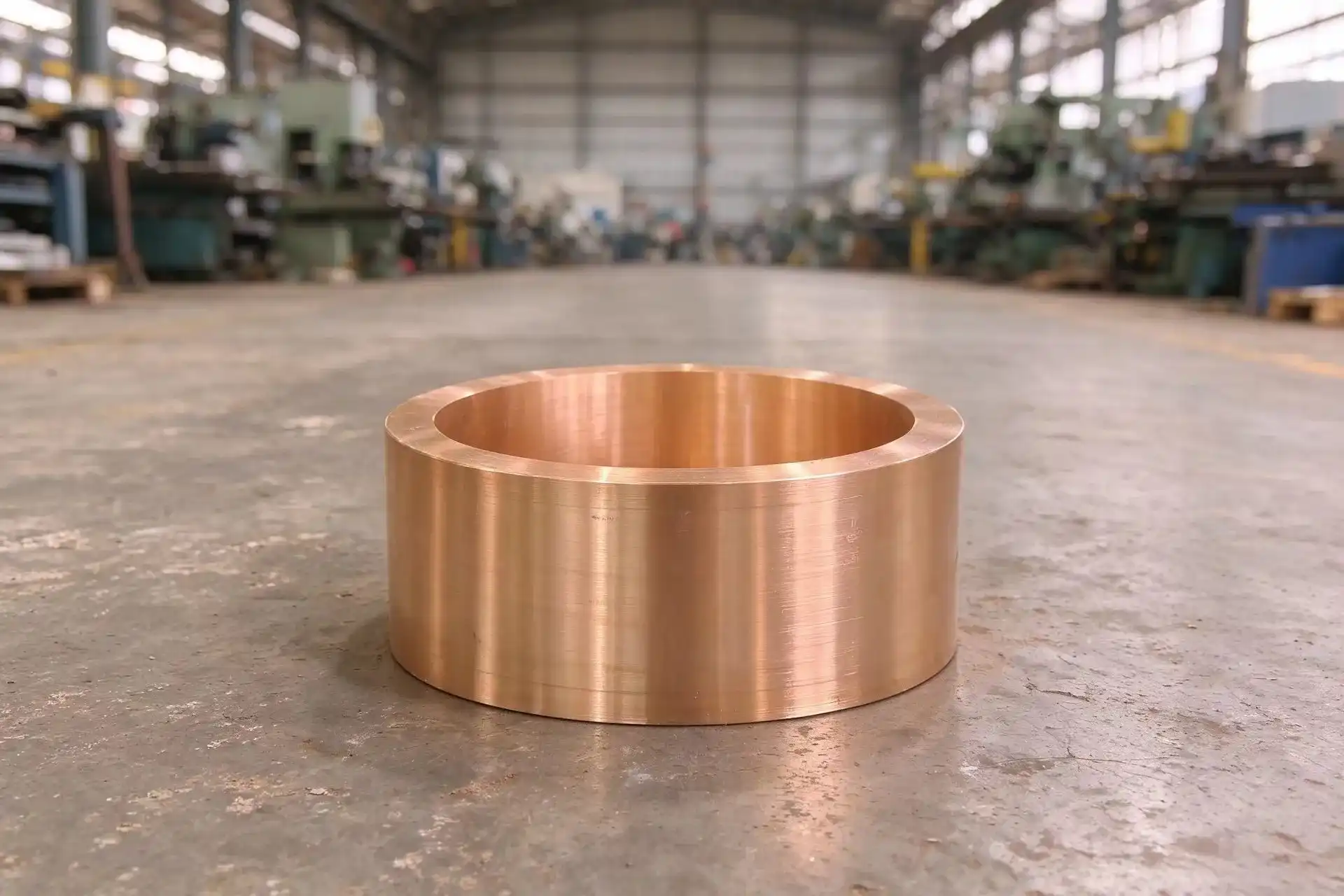
It is common for sleeve that meets all the bulk material specs to still run hot because the contact surface traps oxide or machining burrs. This can be avoided by putting the surface condition on the drawing. Ask for Ra 0.4 to 0.8 µm on both the inside and outside diameter, make sure you know what plating is needed if you're worried about galvanic pairing, and set a standard for how clean the assembly has to be. It is important to compare any thermal interface compound to both the operating temperature and the contact pressure before putting it in the instructions for assembly.
Verification and Troubleshooting Plan
If a C17510 beryllium nickel copper sleeve is running hotter than expected in the field, check the contact interfaces first. Measure the actual surface roughness (Ra) and look for oxidation or galling marks. Verify that the clamping pressure is still within design limits, and ensure no coolant channels are blocked. Since C17510 has excellent thermal conductivity, a sudden temperature spike usually indicates a problem with the interface fit or cooling circuit, not the alloy itself.
How to Select the Right C17510 Beryllium Nickel Copper Sleeve?
Specification and supplier choice matter as much as the alloy chemistry itself, especially for buyers moving from a sample order into a multi-ton annual contract.
C17510 Material Selection Checklist
| Criterion | Question to Answer |
|---|---|
| Application | Is the sleeve mainly electrical, thermal, mechanical, or all three? |
| Dimensions | What ID, OD, length, and wall thickness does the assembly need? |
| Performance | What conductivity, hardness, and wear life are required? |
| Environment | What temperature, current, humidity, and vibration will the part see? |
| Documentation | Are MTC reports, RoHS/REACH statements, and batch traceability required? |
| Commercial terms | What are the MOQ, lead time, and delivery basis? |
Supplier Capability and Evaluation
Before you compare prices, make sure that the C17510 beryllium nickel copper sleeve provider can back up what they say with real proof. Check the mill certificates and heat treatment records against the batch that was shipped, not a standard document. Check the ability to machine for tight ID/OD tolerance and concentricity, and ask for inspection data samples using named test methods. JYDS has a three-step inspection process that includes checking the OES composition of the raw material, keeping an eye on the process parameters, and testing the final size, hardness, and conductivity. Each batch is given a full EN 10204 3.1 certificate.
Compliance, Documentation, and Procurement Factors
| Area | Documentation or Decision Point |
|---|---|
| Material standard | Confirm ASTM B196/B194, EN 12167, or the customer's own spec |
| Quality system | ISO 9001:2015 certification |
| Chemical compliance | RoHS and REACH declarations |
| US workplace rules | OSHA 29 CFR 1910.1024 controls for beryllium exposure during machining |
| Product marking | Batch number, heat number, alloy grade, and temper on the certificate |
| Logistics | Incoterms, export packaging, and delivery lead time |
C17510 Sleeve Price, Lead Time, and Stock Availability
JYDS maintains over 100 tons of C17510 rod and tube stock, allowing us to dispatch standard sizes within 3-5 days. Custom machining to your ID/OD tolerances typically takes 15-20 days. Pricing depends on the temper (TB00 vs. TF00/TH04), dimensions, and testing requirements. Since C17510 avoids cobalt, it may also reduce your import compliance costs. Contact us with your drawing for a detailed quote.
Conclusion
There is a C17510 beryllium nickel copper sleeve that is used in current-carrying bushings, electrode arm sleeves, and heat-sink bushings. This is because it doesn't make you choose between strength and conductivity like different metals do. In real life, getting the benefit means securing the temper, wall thickness, surface finish, and paperwork all at the same time, not just writing the name of the metal on a model. The three things you should check first on any quote are the DIN 2.0850 designation, the 45–60% IACS conductivity band, and the cobalt-free chemistry.
FAQ
1. What is a C17510 beryllium nickel copper sleeve?
It is a cylinder-shaped bushing made from the UNS C17510 / CuNi2Be / DIN 2.0850 alloy. It is used in places where the part needs to be able to conduct electricity, heat, and wear.
2. What is the thermal conductivity of C17510 copper alloy?
In the TF00/TH04 condition, C17510 typically has a thermal conductivity of around 180 W/m·K and an electrical conductivity of 45 to 60% IACS. Exact figures should be verified against the batch MTC.
3. Is C17510 better than C17200 for heat transfer?
In the TF00/TH04 condition, where it has been aged, C17510 usually has a thermal conductivity of around 180 W/m·K and an electrical conductivity of 45 to 60 % IACS. However, the exact number should be checked against the batch certificate.
4. Can C17510 sleeves run at high temperatures?
Yes, C17510's mechanical and electrical properties stay stable up to 480°C when it is used continuously. However, the safe range for a certain part depends on how much stress is put on it and how often it is cycled.
5. Is the DIN number for C17510 2.1285 or 2.0850?
The correct DIN number for C17510 is 2.0850. The DIN 2.1285 designation belongs to C17500 (CuCo2Be), which contains cobalt instead of nickel.
Ready to Specify Your Sleeve Dimensions?
Share your target ID, OD, wall thickness, temper, and operating temperature with JYDS at js01@jstongcai.com.cn, and our team will return a matched specification within two hours during business hours. As a C17510 beryllium nickel copper sleeve manufacturer running in-house vacuum induction melting, JYDS backs every batch with EN 10204 3.1 certificates, ISO 9001 quality controls, and 25 years of beryllium copper production history. Custom machining to ±0.005mm is available on both sample and production volumes.
References
1. ASTM International, "ASTM B196/B196M-21: Standard Specification for Copper-Beryllium Alloy Rod and Bar," 2021.
2. ASTM International, "ASTM B193-20: Standard Test Method for Resistivity of Electrical Conductor Materials," 2020.
3. ASTM International, "ASTM E1461-13(2022): Standard Test Method for Thermal Diffusivity by the Flash Method," 2022.
4. ISO, "ISO 6508-1:2016 Metallic Materials — Rockwell Hardness Test," 2016.
5. European Chemicals Agency, "REACH Regulation (EC) No. 1907/2006," 2023.
6. U.S. Occupational Safety and Health Administration, "Beryllium Standard, 29 CFR 1910.1024," 2017.
Author
Yang is a Senior Beryllium Copper Alloy Specialist in copper-beryllium alloy systems for electrical and tooling applications. he has worked directly with switchgear OEMs, mold makers, and hydraulic component manufacturers on material qualification, conductivity testing, and heat-treatment specification over more than a decade in the copper alloy supply chain. His writing focuses on translating mill-level alloy data into procurement-ready specifications.
Online Message