
Nov 19, 2026
How to Choose C17200 Beryllium Copper Rod for CNC Machining
For CNC machining, the C17200 beryllium copper rod should be selected according to the load, conductivity, and temperature requirements of the item. Then adapt the temper to your machining method: TB00 for severe cutting before aging, TH04 for greatest strength. Make sure there is sufficient material to achieve final tolerance for diameter and length. Need EN 10204 3.1 mill test cert showing heat number, composition, hardness, and conductivity. Shop around for the same temper, standard, and delivery conditions, and place a trial purchase before purchasing in bulk. This guide leads you through every option so you can purchase with fewer surprises.
Confirm Whether a C17200 Beryllium Copper Rod Matches Your Application
What a C17200 Beryllium Copper Rod Offers Beyond Pure Copper
C17200 (UNS C17200), CuBe2, or Alloy 25 is a precipitation-hardening alloy. It comprises 1.80 to 2.00 percent beryllium, at least 0.20 percent cobalt plus nickel, and the balance copper. Pure copper is a good conductor, although it is soft. A C17200 beryllium copper rod in TH04 temper has a tensile strength of 1,280-1,480 MPa after aging. It maintains the electrical conductivity of at least 22% IACS and the thermal conductivity of 105–135 W/(m·K). The density is about 8.25 g/cm³. The alloy is also non-magnetic and does not ignite when struck. I believe these are average statistics and would recommend consumers check the final figures on the certificate for the specific temper and diameter they want.
Match the Alloy to Your Service Conditions
Write down what the machined item will be exposed to before you ask costs. Ask 4 questions. What cyclic stress and load would it be subjected to? Does it have to conduct current or conduct heat? How hot will it run? What will it brush up against? C17200 beryllium copper rod is suitable for parts requiring strength, fatigue life, and wear resistance simultaneously. Temperature is worth considering, as thermal softening occurs after prolonged operation above approx. 350°C. For hot welding or molding duty, a different alloy or water-cooling may be required. The alloy also resists salinity, industrial atmospheres, and stress relaxation, which allows springs and contacts to retain their force over time. A detailed explanation of your application allows your supplier to recommend the right solution, rather than guessing.
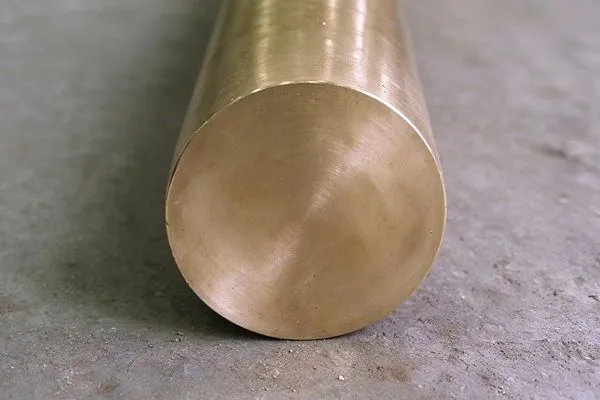
Application-Based Selection for CNC-Machined Parts
Each application has distinct weightings for the attributes. The electrical contacts, connection pins, and relay pieces are designed for conductivity, spring force, and fatigue life. Injection mold inserts, core pins, and hot runner pieces require heat conductivity, hardness, and polish quality. For bushings, bearings, and precision gears, hardness, roundness, and surface polish against mating steel are important. There is a requirement for heat transmission and wear resistance in resistance welding electrode holders and tips. Hammers, wrenches, and chisels for flammable regions are based on non-sparking behavior. Traceability and customer approval requirements are commonly added to oil and gas drilling components and aircraft bushings. When you purchase a C17200 beryllium copper rod, inform your supplier what group your item is in. That tells him exactly what temper and inspection plan you want.
Select the Right Temper for a C17200 Beryllium Copper Rod and Compare Alternatives
Four Tempers and What They Mean for Machining
The temper condition influences tool life, ultimate hardness, and dimensional stability. TB00 (solution annealed, A) is the softest and conforms to complicated shapes before hardening. The TD04 (cold drawn, H) provides moderate hardness from the cold work and excellent dimensional stability. For TF00 (age hardened, AT), heat treatment alone is sufficient to achieve maximal hardness. TH04 (cold worked and aged, HT) has the maximum strength, up to 1,480 MPa tensile, for heavy-duty precision parts. Harder tempers increase cutting pressures and tool wear. Softer rod might burr or deform on narrow walls. All C17200 beryllium copper rod I quote has the temper code, since the same alloy designation might mean completely different material.
Plan the Machining and Aging Sequence
Most businesses cut the part in TB00 and then age it at 315°C (600°F) for 2 to 3 hours. This approach provides minimal distortion of the desired qualities and reduced tool wear. Machining pre-aged TF00 or TH04 rod eliminates the need to do the heat treatment step and its movement but requires more from tooling and cycle time. Plan a final pass or grind after aging for tight tolerance parts. Before manufacturing, you should agree with your supplier on the aging specifications and any stress-relief methods. Ask your machinist to take a sample cut on your equipment to see how the chip behaves and how much the size changes with the same C17200 beryllium copper rod diameter that you want to purchase.
Compare C17200 With C17500 and Other Copper Alloys
C17500 (CuCo2Be) offers higher conductivity but lower hardness than C17200. It is suitable for heat dissipation activities. C17200 is suitable for heavy-duty welding and high-load items. JYDS also offers C17510 (CuNi2Be) for those that desire a different balance. Pure copper is the best choice when only conductivity matters and mechanical loads are light. Brass, bronze, phosphor bronze, and chromium copper may cost less or cut quicker, but compare verified values for the same temper and size before switching. The price per kg is seldom the whole picture. Add machining time, tool wear, scrap, heat treatment, inspection, freight, and service life. A cheaper bar that breaks early may actually be more expensive per completed product than a beryllium copper rod C17200.
Choose Rod Size, Supply Condition, and Documentation
Pick the Starting Diameter, Length, and Tolerance
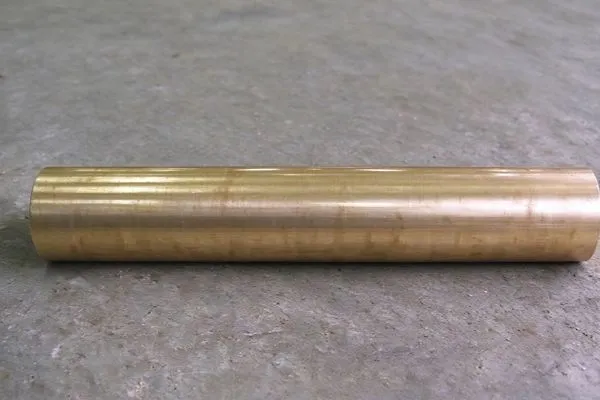
If you start with the proper size, you will save machining time and waste. We provide a variety of C17200 beryllium copper rods with diameters from 2.5 mm to 200 mm and lengths from 1,000 mm to 3,000 mm or cut to your specifications. Select a diameter that will clean up surface blemishes and meet final tolerance without leaving significant extra stock. Specify straightness, roundness, and cut-end condition on the purchase order. A bent or oversized bar will disturb the automated feeding and clamping of a lathe. We meet tolerances to EN 12167 Class B. We inspect diameter and straightness to ASTM B196. Put all the chamfer, bundling, labeling, and packing requirements on one page so nobody has to guess.
Stock Material Versus Made-to-Order Production
Stock reduces lead time for typical sizes; made-to-order covers unique tempers and dimensions. JYDS has 500+ tons of raw material and standard profiles, including 100+ tons of standing C17200 rod stock. Stock products will be sent out within 3-5 days; bespoke orders require 15-20 days. If your customers specify C17200 and don’t want to wait through lengthy import cycles, stocked products enable you to quote and ship immediately. Standard diameters in the four tempers are suitable for stocking programs, and unusual sizes are suitable for made-to-order. We quote CIF, FOB, or DDP by sea, air, or express courier from a base near the Shenzhen and Hong Kong ports, packed with anti-rust, moisture-proof export materials.
Verify Standards, Mill Certificates, and Inspection
Specify the controlling standards on the purchase order: ASTM B196, AMS 4533, AMS 4534, AMS 4651, and EN 12167 if applicable. Our quality system is ISO 9001:2015 certified, and we have documentation to show RoHS and REACH compliance. Each batch is accompanied by an EN 10204 3.1 mill test certificate with composition, hardness, and conductivity data and complete batch traceability. Inspection consists of optical emission spectroscopy for beryllium, nickel, cobalt, and iron, hardness and ASTM E8 tensile tests, eddy current conductivity to verify age, and ultrasonic testing for porosity or inclusions. One key step prevents rejected lots: TH04 rod and bar typically fall within 37–44 HRC (while the 36–42 HRC window applies to TF00). Always ask vendors to provide actual measured values alongside the acceptable specification range.
Handle Safety, Quotes, and Common Mistakes Before You Buy
Beryllium Safety for Warehouses and Machine Shops
Handling solid rod does not, by itself, liberate airborne beryllium. The danger is produced when cutting, milling, turning, or grinding creates dust, fume, or mist. These procedures create obligations for employers under OSHA 1910.1024, including evaluation of the exposure against the permitted exposure level of 0.2 µg/m³ (8-hour average). With each purchase of C17200 beryllium copper rods, get the safety data sheet from your supplier and send it on to your clients. Where material is machined in shops, local exhaust ventilation with HEPA filtering should be used, chips and dust controlled, proper protection worn, and waste disposed of according to local standards. Confirm requirements with your environmental health and safety (EHS) officer since state and facility standards may vary.
Write an RFQ and Compare Quotes Line by Line
The transparent RFQ allows vendors to bid on equal material. Include the following:C17200, Round Rod, diameter, length, temper, regulating standard, quantity, yearly demand, tolerances, surface demands, certificate type, destination, and deadline. Make sure all the quotations come in with the same temper. Then check if cutting, heat treating, testing, packing, freight, duties, and insurance are included. Compare MOQ, stock status, lead time, payment methods, and partial shipping. A low price per kilo doesn’t mean anything if the lot has to be reworked. Before placing an order for large quantities of C17200 beryllium copper rod, get samples or a trial order, pre-shipment inspection, and documented acceptance limits for composition, hardness, and diameter for a first order from any vendor.
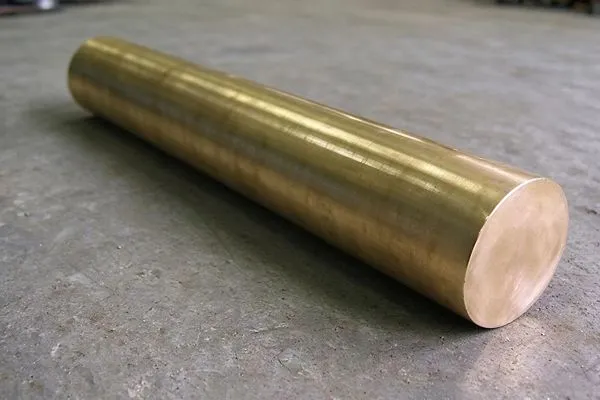
Common Mistakes and a Simple Decision Order
The same mistakes are repeated: ordering without specifying the service environment, comparing hardness of various tempers, selecting the lowest price per kilogram, disregarding size change during aging, and accepting generic certifications. A predetermined sequence of choices prevents them. Define strength, hardness, conductivity, temperature, wear, tolerance, and volume. Then compare C17200 to C17500, pure copper, and other choices, and choose the temper that matches your machining and aging sequence. Write the buy specification. Check vendors on paperwork, MOQ, lead time, and export expertise. Validate with a trial order. After the shipment of a C17200 beryllium copper rod, our experts will offer free guidance on material selection, heat treatment, and machining troubleshooting. We will replace or re-machine any items with confirmed quality or dimensional discrepancies.
Conclusion
Selecting a C17200 beryllium copper rod for CNC machining is a matter of matching alloy, temper, size, and documentation to the product. C17200 provides excellent strength, fatigue life, wear resistance, and usable conductivity that pure copper cannot equal. C17500 and other alloys are used when conductivity or cost is a driving consideration. The four tempers, TB00, TD04, TF00, and TH04 control machinability and ultimate hardness, and aging at 315°C for 2 to 3 hrs controls dimensional movement. Defined diameter, length, and tolerance limitations, a named standard, and an EN 10204 3.1 certificate that distinguishes standard and measured hardness values ensure lot consistency. Selection method includes safe handling of beryllium, line-by-line quotation comparison, and a trial order.
FAQ
1. Can I machine a C17200 beryllium copper rod on standard CNC equipment?
Yes. Rough cut in TB00, then age at 315°C (600°F) for 2–3 hours. Harder tempers raise cutting forces and tool wear, so match the temper to your sequence. Use dust extraction, because cutting and grinding release beryllium particles.
2. How does C17200 differ from C17500?
C17200 offers higher hardness and strength for heavy-duty welding. C17500 offers higher conductivity for heat dissipation. Compare certified values for the same temper.
3. Which documents come with each batch?
An EN 10204 3.1 mill test certificate with composition, hardness, and conductivity data, plus RoHS and REACH compliance documents. Ask for the safety data sheet at quotation.
4. What should an RFQ include?
Grade, diameter, length, temper, standard, quantity, annual demand, tolerances, certificate type, destination, and delivery date. Drawings help.
5. Why does the rod soften in service?
Long service above about 350°C causes thermal softening. Water cooling in the holder prevents it.
Request a C17200 Beryllium Copper Rod Quote From JYDS
Send your drawings, diameter, length, temper, quantity, and destination to JYDS at js01@jstongcai.com.cn, and we will reply within 2 hours. As a C17200 beryllium copper rod supplier with 25+ years of experience, 500+ tons in stock, 3–5-day dispatch on stock items, and EN 10204 3.1 certificates with every batch, we can quote your next order quickly.
References
1. ASM Handbook, Volume 2: Properties and Selection: Nonferrous Alloys and Special-Purpose Materials, 1990
2. ASM Specialty Handbook: Copper and Copper Alloys, 2001
3. ASTM B196/B196M, Standard Specification for Copper-Beryllium Alloy Rod and Bar, 2018
4. Occupational Exposure to Beryllium and Beryllium Compounds in General Industry, Final Rule, Federal Register, 2017
5. EN 10204, Metallic Products: Types of Inspection Documents, 2004
6. Handbook of Materials Selection, 2002
Online Message