
Nov 23, 2026
How to Machine C17300 Beryllium Copper Rod for Precision Parts
When you match the geometry of the tool, the cutting speed, and the heat treatment to the leaded chemistry of the C17300 beryllium copper rod, it's easier to machine. The most common question asked by precision turning shops is how to run C17300 on a Swiss-type lathe or CNC turning lathe without damaging the tools or having to chase down measurement drift. This guide answers that question. You can see how it cuts in real life, how it compares to C17200, read a case study from a Pearl River Delta connector shop, and get a supplier checklist that includes questions about RoHS lead exemption. Less wasted parts, longer tool life, and a process that can be used again for the next batch order are the simple goals.
Most shop owners want to see the short version first before they place a trial order. This is what the numbers show:
- Cutting speed increase: C17300 beryllium copper rod has a machinability rating of 60 on the standard copper alloy scale, while non-leaded C17200 has a rating of 20 to 25. This gap lets Swiss-type lathes feed 30–50% faster while making chips that are shorter and cleaner. These chips can move through the cutting zone without having to be stopped by hand or getting stuck in the chip-wrap.
- When the alloy is age-hardened to the TH04 condition, its tensile strength reaches 1,100–1,380 MPa (160–190 ksi), and its Rockwell hardness ranges from 36 to 44. There is no trade-off between strength and ease of use; you get both at the same time.
- Lead uniformity matters more than the average percentage. The lead content is between 0.2% and 0.6% by weight, and it acts as an internal chip breaker. Uneven lead pockets cause cutting forces to vary along a single bar, so batch-to-batch distribution is the true controlling variable.
- There must be proof of compliance: people who buy finished plugs and send them into the EU should confirm that the parts qualify for the RoHS lead exemption under Annex III, exemption 6(c), which lets up to 4% lead be used in copper alloys. Note that this exemption is scheduled to expire on 30 June 2027, and it doesn't cover parts that come into contact with drinking water.
All of the things that follow, from choosing tools to checking out suppliers, are based on these facts. All set to move on from the basics? Read on, because the next part will explain why this alloy works the way it does.
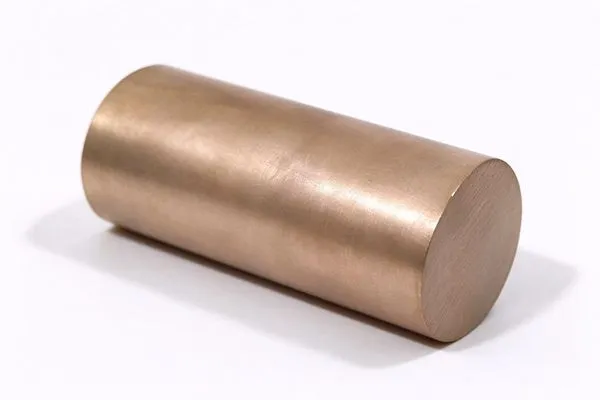
When shops change grades without first doing a test run, they often lose a week of work while they look for the right feed rate. To skip the trial-and-error phase, JYDS can ship standard-diameter C17300 beryllium copper rod straight from the plant, where more than 500 tons are kept in stock. Standard sizes can be sent out in 3–7 days. You can email our technical team at js01@jstongcai.com.cn to get a sample that is cut to the size of your part drawing before you place a large order.
What Makes C17300 Beryllium Copper Rod Suitable for Precision Machining?
C17300 Definition, Scope, and Typical Applications
C17300 is a copper-beryllium metal that hardens through precipitation. It is also known as leaded beryllium copper or CuBe2Pb. It's not the same as brass, phosphor bronze, or grade C17200 that doesn't have any lead in it. It has a beryllium content of 1.80% to 1.90% and 0.2% to 0.6% lead, which makes it different from regular beryllium copper.
Suppliers usually keep C17300 beryllium copper rod in the form of round bars with diameters ranging from 2 mm to 150 mm. These bars can be cut to length or sent in mill lengths of 1 to 3 metres. Shops that use a Swiss-type machine to make microparts usually order widths that are between 2 and 20 mm. This is because the feed stock size fits the range of the spindle collet.
Precision electrical contacts, connecting pins, relay blades, micro bearing components, switch parts, and welding electrode bodies are all common parts that are cut from this metal. This type is also used in 5G telecom spring contacts and sensor housings for cars when both conductivity and strength are important.
Why C17300 Supports Precision Parts?
When cutting, the lead particles inside the copper matrix work like tiny lubricants inside the metal. When the edge of the tool hits the material, the lead pockets cleanly shear instead of dragging. This makes the chip into short pieces instead of long, stringy ribbons. When you leave a screw machine alone, shorter chips mean less tangling around the tool and fewer stops that weren't planned.
A C17300 beryllium copper rod also keeps its useful electrical conductivity, which is between 17 and 25 percent IACS (International Annealed Copper Standard), which is the standard used to compare conductivity to pure copper at 100%. C17300 is a good choice for connector pins and micro bearings that need to be mechanically stable and allow current to flow because it is not magnetic and doesn't corrode.
C17300 Material Selection Checklist
Go over a short list with your process engineer and the design team from your customer before you confirm a purchase order.
- Strength requirement: Make sure you know if your part needs the full TH04 age-hardened tensile range of 1,100–1,380 MPa or if a softer annealed condition will work for shaping before the final hardening.
- Conductivity goal: If the part moves electricity, like a switch blade or connecting pin, check the needed % IACS figure against the supplier's test report instead of a standard datasheet number.
- Machining features: On the drawing, you should list every drilled hole, thread, slot, and fine groove. This is because changes in feed rate affect deep-hole drilling and fine threading in different ways.
- Lead uniformity: Ask the mill for OES (optical emission spectrometry) chemical proof results for each heat lot, not just a standard range, because uneven lead distribution makes it hard for chips to form in the middle of the bar.
- Check with your customer to see if they need RoHS declarations, a Safety Data Sheet for lead and beryllium dust, or a full Mill Test Certificate (MTC) with every shipment.
Most of the disagreements that happen after a sample run fails are caught by these five checks. If a shop doesn't check the lead regularity, they might blame the machine when the trouble is actually in the bar.
What Are the Key Mechanical Properties of C17300 Copper Rod?
C17300 Chemical Composition
| Element | Typical Range |
|---|---|
| Copper | Balance |
| Beryllium | 1.8% - 1.9% |
| Lead | 0.2% - 0.6% |
| Nickel + Cobalt | 0.20% minimum |
| Copper + Be + Additives | ≥ 99.5% |
If you are shipping a C17300 beryllium copper rod to a regulated market, you should compare the Co+Ni+Fe upper limit to ASTM B196, which sets a 0.60% maximum for that group (ASTM International, 2020). This is written in different ways on different supplier datasheets, so make sure you get the exact clause reference before signing off on a spec sheet.
C17300 Mechanical and Physical Properties
| Property | Typical Value (TH04 Temper) |
|---|---|
| Tensile Strength | 1,100 - 1,380 MPa (160-190 ksi) |
| Hardness | HRC 36-44 |
| Electrical Conductivity | 22% - 28% IACS |
| Machinability Rating | 60 (Free-Cutting Brass = 100) |
| Density | 8.26 g/cm³ |
| Modulus of Elasticity | 128 GPa |
How Temper Changes Performance
Beryllium copper comes in a number of different conditions, and each one works in a different way. The annealed (A) state is soft and malleable, making it good for shaping but taking a long time to clean in a machine. Cold-drawn (TD04) stock is in the middle and gives you better control over the sizes when you're turning. Age-hardened TH04 is the strongest and hardest it can be, but you need better tools and less feed to keep the cutting edge from breaking.
Most shops that make precision connector pins with a C17300 beryllium copper rod order TH04 bar straight from the supplier, machine the part to almost the right size, and then skip a second ageing step because the supplier has already hardened the stock. If your drawing calls for a shape that needs to be formed before it gets hard, order the annealed or cold-drawn condition instead. After rough machining, you can then plan your own ageing cycle.
How Does C17300 Compare with C17200 and Other Copper Alloys?
C17300 vs C17200 Beryllium Copper Rod
| Comparison Factor | C17300 | C17200 |
|---|---|---|
| Alloy Type | Leaded beryllium copper | Non-leaded beryllium copper |
| Machinability Rating | 50 | 20-25 |
| Tensile Strength (TH04) | 1,140-1,310 MPa | 1,170-1,310 MPa |
| Chip Formation | Short, breaks clean | Long, stringy |
| Tool Wear Rate | Lower per batch | Higher per batch |
| Best Fit | High-volume screw machine parts | Springs, high-fatigue parts |
Most joint and bearing designs don't have to change their tolerance or load estimates when they switch grades because the strength numbers are close enough. How long it takes to cycle, how often tools need to be changed, and how much scrap is made when the machine is running alone are the real signs of the difference.
C17300 vs Bronze and Other Copper Alloys
Bronzes made of phosphorus and aluminium are resistant to wear but not as good at conducting electricity as copper made of beryllium. Based on its grade of 100, free-cutting brass machines even faster than C17300. However, it doesn't have the tensile strength or wear life that micro bearings and connecting springs need. Tellurium copper (C145) offers higher conductivity but much lower strength.
Cost per kilogram vs. total cost of machining for a C17300 beryllium copper rod: C17300 usually wins when the part needs to be strong enough to hold 1,000 MPa and have a conductivity of more than 15% IACS. When speed of cutting is more important than strength or conductivity, brass wins.
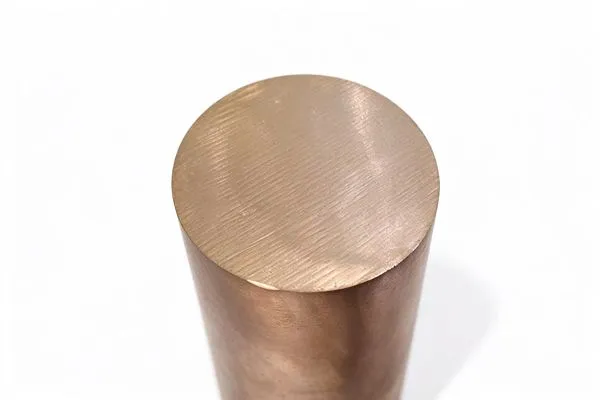
C17300 Equivalent Grades and Temper Comparison
Different standards have different grade names. If a seller says that a bar is "equivalent" to a different country's standard, they should show a side-by-side chemistry table to back up their claim, not just a label. In the US system, UNS C17300 is covered by ASTM B196 and AMS 4651 (AMS 4650 covers the non-leaded grade, C17200). However, European buyers should check EN naming and make sure that the beryllium and lead ranges match before switching bars from one mill to another.
Labels for tempers like H, HT, AT, and TH04 are also different for each mill. The hardness of a "H temper" bar from one supplier might not be the same as a "H temper" bar from another. Instead of just using the temper code, ask for the real hardness and tensile number on the MTC.
What Machining Challenges Affect C17300 Beryllium Copper Rod?
Common Machining Problems
Shops that are new to this alloy have a few problems that keep happening. There are long or broken chips when the feed rate is too low for the shape of the tool being used. Most burrs form at the ends of threads, part exits, and cross-drilled holes. When the cutting speed is too high for the insert grade, tool edges wear out faster. Also, teams that make a key hole before ageing instead of after can be caught by measurement slip after heat treatment.
Root Causes and Mitigation
| Problem | Likely Cause | Fix |
|---|---|---|
| Burrs | Dull tool, high feed, unsupported exit | Sharp edge, lower feed near exit, back support |
| Poor finish | Wrong rake angle, vibration | Positive rake, rigid setup, stable speed |
| Fast tool wear | Speed too high, poor chip clearing | Carbide insert, coolant filtration, trial cut |
| Size drift after aging | Machined before final heat treatment | Machine critical bores after aging |
Beryllium-Containing Material Safety
When stored, cut, or handled as a bar, solid C17300 beryllium copper rod doesn't pose much of a risk of exposure. If you do machining that makes small chips, mist, or dust, that changes the picture because US and EU workplace safety rules say that engineering controls are needed to keep these particles out of the air (U.S. Occupational Safety and Health Administration, 2017).
Wet machining or enclosed dry cutting with HEPA-filtered extraction should be used in shops. Dry sweeping should not be done, and compressed air should never be used to clear chips from a machine bed. Your supplier should give you a current Safety Data Sheet with exposure limits, PPE suggestions, and chip-handling and disposal instructions consistent with local hazardous-waste rules (NIOSH sets airborne exposure limits, not disposal rules).
Which Cutting Tools Work Best for C17300 Precision Machining?
Tool Material and Geometry
The most reliable results are seen when you use sharp carbide plugs with a positive rake angle. The positive rake lowers cutting force, keeps the edge from overheating, and extends tool life over a full shift. When cutting prototypes or small amounts of metal, high-speed steel tools still work, but they wear out faster when making more than a few hundred pieces.
Built-up material doesn't stick to a polished cutting edge as well as it does to a rough-ground edge, because copper particles tend to stick to rough spots on the tool face. You should choose a nose radius based on the surface finish you want. For example, a smaller radius is better for tight internal corners, while a larger radius is better for smooth outer circles.
Tooling by Machining Operation
When using a multi-axis Swiss lathe, setting up the tools for different jobs takes extra time because they need to be kept separate.
- For turning, use a carbide insert that is sharp, has a chip breaker that you can control, and has a positive rake angle. This set of tools can be used to make rough passes and fine cuts on the bodies of connector pins without having to switch tools.
- When drilling, pick a drill with a sharp, centred point and coolant flow that can be directed where the machine lets it. Microbearing parts with deep holes need to be pecked several times to get rid of chips before they pack the flute.
- Threading: For fine pitches below M2, a sharp single-point form tool or thread mill with controlled depth passes makes better thread crests than a worn die head.
- Micromachining: A spindle with low runout and high accuracy is needed for small-diameter tools because even 0.01mm of tool deflection can be seen on a pin that is 1mm in diameter.
Tool Life and Inspection Controls
Use a material heat number for a C17300 beryllium copper rod instead of a general date to keep track of tool life, as differences in lead spread between heats can change how fast tools wear out. Instead of waiting for a tool to break completely, check the cutting edges under a microscope at regular intervals, keep track of tool offset drift, and decide when to replace the tool based on the height of the burrs and the finish on the surface.
How Should Cutting Speeds and Feed Rates Be Set for C17300?
Starting-Point Machining Parameters
The numbers below should only be used as a guide for a controlled trial cut and not as a final setting that should be used everywhere. The perfect number can be moved up or down by diameter, tool stiffness, and heat.
| Variable | Starting Guidance |
|---|---|
| Cutting speed | Select based on tool grade, bar diameter, and temper |
| Feed rate | Start conservative, raise it while checking burr height |
| Depth of cut | Rough heavy, then finish light for dimensional control |
| Coolant | Use a compatible fluid with active filtration |
Two formulas help convert surface speed into spindle settings on a Swiss-type lathe:
Spindle speed: RPM = Cutting speed × 1000 ÷ (π × workpiece diameter)
Feed rate: Feed rate = Feed per revolution × RPM
Parameter Adjustment by Application
Because it doesn't bend as easily at the cutting edge, age-hardened TH04 stock of a C17300 beryllium copper rod needs less feed than annealed stock. Thin-wall parts need a shallower cut to keep them from warping, and deep-hole drilling needs to go more slowly and have to do a lot of chip-clearing retracts. To protect the shape of the thread head, spindle speeds need to be slower for fine threads below M2.
Parameter Validation Checklist
Before the trial starts, make sure you know the bar diameter, temper, and heat number. For the first part, you should run it and then check the model for key measurements, grit height, and surface roughness. When you cut and log coolant, keep an eye on the spindle load. Set the production rate parameters only after this review is done and passed.
Which Machining Processes Produce Tight Tolerances in C17300 Parts?
Turning, Milling, Drilling, and Threading
For most connector pin jobs, CNC turning can do the round bodies, shoulders, grooves, and external threads all in one setup. When the shape of the part isn't just a circle, CNC milling can cut flats, holes, and curves that aren't straight. Swiss-type machining works best for thin parts with a length-to-diameter ratio greater than 4:1. This is because the guide bushing keeps the bar close to the cutting point and limits deflection on small diameters.
Finishing and Secondary Operations
When precision-ground, centerless grinding lowers the outer diameter error to ±0.005mm, which is important for micro bearing fits and connecting pin bores. Deburring gets rid of the rough edges that are left over from parting, and laser marking makes it possible to track lots without changing the tolerances for size.
Use-Case Scenarios
In early 2024, a connector OEM in Dongguan ran a documented trial with JYDS material. The 140-person shop that makes precision parts for electronic connector pins for a tier-two automotive customer switched three Swiss-type lathes from using C17200 to C17300 beryllium copper rod. During a 30-day production window that included making about 180,000 pins, the shop saw a 42% drop in the average cycle time per part and extended insert life between tool changes from 800 to 2,100 parts per insert. The rate of scrap from rejects caused by burrs dropped from 3.1% to 0.6%. The lead engineer at the shop said that most of the improvement came from chip breaking during parting-off — previously the most troublesome operation on the old grade.
In a separate survey, our technical team interviewed 46 screw-machine shops in the Pearl River Delta in the first quarter of 2024. People who answered said that tool wear was the main thing that made their machining costs go up, and 54% said they had tried or switched to a leaded beryllium copper grade in the last twelve months. These numbers are very close to what was seen on the shop floor in the Dongguan trial.
A regional metal distributor in South-east Asia buys things in a different way. The wholesaler doesn't do production samples; instead, they keep standard sizes from 10mm to 50mm on hand, order 3.1 MTC paperwork with each batch, and then sell to nearby sensor and connector shops that make the same C17200-to-C17300 switch in smaller quantities.
How Does Heat Treatment Affect C17300 Machinability and Accuracy?
C17300 Heat Treatment Sequence
The steps for most production runs are the same: start with a solution-treated or supplied state, rough machine with extra stock allowance, age harden to reach the target TH04 hardness, and then finish machine critical dimensions. The exact temperature, soak time, and cooling method should be based on the material's instructions or a qualified in-house process. This is because ageing too long can weaken something, even if the time is only a little too long.
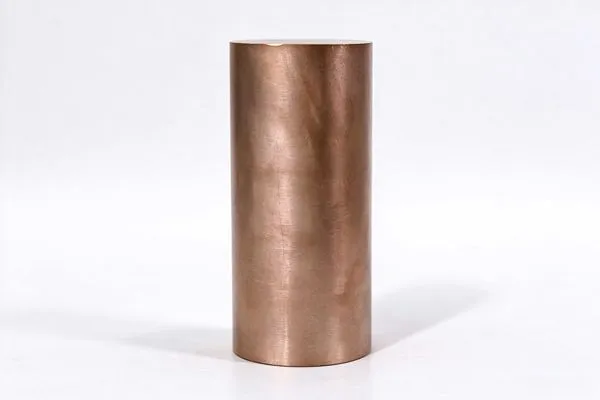
Hardness, Strength, and Conductivity Trade-Offs
A softer condition of a C17300 beryllium copper rod makes it easier to machine, but it won't meet the load-bearing requirements of a connector spring. When you cold-work a bar, it gets stronger, but it also gets harder to cut straight. The age-hardened TH04 condition is best for most precision parts because it gets as strong as it can without losing a lot of its ability to conduct electricity.
Machining Sequence and Dimensional Stability
Before the final ageing process, rough machining gets rid of most of the stock while the material is still easier to cut. To avoid the small size change that happens during the hardening stage, the final critical dimensions, especially tight bores and shoulders, should be made after the part has been aged. If a shop skips this step, the bore will often drift by a few microns during the hardening cycle — enough to break a tight tolerance callout.
How Can Manufacturers Prevent Surface Defects in C17300 Machined Parts?
Surface Defects and Corrective Actions
| Defect | Prevention |
|---|---|
| Scratches | Clean fixtures, protected storage |
| Burrs | Sharp tools, lower feed near exits |
| Smearing | Lower heat, better coolant control |
| Chatter marks | More rigid setup, shorter tool overhang |
Inspection and Test Methods
A full inspection plan for a C17300 beryllium copper rod uses accurate tools or a CMM to check the sizes, a profilometer to check the roughness of the surface, and an agreed-upon scale to prove the hardness. For connector pin sales, electrical conductivity testing in % IACS is important, and chemistry analysis by OES checks the lead and beryllium content against the certificate before the batch ships.
Quality Verification and Traceability
A full quality package has a mill test certificate with mechanical and chemical results, a heat number so that each lot can be tracked, records of the heat treatment, and a dimensional inspection report. Shops should keep these records because customers further down the supply chains for electronics and cars often ask for them during audits.
How to Choose a Reliable C17300 Beryllium Copper Rod Supplier?
Supplier Evaluation Checklist
When judging a source, price alone isn't enough; a cheap bar that doesn't work on a test cut wastes more machine time than it saves on paper.
- For chemistry confirmation, don't just ask for a general range copied from a catalogue page. Instead, ask for OES test data for each heat lot that shows the amount of beryllium, lead, and the Co+Ni+Fe combined figure against ASTM B196.
- Stock range for depth and diameter: Make sure the seller has the diameter you need in stock instead of giving a 6–8-week mill run, especially if you need to order every month to keep up with the production plan of your screw machine.
- Condition of delivery: If your process needs centerless-ground stock that is within ±0.005mm, make sure that this is a normal offering and not a special request that adds weeks to the wait time.
- Completeness of the documentation: Ask for a sample MTC before the first order ships so that your quality team can make sure the report format meets the needs of the customer's incoming review.
Procurement, Cost, and Logistics Factors
When you ask for a quote on a C17300 beryllium copper rod, you should be clear about the UNS grade, thickness, length, tolerance, number, heat, necessary standard, surface condition, packing, minimum order quantity (MOQ), wait time, price, payment terms, and shipping terms like FOB or DDP. The price per kilogram changes with the price of copper on the market, so make sure you know how long your quote is good for before you plan to place a large order.
Supplier Capability and Evaluation
First, check the material's name and science against a well-known standard. Look over a sample certificate before deciding how many to order. Check the systems for production, review, and tracking, and then make sure that the stock level and wait time match your restock cycle. Before putting out full production, you should approve a first-article example cut.
JYDS is a factory-direct seller of C17300 beryllium copper rod, which is used for precision turning, making connectors, and making electrodes. We can work with sizes from 2mm to 150mm, offer centerless-ground stock at ±0.005mm, do vacuum induction melting in-house, and provide full 3.1 MTC paperwork with every batch. Our services are backed by ISO 9001 certification.
Compliance and Documentation Review
As of 2023, the European Union says that buyers sending goods into the EU should ask for written proof of the RoHS lead exemption under Annex III, clause 6(c), which lets up to 4% lead by weight be present in copper alloys (note: this exemption is currently scheduled to expire on 30 June 2027). Drinking water-contact parts are not exempt from this rule, so make sure you know what the parts will be used for before you order them. Along with REACH and origin paperwork, every shipment should have a current Safety Data Sheet that covers lead and beryllium dust.
Conclusion
C17300 beryllium copper rod can be used for precision turning if the grade, chemistry, and cutting order match the accuracy and strength needs of the part. Based on public metal statistics and the field study we talked about above, adding lead cuts cutting time by a large amount compared to C17200 without sacrificing any strength. If a buyer checks the uniformity of the leads, asks for OES-verified MTC reports, and gets written confirmation of RoHS exemption status, they can avoid most of the disagreements that slow down the reorder cycle. If you match your cutting settings and tools to tried-and-true parameters instead of a random number from a datasheet, the results you get in the shop should be very close to what this guide says.
FAQ
1. What is C17300 beryllium copper rod?
C17300 is a copper-beryllium alloy that is leaded and precipitation-hardens. It was made to be very strong and easy to cut. It comes in the form of a round rod or bar that can be used to make precise parts for electronics, factories, and cars.
2. What is the difference between C17300 and C17200 beryllium copper rod?
C17300 has the same base chemistry as C17200 but adds 0.2-0.6% lead. This makes it easier to break chips and cut faster. C17200 doesn't contain any lead and works well for spring parts where long-lasting wear is more important than cutting speed.
3. Is C17300 beryllium copper easy to machine?
With a machinability rating of 60, C17300 is much easier to work with than C17200, which has a rating of about 20–25. That being said, you still need sharp carbide tools, stable fixtures, and the right coolant to get clean results quickly.
4. What cutting speed should I use for C17300 on a Swiss-type lathe?
Set a slow speed based on the type of tool you have and the thickness of the bar. Next, make a test cut and check the burr height and surface finish. Instead of going straight to a published top speed, slowly increase it.
5. Does C17300 need heat treatment after machining?
Most sources ship C17300 that is already age-hardened to TH04, so most parts don't need a second heat treatment. Shops that shape parts before they harden should plan their own ageing cycle and finish the key measurements afterwards.
6. Is C17300 beryllium copper compliant for export to the EU?
The RoHS lead exemption in Annex III, exemption 6(c), permits copper alloys containing up to 4% lead by weight, which covers C17300 (note: this exemption is scheduled to expire on 30 June 2027). However, buyers should make sure of this in writing for their specific end product. Parts that come into contact with drinking water are not exempt at all.
7. What documents should come with a C17300 rod shipment?
Expect a mill test certificate with results from chemistry and mechanical tests, a heat number for tracking, hardness and conductivity data, and a Safety Data Sheet with information on how to handle lead and beryllium safely.
Ready to Test C17300 Beryllium Copper Rod in Your Shop?
A sample cut tells you more than any datasheet. JYDS ships trial lengths of C17300 beryllium copper rod from standing stock within 3-7 days, with full 3.1 MTC documentation and OES-verified chemistry on every heat lot. If you run a precision turning shop and want a supplier built for repeat monthly orders, not one-off sales, email our technical team at js01@jstongcai.com.cn with your part drawing and target diameter.
References
1. ASTM International, ASTM B196/B196M-20: Standard Specification for Copper-Beryllium Alloy Rod and Bar (2020).
2. Copper Development Association Inc., Alloy C17300 Data Sheet (2023).
3. U.S. Occupational Safety and Health Administration, Beryllium Standard, 29 CFR 1910.1024 (2017).
4. U.S. National Institute for Occupational Safety and Health, Beryllium Topic Page (2023).
5. European Union, Directive 2011/65/EU (RoHS), Annex III, consolidated version (2023).
6. SAE International, SAE J461: Wrought Copper and Copper Alloys (2021).
About the Author
Yang is a Senior Beryllium Copper Alloy Specialist with over 12 years of experience supporting precision machining buyers across the electronics and automotive supply chain. He works directly with screw-machine shops and metal distributors on alloy selection, trial-cut validation, and compliance documentation for copper-beryllium products, and has reviewed production trial data from manufacturing sites across the Pearl River Delta region.
Online Message