
Nov 12, 2026
What Is Cube2 Bushing Used for in Industrial Equipment?
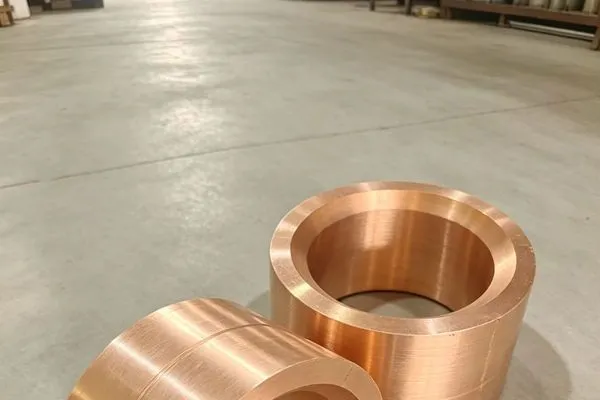
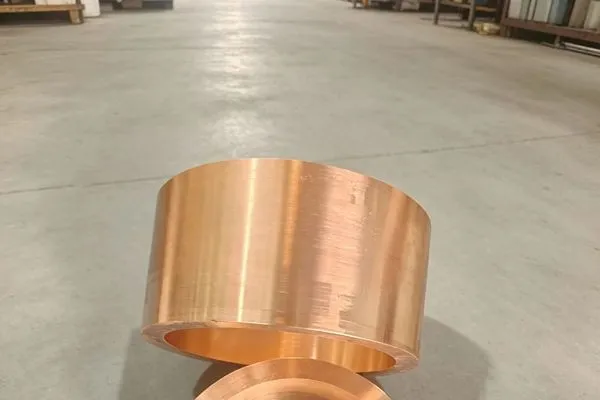
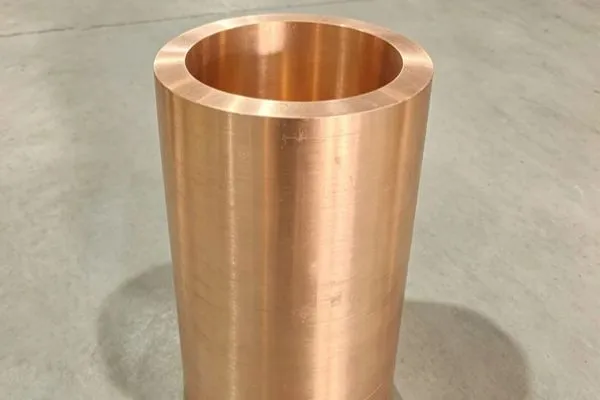
A CuBe2 Bushing (also known as grade equivalents UNS C17200, Alloy 25, or DIN 2.1247) is a precision-machined worn component of Copper Beryllium manufactured from ASTM B196 / AMS 4650 rod and bar stock and age-hardened to the AT / TF00 temper. The CuBe2 bushing is used in industrial equipment for support of landing gear pivot loads, downhole tool oscillation, hydraulic pump shaft interfaces and anti-galling wear sleeves. After precipitation ageing, it has a maximum tensile strength of 1,400 MPa and is one of the most mechanically competent non-ferrous bearing materials available to aircraft MRO and oilfield tooling procurement teams today.
Understanding CuBe2 Bushings: Material Grades, Geometry, and Industrial Uses
What Alloy Is a CuBe2 Bushing Made From?
Made from C17200 copper-beryllium bar stock to ASTM B196. The CuBe2 bushing contains 1.80–2.00% Be and at least 0.20% Co+Ni. The completed part’s grade designations are CuBe2, UNS C17200, Alloy 25, DIN 2.1247, EN CW101C and RWMA Class 4. The material is supplied in solution annealed condition (TB00/A) and is aged to obtain AT/TF00 hardness i.e. hardness of 38–42 HRC and a tensile strength of 1,170–1,400 MPa. Each batch will come with EN 10204 3.1 Mill Test Certificate showing full chemical and mechanical details.
What Size Range Does a CuBe2 Bushing Cover?
The normal output range is 10 mm to 500 mm for outer diameter and 5 mm to 450 mm for interior diameter. In CNC turning and cylindrical grinding, diameters are ±0.005 mm tolerances when taken with a CMM or air gauging equipment at a temperature of 20 ± 2 °C. Aerospace procurement teams should note that this tolerance claim only applies to certain diameter bands illustrated in the illustration. Technically, a single statement that covers the whole size range is insufficient without segmentation tolerance tables. Aircraft landing gear pivot bushings and hydraulic actuator liners are custom drawing requests via documentation at the part number level.
Where Are CuBe2 Bushings Used in Industrial Equipment?
The CuBe2 bushing is used in four main types of applications. They are used in landing gear trunnion pivots and actuator rod-end liners by aviation MRO facilities. The nonmagnetic property (relative permeability < 1.001) protects sensors on board. They are pressed into MWD/LWD stabilizer bores and non-magnetic bearing housings by companies that make oilfield downhole tools. Builders of hydraulic pumps use them as shaft bearing liners in places where the reliability of the lubrication film isn't known. Heavy machinery OEMs use them as anti-galling wear covers on steel-pin joints that move back and forth and are exposed to rough materials. The main properties that are used in all of them are high hardness, low friction, no sparks, and resistance to corrosion in H2S and hydraulic fluids.
Benefits of Using CuBe2 Bushings in Industrial Applications
Purchasing engineers often wonder why a copper-beryllium bushing is more expensive than options made of phosphor bronze or stainless steel. There is a set of mechanical properties that most other non-ferrous alloys can't match at the same time that hold the answer.
These are the key performance features that make them attractive to the aviation and gas sectors:
- Tensile strength of 1,170–1,400 MPa (AT temper): This is three or more times more than ordinary bronze bearing alloys, enabling the CuBe2 bushing to absorb shock loads in landing gear cycles that would plastically distort weaker materials. 980-1,200 MPa yield strength maintains bore geometry tolerance under press-fit stress.
- Anti-Galling Behaviour Against Steel and Titanium Pins In the aged state C17200 has intrinsic metal-to-metal compatibility with hardened steel shafts and titanium mating pins. Wear mechanisms such as fretting, scuffing and adhesive wear start are significantly minimised compared to steel-on-steel or aluminum-bronze surfaces.
- Non-magnetic permeability < 1.001 Aerospace avionics and downhole logging devices are subject to data corruption by magnetic bushing materials. The CuBe2 bushing is free from measurable magnetic field interference, fulfilling the design criteria for MWD collar bearings and sensor housings.
- C17200 has a documented history in sour gas but is not directly covered by ISO 15156 Parts 2/3. Sour service suitability must be evaluated by the design engineer for the specific well environment, noting NACE cautions that copper alloys can suffer accelerated corrosion where oxygen is present.
CuBe2 Bushings vs. Other Bearing Alloys: A Focused Comparison
How Does C17200 Compare to Phosphor Bronze (C54400)?
In normal bearing grades, phosphor bronze has a tensile strength of about 180–220 MPa, which is about one-sixth the capacity of an aged CuBe2 bushing. When phosphor bronze is put through high-contact-pressure oscillating joints, like those in landing gear sidestay pivots, it deforms more quickly. The CuBe2 bushing can hold its shape in places where phosphor bronze would lose its ability to fit properly for a very short time.
How Does CuBe2 Compare to Aluminum Bronze (C95400)?
Aluminum bronze is pretty resistant to rust, but it's not very hard (usually 180–230 HV). The CuBe2 bushing at 370–440 HV works better than aluminum bronze in situations where it will wear away easily, like when downhole tool centralizers are exposed to sand and rock chips. Aluminum bronze can also be magnetically permeable in some alloy combinations, which means it doesn't meet the requirements for MWD non-magnetic bearings.
How Does CuBe2 Compare to Copper-Nickel-Tin Alloys?
Copper-nickel-tin spinodal alloys (C72900) are sold as nonmagnetic bearing materials and have a moderate hardness of 35–38 HRC. The CuBe2 bushing can reach 38–42 HRC and is also available in bulk quantities. It can also be bought in a form that is well-known in aircraft approved source lists (ASTM B196/AMS 4650). For buying things for the oilfield, the C17200 material data package is more consistent across API documents than copper-nickel-tin alternatives. It includes hardness, magnetic permeability, and H₂S compatibility reference.
How to Procure CuBe2 Bushings for Aviation and Oilfield Applications
What Certifications Should a Supplier Hold?
For MRO applications in aviation, the CuBe2 bushing supplier must have a valid AS9100 certificate with a valid certificate number and expiration date. They cannot self-declare in order to be added to the qualified supplier list. The audit package is stronger because NADCAP approval covers testing materials, nondestructive testing (NDT), and heat treatment. When it comes to European MROs, paperwork has to match quality standards recognized by EASA and EN material cross-references.
What Documentation Should Accompany Each Shipment?
There should be an EN 10204 3.1 Mill Test Certificate from the raw material heat, a full-size CMM inspection report referencing the customer drawing revision, a heat treatment record confirming AT/TF00 aging cycle parameters, a certificate of conformance stating AMS 4650 or ASTM B196 parent material with temper designation, and a country-of-origin declaration for export control review with every delivery of CuBe2 bushing parts. Keep in mind that ASTM B196 only applies to rods and bars. Tube bushings are made from ASTM B643 or AMS 4535 tube stock. If you want to use B196 for tube-form parts, you will need to include more information in the package.
What Lead Times Are Realistic?
We keep more than 500 tons of C17200 rod and bar in stock, and standard catalog-size CuBe2 bushing blanks are sent out within 3–5 business days. Parts that are CNC-machined to a model and have an outside diameter of 10 to 500 mm usually ship in 15 to 20 days. AOG requests are given priority scheduling, and you will hear back from us within two hours.
Practical Tips for Installing and Maintaining CuBe2 Bushings
Correct Installation Practices
For press-fit fitting of a CuBe2 bushing, the housing bores must be clean and free of burrs. They must also be measured at 20 ± 2 °C before assembly. When interference fits are used, they should stay within the range shown on the drawing. If there are too many interference stresses, the bore ID can close too much in thin-wall configurations. It is better not to use impact tools on aged materials materials and instead use a calibrated hydraulic press with a parallel-face mandrel.
Routine Inspection Intervals
Check the landing gear and actuator CuBe2 bushing parts on every heavy-maintenance visit that is planned (C-check or similar). Use an accurate air gage to measure the bore ID. The main sign that it's time to replace something is when the radial clearance grows beyond the drawing wear limit, which is usually 0.03–0.05 mm for close-tolerance aircraft parts. Check the OD/housing contact visually for fretting oxide deposits. These show small movements and lack of interference.
Signs That a CuBe2 Bushing Needs Replacement
The CuBe2 bushing is no longer useful if it makes metallic noise when the actuator cycles, has axial end-play that can be measured at the pivot joints, or shows discoloration from localized heat at the bore surface. By finding problems early on with a borescope at access panels, you can stop damage to the matching steel pin, which is much more expensive to repair than the bushing itself.
Conclusion
The CuBe2 bushing is made from C17200 copper-beryllium that meets ASTM B196 and AMS 4650 standards and is aged to an AT/TF00 temper. It is used in a specific range of technically demanding industrial applications that need hardness, non-magnetic integrity, anti-galling behavior, and proof of traceability. Different applications, such as aviation landing gear pivots, drilling downhole stabilizer bores, and hydraulic pump shaft liners, have different needs for the part. However, the C17200 property description meets all of them. The AS9100 certificate, EN 10204 3.1 MTC, CMM report, and heat treatment record make up the complete document chain, providing buying teams with the evidence needed to distinguish a compliant source from one that is not.
FAQ
1.What is the correct temper designation for an aviation-grade CuBe2 bushing?
The right name is AT, which is also spelled as TF00. It means that the material was heated in a solution and then hardened by precipitation. AMS 4650 sells C17200 rod and bar that has been solution-annealed (TB00/A). The part manufacturer then ages the machined CuBe2 bushing to AT. Calling a finished bushing "conforming to AMS 4650" without saying what the post-machining temper was is technically not complete in aviation documentation.
2.Does the CuBe2 bushing comply with NACE MR0175 / ISO 15156 for sour service?
The alloy C17200 copper-beryllium is not made of iron, so it is not covered by ISO 15156 Parts 2 and 3. Those parts cover carbon/low-alloy steels and corrosion-resistant alloys, respectively. For applications involving sour gas in the ground, the CuBe2 bushing hardness ceiling and H₂S compatibility must be checked against the specific well environment and confirmed by the equipment design engineer. A supplier cannot give a general ISO 15156 compliance declaration for copper-beryllium parts.
3.What tolerances should I specify for a CuBe2 bushing on a landing gear drawing?
Instead of giving a single overall number, list the tolerances by diameter band. ±0.005 mm is possible for bores smaller than Ø50 mm when the temperature is kept at 20 ± 2 °C and the CMM is used to confirm. When the width gets bigger, the tolerance bands usually get wider to meet the needs of EN 12167 Class B or the drawing itself. It is important to write down the measurement temperature and type of equipment in the inspection plan at all times.
4.Can I cite ASTM B196 for tube-form CuBe2 bushing stock?
No. ASTM B196 covers C17200 rods and bars. ASTM B643 or AMS 4535 sets the rules for tube-form stock. The correct way to cite your part is "machined from ASTM B196 / AMS 4650 bar, aged to AT temper." if it was made from bar stock and shaped into a bushing.
Get Your CuBe2 Bushing Quote from JYDS — Certified Manufacturer and Supplier
Every CuBe2 bushing order that JYDS gets comes with quality documentation that is in line with AS9100 standards and over 25 years of experience making copper-beryllium alloys. We support both AOG response and qualified supplier qualification equally, as we keep more than 500 tons in stock and can do custom CNC machining to your specifications. To get a part-number-matched quote, EN 10204 3.1 MTC, and AS9100 certificate details within 2 hours, email our technical sales team at js01@jstongcai.com.cn. JYDS is ready to help you whether you need a CuBe2 bushing manufacturer for a repeat MRO order or a first-article documentation package for a supplier audit.
References
-
ASTM International. ASTM B196/B196M: Standard Specification for Copper-Beryllium Alloy Rod and Bar. ASTM International, 2023.
-
SAE International. AMS 4650: Copper-Beryllium Alloy, Rod, Bar, and Forgings — Solution Heat-Treated. SAE International, 2021.
-
International Organization for Standardization. ISO 15156 / NACE MR0175: Petroleum and Natural Gas Industries — Materials for Use in H₂S-Containing Environments in Oil and Gas Production. ISO, 2020.
-
SAE International. AS9100 Rev D: Quality Management Systems — Requirements for Aviation, Space, and Defense Organizations. SAE International, 2016.
-
European Committee for Standardization. EN 12167: Copper and Copper Alloys — Profiles and Bars for General Purposes. CEN, 2011.
-
Davis, J.R. Copper and Copper Alloys. ASM International, 2001.
Online Message