
Nov 25, 2026
Why C18150 Chromium Zirconium Copper Plate Handles High Temperatures
C18150 chromium zirconium copper plate resists high temperatures because chromium and zirconium precipitate into fine particles during aging. These particles don't allow crystal planes to move. This indicates that the plate is firm even at temperatures exceeding 200 °C, at which point pure copper starts to soften. The aged plate still possesses no less than 80% IACS conductivity after 2 hours at 500°C (932°F) for JYDS sample tests. It has lost no more than 10 % of the hardness. That blend allows businesses to produce moulds, switchgear and welding tools that can pass heat and electricity through the same part without it turning soft. I’ll explain below how it works and what you should check before you order.
C18150 Copper Plate Chemical Composition and Metallurgical Design
How Chromium and Zirconium Work in Copper
UNS C18150, also known as CuCr1Zr, DIN 2.1293, CW106C, has 0.5% to 1.5% chromium and 0.05% to 0.25% zirconium. The rest of the metal is copper. Chromium precipitates out as microscopic particles that get harder with age. Zirconium prevents recrystallisation when the plate becomes heated and stabilises the grain structure. Imagine the particles as tiny speed bumps that impede the metal while it is being loaded. This precipitation leaves the copper matrix relatively pure, allowing the plate to maintain high thermal and electrical conductivity. So JYDS melts the alloy in a vacuum and then controls the ageing stage to set the structure. Rolls it out extremely carefully.
Why Chemistry Alone Does Not Predict Performance
Even if two plates have the same chemistry, they may act in very different ways. Solution treatment, aging time and temperature, cold work, and thickness can all change how hard and how well something conducts electricity in the end. When quenched, thick plate cools more slowly, so the center and the surface may not be the same when a process goes wrong. This is a worry for mold shops that cut C18150 chromium zirconium copper plate that is up to 200 mm (7.9 in) thick. Instead of relying only on a chemistry sheet, I think you should get readings of the hardness and conductivity at agreed upon locations and also an ultrasonic test report. Before plates are sent out, JYDS uses 100% ultrasonic testing to look for internal holes or inclusions.
Documents to Request Before You Buy
Ask each supplier to give you a certificate that shows the heat number, the amount of chromium and zirconium, the conductivity in % IACS, and the hardness in HRB. JYDS is certified by ISO 9001:2015 and gives all of its batches EN 10204 3.1 inspection certificates. The plates also meet the rules for RoHS and REACH. On your drawing, make one clear line. I suggest using EN 1652 (CW106C) along with DIN 17666 and RWMA Class 2 (AWS J1.3) when the C18150 chromium zirconium copper plate is used as a welding electrode. I don't use the copper-iron or beryllium-copper ASTM standards for this alloy because they are for different types of metals. That makes sure that the language used in your purchase order, drawing, and certificate is the same.
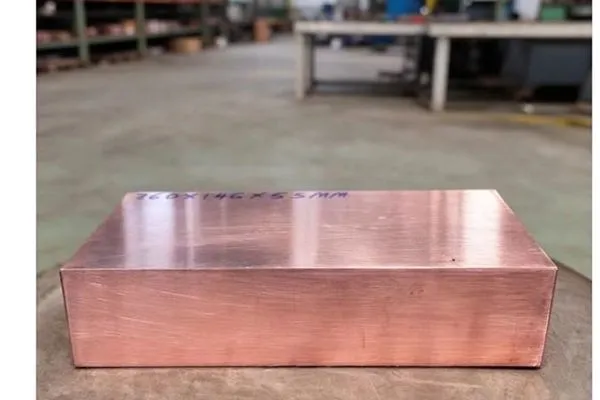
Why C18150 Chromium Zirconium Copper Plate Handles High Temperatures
Precipitation Hardening Keeps Hardness Under Heat
The copper was solution treated and aged, and particles rich in chromium dispersed throughout it. They interfere with dislocations, line defects which allow metal to shift shape. Pure copper is easily bent , therefore it softens at about 200 ° C . Aged C18150 chrome zirconium copper plate remains firm at significantly greater temperatures. To test samples, JYDS warms them to 500°C (932°F) for two hours, with hardness loss of 10% or less. That's a number you can compare to the temperature of your mould or electrodes, instead of a vague statement. Run the same test on your own sample, observe if your duty cycle is longer or hotter.
Zirconium Slows Recrystallization and Grain Growth
Repeatedly heating and cooling copper can modify the form of the grains, which can lead to warping or wear on the surface. Zirconium helps hold grain boundaries in place so the C18150 chromium zirconium copper plate does not re-crystallize when it is heated and cooled multiple times. This helps to maintain the dimensions consistent in hot-runner zones, welding fixtures and contact parts that heat up and cool down with each cycle. JYDS also does metallography to monitor grain size and particle distribution, which is useful in finding weak locations before they cause an issue in service. Stable grains mean stable flatness. This is vital when a huge insert wants to make a tight seal against the surface it mates with.
Operating Conditions Still Decide Service Life
Alloy chemistry doesn't tell the whole story. The part can run very hot or very cool depending on the current density, contact pressure, cycle time, plate thickness, and surface condition. There is a different test for a plate that is at 300°C for a short time than for one that is there all shift. Before I suggest a C18150 chromium zirconium copper plate, I ask buyers for the highest and lowest temperatures that will stay in place, as well as the length of the cycle. Then I use real data instead of generic tables to compare those numbers. The best proof is a short test run in your own mold or fixture, and I recommend you do this before placing a bulk order.
C18150 Chromium Zirconium Copper Mechanical and Thermal Properties
Conductivity and Thermal Conductivity
The C18150 chromium zirconium copper plate has a thermal conductivity of around 320 W/m · K and an electrical conductivity of at least 80% IACS. IACS is defined as 100% for annealed copper, or 58.0 MS/m. This means that 80% of that current passes through the plate. For mould, the thermal figure is more significant. Most tool steels have a thermal conductivity of about 30 W/m·K. That implies a copper inlay carries heat out of hot regions around ten times better and faster. To reduce cooling time you can remove heat more quickly . The amount of advantage you will see will rely on your mould design and how your channels are laid up . JYDS does conductivity testing with Eddy current testing based on ASTM E1004.
Hardness and Strength in the Aged Condition
Each C18150 chromium zirconium copper plate that shipped has been completely aged and solution treated. It is at least 75 HRB in hardness . Tensile strength is 400 MPa . That is a considerable step up from pure copper which is soft, thus machined inserts will not dent at parting lines and gate areas. Generally no heat treatment is needed after machining as the plate is supplied aged. Still, I urge people not to braze or heat anything above the ageing temperature, because it will soften the metal. ASTM E18 Rockwell Testing To check the core of a thick plate, take readings on the surface and on a cut face.
Flatness, Thickness, and Size Range
JYDS offers C18150 chromium zirconium copper plate 5 mm to 200 mm thick (approx. 0.2 in to 7.9 in), 100 mm to 1000 mm broad and 1000 mm to 3000 mm long. We can also zoom in on your drawing. Getting the exact length you want is free. Ships in 3 to 7 days for normal sizes. I would propose putting the flatness tolerance and machining allowance in the RFQ as you will lose a lot of material when milling huge mould plates. There is some additional stock on each face so you may rough out the shape and cut it to size. If you are going to cut seam welding wheel blanks set the thickness and diameter tolerances early on. This will allow you to keep your plan.
C18150 vs. Other Copper Materials: Performance and Selection Comparison
Versus Pure Copper and C18200
Pure copper conducts electricity better, but it gets soft around 200°C and is easy to dent. C18150 gives up some conductivity in exchange for being hard and resistant to heat. Chrome copper C18200 also doesn't have zirconium. The zirconium-bearing grade is better at keeping the electrode from sticking and picking up zinc on galvanized steel. This makes the electrode last longer on long runs. Because similar names don't always mean the same thing, I put composition limits, temper, and test results next to each other. Brass doesn't transfer heat as well as C18150 chromium zirconium copper plate, so it's better for wear parts than for getting rid of heat.
Versus Beryllium Copper: Thermal, Strength, and Price
C18150 Beryllium Copper and beryllium copper are widely compared in mould shops. Here are the three axises. The thermal conductivity of C18150 chromium zirconium copper plate is about 320 W/m·K, whereas JYDS beryllium copper is approximately 105 W/m·K. If you’re talking about strength, beryllium copper is the best. JYDS grades can be heat treated to 38 to 42 HRC and C18150 grades to 75 HRB. C18150 plates are normally cheaper, but you should acquire a quote to confirm. From a safety standpoint, C18150 has no beryllium handling requirements, which can ease the EHS evaluation. In the U.S., OSHA’s standard (29 CFR 1910.1024) regulates beryllium. For heavy wear use beryllium copper. Pick C18150 for heat removal and cost.
A Simple Way to Decide
Decide what you need in terms of cost per plate, hardness and wear, heat or current flow, and how easy it is to shape. If the load is light and the conductivity and ductility are good, pure copper (C110) might be enough. I would pick C18150 chromium zirconium copper plate if you need a moderately hard surface and heat or current flow is important. Beryllium copper is a good choice if hardness is important. Then put a prototype to the test and record its temperature rise, deformation, ability to keep its conductivity, and service life. A test mold and a sample plate give you real information before you order a lot of the project's parts.
Applications of C18150 Chromium Zirconium Copper Plate and How to Buy It
Mold Inserts and Hot-Spot Conduction Plates
C18150 chromium zirconium copper plate can be used as cooling inserts, core and cavity inserts, manifold plates, and hot-spot conduction plates in injection and die casting molds. Because it conducts heat well, it pulls heat from deep ribs, bosses, and gate zones where steel holds it. You don't have to use brazed assemblies because you can mill plates from 5 to 200 mm from a single solid block. Shops that make molds also cut EDM electrode plates out of it, and data from suppliers shows that it wears less quickly than pure copper. To fit your layout, you can drill and mill cooling features right into the plate.
Switchgear, Motor End Rings, and Welding Tooling
C18150 chromium zirconium copper plate is utilized for the production of motor end rings,busbar connection plates and switchgear contact seats. These sections carry heavy current and get hot and chilly. IACS is ≥ 80 % It has low losses . Hardness means that electromagnetic force can not modify it . Resistance Welding Builders obtain electrode seats and seam welding wheel blanks from the same plate. This is because it cuts and twists cleanly and holds good flow of welding current. Determine the conductivity of each batch. If you will be cycling or charging parts a lot, you should undertake an application test before you use them. For OEM runs, we may cut plates according to your drawing, and maintain the quality of each batch the same.
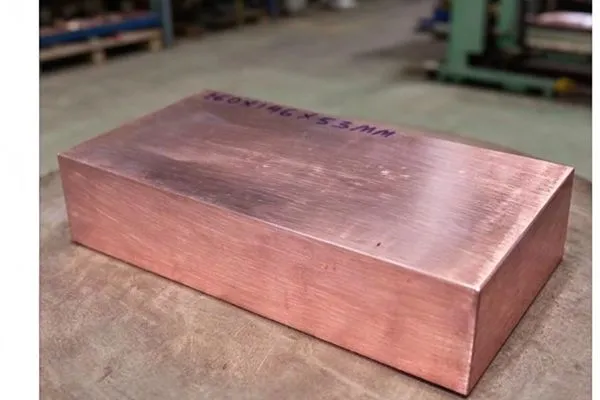
Choosing and Buying the Right Plate
First set the temperature, current, pressure and cycle duration to be employed. Then, set targets for conductivity, hardness, thickness and flatness of the material. The RFQ for C18150 chromium zirconium copper plate should state standard (EN 1652, CW106C), size, tolerance, quantity, destination and delivery terms. The plate should also be designated UNS C18150, or CuCrZr. Don’t only look at price as the landed cost. Look at cutting, inspection, goods, duties and machining waste. Common mistakes people make are comparing data from different temperature, simply looking at conductivity at room temperature, perceiving a small peak as continuous service, and purchasing only on unit pricing. JYDS delivers from Shenzhen and Hong Kong ports nearby, using export-friendly packaging, rust-proof and moisture-proof. They provide CIF, FOB and DDP shipping via sea, air or express.
Conclusion
Chromium and zirconium combine to form tiny particles that preserve their hardness and grain structure. The C18150 chromium zirconium copper plate is unaffected by high temperatures. The copper matrix also retains electrical conductivity of at least 80% IACS and thermal conductivity of around 320 W/m·K. Pure copper weakens at around 200°C, but the aged plate still retains almost 90% of its hardness after two hours at 500°C. So it’s more than chemistry to acquire approved results for conductivity, hardness & ultrasonic testing. Service life is still dependant on current, pressure, cooling design & cycle time. It is tougher than pure copper, has superior thermal conductivity than beryllium copper and costs less than beryllium copper in most circumstances. Trial runs ensure it fits mould inserts, switchgear parts and welding tools.
FAQ
1. What temperature can a C18150 chromium zirconium copper plate handle?
In tests with JYDS samples, the aged plate loses no more than 10% of its hardness after two hours at 500°C (932°F), while pure copper begins to soften at around 200°C. We need you to tell us your duty cycle so we can compare it with the test data and figure out how long the battery will really last.
2. Does the plate need heat treatment after machining?
Not often, no. The plate is fully aged and treated with a solution before it is shipped, so its hardness and conductivity are already set when it gets there. You can machine it the way it was sent. If you need to braze or use process heat above the aging temperature, don't do it. That will change the hardness of the aged metal. Tell us first if a job needs that heat, and we'll tell you what to do.
3. Which documents should I request from a C18150 chromium zirconium copper plate supplier?
Ask for an EN 10204 3.1 certificate that lists the amount of chromium and zirconium, the conductivity in % IACS, the hardness in HRB, and the result of the ultrasonic test. Your drawing should have EN 1652 (CW106C) and DIN 17666 on it, as well as RWMA Class 2 (AWS J1.3) for welding electrode applications. This keeps the drawing, certificate, and purchase order in the right place.
Request a C18150 Chromium Zirconium Copper Plate Quotation from JYDS
Looking for a company that has been making C18150 chromium zirconium copper plates for more than 25 years? JYDS sells factory-direct plate from 5 mm to 200 mm, with certificates for 100% UT and EN 10204 3.1. They will also cut the plate to your liking for free. Send your drawing, quantity, and temper to js01@jstongcai.com.cn, and someone from our team will get back to you in two hours. To find out more, go to becualloy.com.
References
1. ASM Handbook, Volume 2: Properties and Selection: Nonferrous Alloys and Special-Purpose Materials, ASM International, 1990
2. Copper and Copper Alloys, ASM Specialty Handbook, ASM International, 2001
3. EN 1652: Copper and copper alloys — Plate, sheet, strip and circles for general purposes, CEN, 1997
4. The precipitation behaviour of ITER-grade Cu-Cr-Zr alloy after simulating the thermal cycle of hot isostatic pressing, Journal of Nuclear Materials, 2000
5. ASTM E1004: Standard Test Method for Determining Electrical Conductivity Using the Electromagnetic (Eddy-Current) Method, ASTM International, 2017
6. ASTM E18: Standard Test Methods for Rockwell Hardness of Metallic Materials, ASTM International, 2022
Online Message