
Nov 23, 2026
Why Choose C17500 Beryllium Cobalt Copper Rod for High-Current Applications?
Choose C17500 beryllium cobalt copper rod for high-current applications when a part must carry current and heat while resisting wear, mushrooming, and softening. This copper alloy contains 0.4–0.7% beryllium and 2.4–2.7% cobalt. After age hardening, it delivers 45–60% IACS conductivity with 690–900 MPa tensile strength. Pure copper conducts better but deforms under pressure, while C17200 is harder but conducts far less. C17500 sits between them, so it suits resistance welding electrodes, mold inserts, and heavy-duty contacts. Below, I cover the properties, comparisons, testing, and buying steps so you can decide with data.
Key Properties of C17500 Rod for High-Current Applications
What the Alloy Contains and How It Hardens?
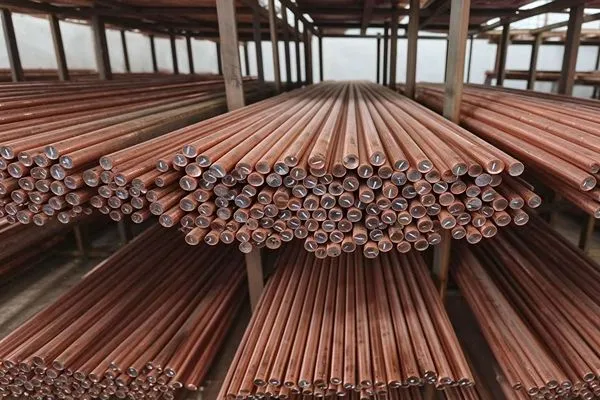
UNS C17500, also listed as CuCo2Be, Alloy 10, CW104C, and DIN 2.1285, is a precipitation-hardening copper alloy. The C17500 beryllium cobalt copper rod we supply holds 0.4–0.7% beryllium and 2.4–2.7% cobalt. The material is solution annealed, then aged so fine particles form inside the copper matrix. Those particles block dislocation movement, which raises strength and hardness without wrecking conductivity. Cobalt also refines the grain structure and steadies the microstructure at high temperature. That is why the alloy handles repeated heating better than a binary copper-beryllium grade. The governing specification for rod and bar is ASTM B441.
Conductivity and Heat Transfer
A C17500 beryllium cobalt copper rod conducts 45–60% IACS, where 100% IACS equals annealed copper. Thermal conductivity falls between 200 and 245 W/m·K, so heat leaves contact faces quickly. Lower contact resistance means less heat is generated, and faster heat removal keeps the working surface cooler. Both effects matter in welding electrodes and mold cores, where heat buildup causes wear or part defects. Conductivity shifts with temper and batch, so I recommend checking each lot with an eddy-current meter. Read the result on the mill test certificate instead of relying on a typical catalog value.
Strength, Hardness, and Softening Resistance
After aging, tensile strength reaches 690–900 MPa, and hardness measures HRB 90–100, or roughly HRC 20–30. That range lets electrode shanks, holders, and current-carrying shafts keep their shape under clamping force and repeated pressure. The material also resists softening during thermal cycling, so electrode faces mushroom more slowly than they do on soft copper. Strength stays moderate to high rather than extreme. C17200 reaches higher hardness, but it gives up most of its conductivity to get there. With C17500, you trade some peak hardness for a much better current path. That trade suits most welding and thermal tooling.
Why Choose C17500 Rod Instead of Other Conductive Materials?
C17500 Versus Pure Copper
Pure copper wins on raw conductivity and works well for large busbars and low-load conductors. It is soft, though. Under clamping force, repeated impact, or elevated temperature, copper indents, mushrooms, and loses shape. A C17500 beryllium cobalt copper rod gives up part of the conductivity but gains much higher strength. Compact parts such as electrode shanks, contact pins, and mold inserts then last longer between replacements. When a part sees little mechanical load and needs the lowest possible resistance, pure copper remains the sensible choice. When it sees pressure, wear, and heat together, C17500 usually makes more sense.
C17500 Versus C17200 and C17510
C17200 is the strength-first grade, with hardness up to about HRC 44 but conductivity near 22% IACS. C17500 reaches 45–60% IACS, so it suits parts where current and heat flow matter as much as hardness. If a stressed clip or structural part needs maximum strength, C17200 fits better. If an electrode holder or thermal insert must stay conductive, a C17500 beryllium cobalt copper rod fits better. C17510, a copper-nickel-beryllium alloy, belongs to the same high-conductivity family and falls under the same ASTM B441 specification. Share your current, load, and temperature targets with us, and we will help match the grade.
Machinability and Total Cost
Price per kilogram tells only part of the story. TF00 age-hardened rod arrives at HRC 20–30, a range that machines cleanly into electrode shanks, nozzle seats, and mold inserts. Your shop needs no post-machining heat treatment. Count replacement frequency, scrap from distortion, machine downtime, and incoming inspection hours as well. A harder-wearing electrode that stays in service longer can cost less per weld, even at a higher material price. Consistent hardness within a lot also matters, because uneven bars can warp during machining and lead to scrapped parts. A C17500 beryllium cobalt copper rod from a controlled melt helps limit that risk.
How C17500 Rod Performs in High-Current Applications
Resistance Welding Electrodes and Holders
C17500 is a mainstream material for spot welding electrodes, seam welding wheels, and electrode holders, especially when the work involves stainless steel and high-resistance alloys. These jobs push current through a small contact face while pressing hard, so the electrode must carry heat away and stay hard. A C17500 beryllium cobalt copper rod keeps its hardness and conductivity through repeated heating and cooling cycles, which supports steady weld quality from one shot to the next. Pair the rod with proper water cooling and contact geometry, since alloy choice alone cannot fix a poorly cooled tip.
Mold Inserts and Casting Components
In plastic injection molds, thin cores and hot runner nozzle seats trap heat. A C17500 beryllium cobalt copper rod machined into inserts pulls that heat toward the cooling circuit, which can shorten cycle time and reduce part warpage. It also tolerates injection pressure better than soft copper. Die-casting plunger tips and non-ferrous casting molds use the alloy for the same pairing of heat transfer and strength. Diameters up to 200 mm cover most mold cores. Start with a small trial insert on one tool, check hardness uniformity across the bar, and then approve the material for the full project. Changing material after a mold is qualified costs a lot.
Switchgear, Connectors, and Current-Carrying Parts
Fuse clips, switch and relay parts, durable connectors, and current-carrying shafts all need a material that conducts well and holds its shape under contact pressure. C17500 resists softening at high current density, so contact surfaces keep their form over many cycles. High-flux electromagnet parts and aerospace bushings also use it where load and conductivity overlap. Before series production, test temperature rise, contact resistance, and wear under your real duty cycle. Surface finish, plating, corrosion exposure, and storage conditions also change results, so include them in your trial plan. The alloy handles seawater and mild acids but needs protection in strongly oxidizing media.
C17500 Rod Heat Treatment and Quality Requirements
Tempers and Delivery Condition
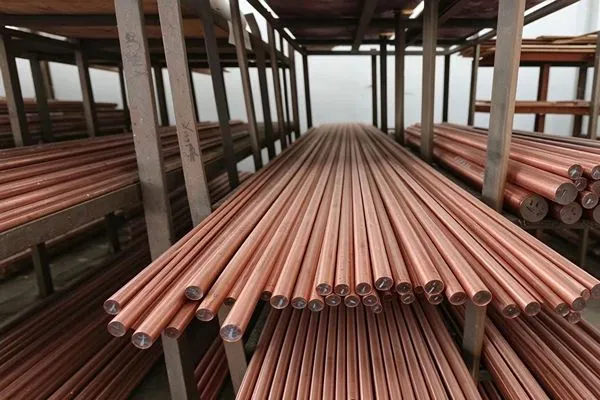
Four tempers are available: solution annealed (TB00/A), age hardened (TF00/AT), cold drawn (TD04), and quarter hard plus age hardened (TH04). Most rods ship as TF00 or TH04, already aged, so you can machine and assemble without further heat treatment. Do not compare data from different tempers, because hardness, strength, and conductivity shift with the condition. When you request a quote, name the temper and the test method together. Diameters run from 2.5 to 200 mm, and lengths run from 1000 to 3000 mm or cut to length. If your drawing calls for machining after aging, leave stock allowance on tight-tolerance features of slender parts.
Per-Batch Testing and the Class 3 Declaration
RWMA sets Class 3 as a threshold, not a formal material standard: at least 45% IACS and at least 90 HRB, consistent with AWS J1.3. I suggest wording your requirement as "meets the RWMA Class 3 thresholds (AWS J1.3)." JYDS checks each lot with optical emission spectroscopy for beryllium and cobalt, ultrasonic testing for internal porosity, eddy-current conductivity testing, hardness and tensile testing under ASTM E18 and E8, and dimensional inspection. Every batch ships with an EN 10204 3.1 mill test certificate listing chemistry, hardness, and conductivity data. Your incoming re-test can then be compared directly with the certificate.
Safe Machining and Cobalt Paperwork
Solid rod is safe to handle, but machining, grinding, and polishing can release beryllium-bearing dust. The OSHA beryllium standard, 29 CFR 1910.1024, sets an 8-hour exposure limit of 0.2 µg/m³. Use wet machining, local exhaust, and protective equipment. Some customers ask for a conflict-minerals statement on cobalt-bearing grades. Cobalt falls under OECD due diligence guidance on a voluntary basis, and the declaration is usually written on a 3TG basis with that point explained. Raise the request when you send your RFQ so the document chain is ready before the first shipment. RoHS and REACH documents are available on request.
How to Buy C17500 Beryllium Cobalt Copper Rod from a Qualified Supplier
Build a Clear RFQ
A precise request gets comparable quotes. List UNS C17500, rod form, diameter, length or cut length, temper, conductivity and hardness targets, ASTM B441 for rod, quantity, packaging, and destination. State whether you need stock sizes, custom production, or machined blanks, since each changes MOQ, yield, price, and lead time. Add straightness and concentricity needs for electrode stock, along with certificate requirements. When you request a C17500 beryllium cobalt copper rod quote with these details, you cut the number of clarification rounds before sample approval.
What JYDS Brings as a Manufacturer
JYDS has more than 25 years of beryllium copper experience and runs its own vacuum induction melting furnace, which supports low gas content and consistent chemistry. We hold ISO 9001:2015 certification and issue EN 10204 3.1 certificates with every batch. We keep over 500 tons of raw material and standard profiles in stock. Stock items dispatch in 3–5 days, and custom orders take 15–20 days. Our team answers inquiries within 2 hours and gives free advice on material selection and machining. If a verified quality or dimension issue appears, we replace or re-machine the parts.
Sampling and Shipping
Most buyers begin with a sample lot, retest conductivity and hardness, and then move to scheduled repeat orders. Build that retest time into your schedule. We pack every C17500 beryllium cobalt copper rod in export-grade anti-rust, moisture-proof packaging and ship from a base near the Shenzhen and Hong Kong ports. Sea freight, air cargo, and express courier are available under CIF, FOB, or DDP terms. Confirm Incoterms, packing lists, certificates of origin, and customs paperwork before dispatch, so your receiving team can inspect and release the material quickly.
Conclusion
The C17500 beryllium cobalt copper rod fills the gap between pure copper and higher-hardness beryllium copper. With 0.4–0.7% beryllium and 2.4–2.7% cobalt, age-hardened rod delivers 45–60% IACS, 200–245 W/m·K thermal conductivity, 690–900 MPa tensile strength, and HRB 90–100 hardness. That mix explains its use in welding electrodes and holders, mold inserts, casting parts, and current-carrying components. C17200 suits strength-first jobs, and pure copper suits low-load conductors. Consistent results depend on matching the temper, testing each batch for conductivity and hardness, stating the RWMA Class 3 thresholds correctly, and handling machining safety and cobalt documentation early.
FAQ
1. How does C17500 differ from C17200?
C17500 offers 45–60% IACS for current and heat flow. C17200 reaches hardness up to about HRC 44 but conducts near 22% IACS.
2. Can I machine C17500 rod?
Yes. TF00 and TH04 rods arrive aged and ready for machining and assembly. Use wet machining and ventilation to control dust.
3. What does cobalt do in this alloy?
Cobalt refines grain structure and improves thermal stability, which raises resistance to thermal-cycle fatigue.
4. Which documents come with an order?
Every batch includes an EN 10204 3.1 mill test certificate with chemical, hardness, and conductivity data. RoHS and REACH documents are available on request.
Request a C17500 Beryllium Cobalt Copper Rod Quote
Ready to compare our data against your drawing? JYDS offers C17500 beryllium cobalt copper rod direct from the factory, with 3–5 day dispatch on stock items, EN 10204 3.1 certificates, and a 2-hour inquiry response. As a C17500 beryllium cobalt copper rod supplier, we quote by diameter, length, temper, and quantity. Email js01@jstongcai.com.cn, or visit becualloy.com for details.
References
1. ASTM International, ASTM B441 Standard Specification for Copper-Cobalt-Beryllium Alloys (UNS Nos. C17500 and C17510) Rod and Bar, 2020
2. ASM International, ASM Handbook, Volume 2: Properties and Selection: Nonferrous Alloys and Special-Purpose Materials, 1990
3. ASTM International, ASTM E18 Standard Test Methods for Rockwell Hardness of Metallic Materials, 2022
4. ASTM International, ASTM E1004 Standard Test Method for Determining Electrical Conductivity Using the Electromagnetic (Eddy Current) Method, 2017
5. U.S. Occupational Safety and Health Administration, Occupational Exposure to Beryllium, 29 CFR 1910.1024, 2017
6. OECD, OECD Due Diligence Guidance for Responsible Supply Chains of Minerals from Conflict-Affected and High-Risk Areas, Third Edition, 2016
Online Message