
Nov 14, 2026
Aluminum Bronze Rod vs Brass Rod: Performance Comparison
Aluminum bronze rod is the answer for parts that need high strength, wear resistance, and extended life in saltwater. Machining speed, conductivity, and upfront cost make brass rod a winner. A wrought aluminum bronze rod like C63000 will give 620-760 MPa tensile strength and 200-250 HB hardness in the HR50 condition, much above ordinary brass standards. But free-cutting brass will machine three to five times faster. At JYDS, we sell aluminum bronze rod with EN 10204 3.1 certifications, so you may verify grade data against your design before you buy. And that’s how the two alloys stack up.
Aluminum Bronze Rod and Brass Rod: Composition and Material Structure
What Each Alloy Family Contains
Brass is a mixture of copper and zinc metals. Free-cutting C36000 has around 3% lead to split chips cleanly, while naval brass has a little tin added to provide greater service in saltwater. Aluminum bronze rod is a copper-aluminum alloy normally including iron, nickel, and manganese. This is why this family can endure saltwater, industrial fluids, and heat. The aluminum produces a thin, adhering coating of oxide that rebounds after a scratch. Iron improves hardness and wear resistance. It also refines grain size. Nickel enhances corrosion resistance in saltwater and at high temperatures. Manganese improves hot working. We spectrograph every heat using OES testing so the chemistry on your certificate matches the metal on your bench.
Aluminum Content Grade by Grade
A blanket “5-12% aluminum” range masks genuine variances. So I provide restrictions per grade. ASTM B150 specifies that C63000 has 9.0 to 11.0 percent aluminum, 4.0 to 5.5 percent nickel, and 2.0 to 4.0 percent iron. C63200 contains 8.7–9.5% Al, 4.0–4.8% Ni, 3.5–4.3% Fe, and 1.2–2.0% Mn. C61400 runs leaner with 6.0-8.0% aluminum and 1.5-3.5% iron. Those gaps vary in strength, corrosion behavior, and cost. Brass grades must be treated the same way, since C36000, C46400, and dezincification-resistant brass respond differently in wet service. When any aluminum bronze rod supplier cites a family range rather than a grade, ask for the grade-specific restrictions and compare them line by line with the mill test certificate.
Wrought Rod Versus Cast Bar
Process is as important as chemistry. C63000, C63200, and C61400 are wrought grades under ASTM B150 and ASME SB150, while EN 12163 is for copper alloy rod for general uses. C95400 is a cast grade; hence, cast bar should be under ASTM B505 for continuous casting or B271 for centrifugal casting, not B150. Cast and wrought bars are different in grain structure, and a recheck of grain size or flow lines will indicate which one got there. We preserve the heat number of each grade on its certificate so you can check precisely what you got. We list C95400 individually on its cast base.
Aluminum Bronze Rod vs Brass Rod: Performance Comparison
Strength and Hardness
The wrought aluminum bronze rod in C63000 generally achieves tensile strength of 620-760 MPa and 200-250 HB in the HR50 condition, depending on diameter. Brass rod is lower: C36000 ranges around 340-470 MPa in its tempers, with substantially lower hardness. This gap provides a greater load or longer life under the same force from a shaft, bushing, or valve stem. Values published vary with size and condition; therefore, verify hardness at the diameter you buy, and indicate the permissible range on your purchase order. A Brinell check on each arriving lot against the 3.1 certificate identifies mix-ups early.
Seawater, Cracking, and Dealloying
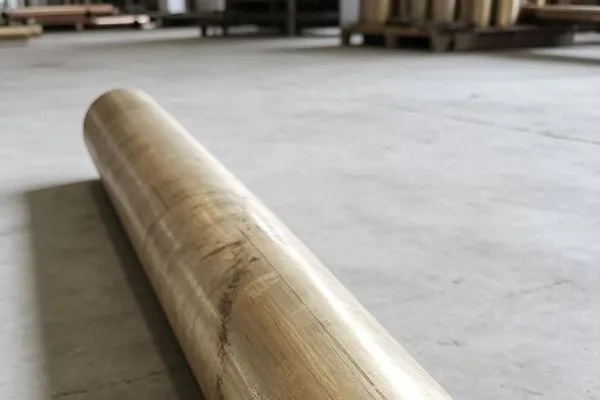
Seawater readily separates these alloys. Aluminum bronze rod creates an aluminum-rich oxide layer that resists cavitation and erosion and so is used in marine pumps and valves. Brass has two well-known risks: dezincification, when the zinc is leached off and a porous copper structure is left behind; and stress corrosion cracking when exposed to ammonia-bearing conditions. Aluminum bronze has its own danger, dealloying, which is the selective corrosion of the aluminum-rich phase under certain circumstances. It could be useful to inquire about corrosion data and microstructure inspections for the particular grade, especially for nickel-aluminum bronze pieces exposed to hot or stagnant seawater. You need stress corrosion and dealloying data in your approval file, not simply a datasheet.
Wear, Machinability, and Weight
Aluminum bronze is a multiphase structure (alpha phase + kappa intermetallics) which is gall-resistant and glides well on steel. Machinability is the trade-off. Free-cutting brass is defined as having a 100% machinability rating. Aluminum bronze rod is rated at approximately 20 to 30% and requires carbide tools and stiff setups. Valve and pump shops generally use the slower cycle since the increased hardness buys greater wear life. Density helps, too: 7.58 g/cm3 vs 8.50 for C36000, thus a meter of aluminum bronze at the same diameter weighs around 11 % less. Conductivity is the reverse, at 7% IACS vs roughly 26% for C36000.
Aluminum Bronze Rod vs Brass Rod for Different Applications and Grades
Where Aluminum Bronze Rod Fits
Aluminum bronze rod is found in marine hardware and propeller shafts, pump components, valve stems and sleeves, heavy-duty bushings and bearings, worm gears, wear plates, and subsea oil-and-gas equipment. Our application list also includes non-sparking safety gadgets and aerospace landing gear parts. Most grades are non-sparking and low in magnetism and are suitable for hazardous regions and magnetic-sensitive devices. Seawater and heavy loads are typical conditions. C63000 can manage both in a single rod, and because of its oxide layer, it normally operates without a protective coating. Hydraulic wear parts also employ it, where hardness inhibits clearance expansion.
Where Brass Rod Is the Better Call
Brass rod is good for fittings, connections, terminals, parts for instruments, ornamental hardware, and large volume turned parts. Machining speed, conductivity, appearance, and reduced material cost influence the options. The stresses and sliding speeds are small. If a part receives fresh water, moderate pressure, and minimal wear, free-cutting brass may do the job at reduced overall cost. Check the particular grade; naval brass or dezincification-resistant brass handles wet service better than conventional free-cutting brass. And if brass is the proper answer, I'd rather tell you that than sell you a tougher alloy your part never required.
Choosing Among C63000, C63200, C61400, and C95400
Valve and pump manufacturers commonly inquire what grade to supply. Here’s our guidance. C63000 is suitable for high strength with marine corrosion. C63200 is suited to harsh saltwater with increased temperature. C95400 is a cast, economy-minded general-engineering grade available on a B505 basis. C61400 is a slimmer wrought grade, so give us the design, and we'll evaluate the fit. C63000 and C63200 are the standard options for low-magnetic or defense work. The slower cut saves minutes on each component, and the tougher stem or sleeve gives that back in a longer wear life. None of these grades interchange readily or immediately substitute for brass.
How to Choose, Size, and Specify Aluminum Bronze Rod
A Four-Step Selection Check
I lead purchasers through four stages. First, specify the environment: fluid, chloride level, temperature, ammonia, abrasion, mating metals. Second, specify mechanical targets: tensile strength, hardness, load, speed, and wear life. Third, Examine the manufacturing: tooling, tolerance, surface finish, volume, and cut-to-length demands. Fourth, compare landed cost, not price per kilogram. Include machining, inspection, freight, maintenance, and replacement. A cheap brass rod may appear to win on price per kilogram, but once you add the cost of one replacement shutdown, the life-cycle math often favors aluminum bronze rod. Step one is worth a paragraph on galvanic pairing. The rod will contact stainless steel, carbon steel, or other copper alloys in various configurations.
Diameters, Shapes, and Machining Services
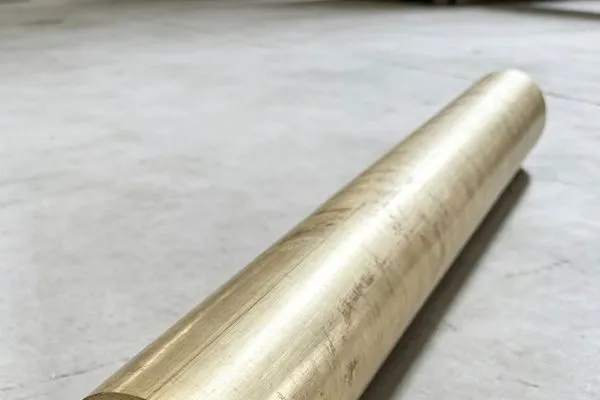
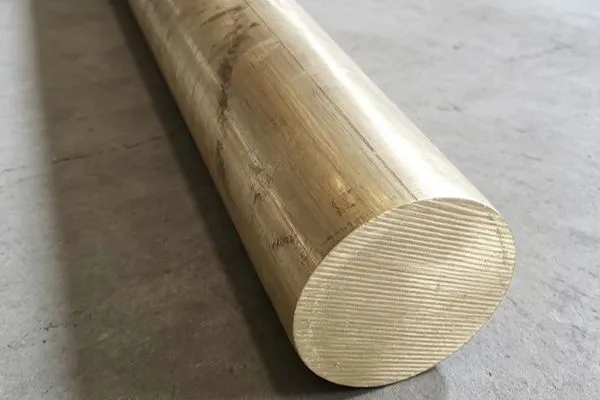
We sell aluminum bronze rod in Ø5.0 mm to Ø300 mm in 1000-3000 mm lengths or cut to your size. Round, hexagonal, and square bars are offered, and near-net-shape profiles may decrease machining. Our business also provides CNC turning, centerless grinding, threading, and keyway machining. For a fast weight check, multiply the cross-sectional area by the density of ca 7.58 g/cm3. A Ø50 mm rod weighs ca 14.9 kg/m. Check packing list for actual shipping weight. Actual weight varies significantly with tolerance and surface condition. Include grade, size, tolerance, straightness, surface quality, end preparation, and length on the purchase order.
Supply Terms: Stock, Shipping, and Documents
Below are the delivery terms we give for regular orders.
- We quote within 24 hours and dispatch stock aluminum bronze rod within 3-5 days. You provide us with the grade, diameter, length, quantity, and standard. We will confirm stock or advise you on the manufacturing timeline for made-to-order sizes. This allows your engineers to evaluate the sample lot against the design and approve the material for volume release.
- Shipping: We are situated near Shenzhen and Hong Kong ports; we quote FOB, CIF, or DDP for sea or air shipping, and for sample lots via international courier. The rods are packed in anti-rust, moisture-proof export packaging, and we take care of the export customs clearance, so the item is in the same condition as when it left.
- Documentation: EN 10204 3.1 mill test certifications, RoHS and REACH documentation, and complete traceability accompany each shipment. Our quality system is ISO 9001:2015 certified. Your materials engineer may verify the chemical and mechanical findings for each heat to the order and compare the heat number on the rod to the certificate.
These words get rid of the back-and-forth between buying and quality teams.
Quality Checks, Cost Planning, and Common Mistakes with Aluminum Bronze Rod
Documents to Request Before You Approve a Supplier
Ask for a datasheet, chemical analysis by heat, certificate EN 10204 3.1 with mechanical findings, dimensions report, and heat number traceability. Check certificate tensile and hardness values with the drawing. Retest hardness on a sample. Check grain size and flow lines on important sections. Those tests distinguish wrought rod from cast bar. Watch for a missing grade, a standard that does not cover the grade (C95400 quoted to B150, for example), a combined aluminum range, no tolerances, a price that no one seems to be able to justify. A first-article order on a sample establishes quality before you go to volume.
Cost and Procurement Planning
Rod pricing is connected to copper and alloying-metal prices as well as grade, diameter, quantity, tolerance, testing, packing, and freight. Nickel-bearing aluminum bronze is more expensive per kilogram than brass. So the business case for aluminum bronze rod is service life and saved downtime. A complete quotation request consists of grade, form, diameter, length, quantity, standard, condition, inspection papers, Incoterms, destination and timetable. To keep costs down on all parts, choose standard sizes, group volumes, check tolerances early, purchase fixed lengths, and lock down a repeat order specification. If you operate small hydraulic or wear-part amounts, inquire about sample quantities.
Common Mistakes to Avoid
Four mistakes happen over and over: Choosing brass just for its machining speed; calling for aluminum bronze without thinking about carbide tooling; comparing alloy families instead of specific grades; and forgetting galvanic corrosion at the point of contact between the rod and stainless steel, carbon steel, aluminum, or other copper alloys. Before finalizing the design, review water chemistry, isolation, coatings, and installation circumstances. A pilot run reveals tool wear and cycle time before you buy yearly volume. Consider the additional machining minutes as a trade-off. You pay in cycle time and get tougher material and longer service in exchange.
Conclusion
Brass rod and aluminum bronze rod address distinct difficulties. Wrought aluminum bronze in C63000, C63200, and C61400 has tensile strength of 620–760 MPa, hardness of 200–250 HB, an oxide coating that protects in saltwater, and minimal galling. It machines at only 20–30% of free-cutting brass and requires dealuminification checks. Brass machines are quicker, conduct better, and cost less up front, but they may dezincify and season-crack. The rod provided is as per order, verified by grade-level chemistry, proper standard (B150 for wrought grades, B505 or B271 for cast C95400), and an EN 10204 3.1 certificate with hardness and grain retests. For high-load, wet, or abrasive parts, aluminum bronze often wins on life-cycle cost, while brass remains feasible for light-duty, high-volume parts.
FAQ
1. Is aluminum bronze rod stronger than brass rod?
Yes. Wrought C63000 typically reaches 620–760 MPa in the HR50 condition, while C36000 brass runs roughly 340–470 MPa. Temper and diameter shift both ranges, so confirm values on the certificate.
2. Does ASTM B150 cover C95400?
No. C95400 is a cast grade covered by ASTM B505 or B271. We list it separately from wrought C63000, C63200, and C61400.
3. Which certificates and sizes do you offer?
Each shipment carries EN 10204 3.1 certificates. Diameters run from 5.0 to 300 mm and lengths from 1000 to 3000 mm or cut to size, with CNC turning, centerless grinding, threading, and keyway machining.
4. Does aluminum bronze need a coating?
Usually not. Its aluminum-rich oxide film protects the surface and reforms after damage. Your engineer should still check galvanic pairing and water chemistry.
5. Can aluminum bronze be welded?
Yes, with TIG or MIG processes, preheating, and the right filler wire to avoid cracking.
Request an Aluminum Bronze Rod Quote from JYDS
Ready to compare grades? Send JYDS your drawing, grade, diameter, quantity, and standard at js01@jstongcai.com.cn, and our team will reply within 24 hours. As an aluminum bronze rod supplier founded in 1997 with 25+ years of copper alloy experience, we ship stock rods in 3–5 days with EN 10204 3.1 certificates and offer free material selection advice.
References
1. ASTM International, ASTM B150/B150M: Standard Specification for Aluminum Bronze Rod, Bar, and Shapes, 2019
2. European Committee for Standardization, EN 12163: Copper and Copper Alloys – Rod for General Purposes, 2016
3. European Committee for Standardization, EN 10204: Metallic Products – Types of Inspection Documents, 2004
4. ASM International, ASM Handbook Volume 2: Properties and Selection: Nonferrous Alloys and Special-Purpose Materials, 1990
5. J.R. Davis (ed.), ASM Specialty Handbook: Copper and Copper Alloys, ASM International, 2001
6. A.H. Tuthill, Guidelines for the Use of Copper Alloys in Seawater, Materials Performance, 1987
Online Message