
Nov 27, 2026
C18000 Nickel Chromium Silicon Copper Rod: Diameter and Tolerance Guide
The nominal diameter, tolerance grade and cut length are three things that describe a C18000 nickel chromium silicon copper rod. We have this beryllium-free alloy in lengths from 1000 mm to 3000 mm and sizes from 2 mm to 200 mm at JYDS. We cut to length when you want and the typical tolerance is h9 or h10. The rod ships aged to the TF00 temper, which means it offers 550-760 MPa tensile strength, 90-100 HRB hardness, and 45-60% IACS conductivity. The lowest of such categories is the RWMA Class 3 floor, 90 HRB and 45% IACS. With this guidance you can understand tolerance, choose a size and create a clear PO.
C18000 Nickel Chromium Silicon Copper Rod Dimensions and Diameter Tolerance
Diameter, Length, and Supply Form
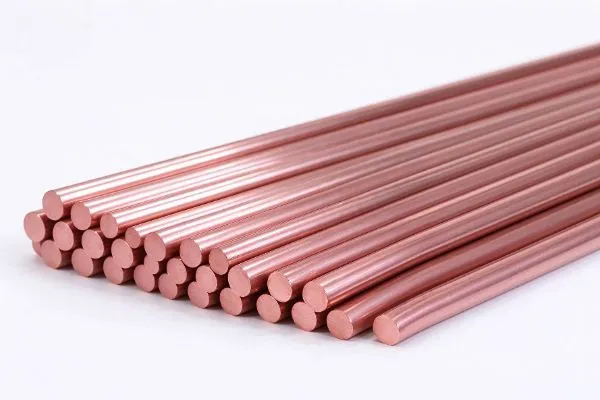
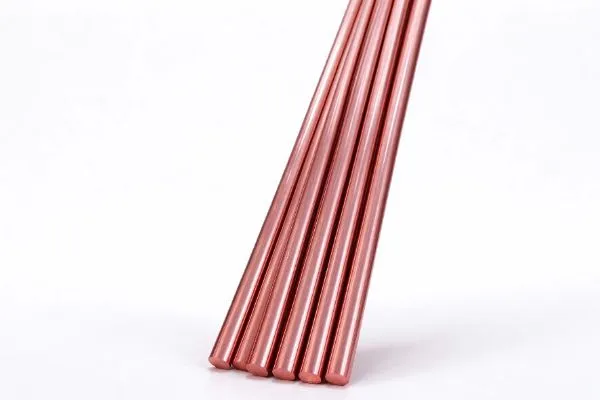
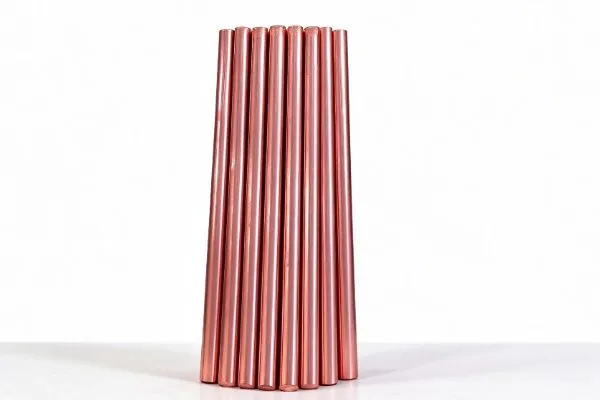
This is the C18000 copper nickel chromium silicon rod. It is a round rod with a diameter of 2.0 mm to 200 mm . The usual length is from 1000mm to 3000mm. If a fixed blank would save you time by eliminating one step, we can cut to your length. Electrode arms, holders and fixture blocks are larger in diameter. Most cap and tip blanks are smaller in diameter. The rod is mill-hardened because it has already been solution annealed and aged TF00. It requires no further heat treatment. Sizes that are in stock ship in 3–5 days and sizes that are built to order take 15–20 days. When you submit your order, provide us a cut list with the size of each part required.
How to Read Diameter Tolerance
Diameter tolerance is the allowable variation from the nominal diameter size. We are constantly producing h9 and h10 grades. According to ISO 286-1 a h grade can never be greater than nominal, only lower. The h9 can be 0 to 0.052 mm with a 25 mm rod and the h10 can be 0 to 0.084 mm. Narrower grades are simpler to feed into automatic lathes because there is less stock to turn off. It takes more labour to draft and inspect, which can add to cost and lead time. The tolerances for rods are given in EN 12163. The correct values depend on the standard, the diameter and your sketch. I think for a critical C18000 nickel chromium silicon copper rod diameter you should write down the grade, the standard and the measuring point. That’s when you want to pay attention to the tolerance level.
Choosing the Right C18000 Nickel Chromium Silicon Copper Rod Size
Begin with the part that is already created, not the rod catalogue. Use the finished part diameter to determine the stock size you need for drilling, threading, and turning. So the following size up should be utilised. A 16 mm shank is cut from an 18 mm rod, leaving 1 mm on either side to be removed. If you use too little stock the finished product may bow or have marks on the surface. Aged C18000 has a machinability rating of 20-30% compared to free-cutting brass, so expect slower cutting speeds. Too much stock wastes both alloy and tool life. If rods are feeding an automatic machine, see that they are straight and the surface is in good condition. Make sure that the cross-section can transport current before you fix the size of the arms of the electrodes.
C18000 Properties and How It Compares with Beryllium Copper
Composition and Mechanical Properties
Nickel (1.8–3.0%), silicon (0.4–0.8%), chromium (0.1–0.8%), and copper (the rest) make up the C18000 nickel chromium silicon copper rod. It is also designated as CW111C, CDA 180, DIN 2.0855, and UNS C18000. Nickel silicides and chromium phases form in the copper matrix as it ages. That makes it harder while keeping the conductivity. Tensile strength of 550–760 MPa, hardness of 90–100 HRB, IACS conductivity of 45–60%, thermal conductivity of about 190 W/m·K at 20°C, and density close to 8.75 g/cm³ are all normal values. Up to 475°C, the alloy doesn't change its shape. That's important when the electrode tips heat up and cool down many times during the welding process.
Comparing C18000 with C17500, C17510, and Pure Copper
A C18000 Nickel Chromium Silicon Copper rod can be substituted for C17500 and C17510 since it is less costly and has the same RWMA Class 3 performance. C18000 has 45% IACS and 90 HRB - class 3 needs at least that much. Pure copper is soft and therefore bends more easily under electrode pressure. Brass is easy to machine but not suitable for high-current welding contacts. Beryllium copper is harder than C18000, so make sure your joint really needs that extra strength before you spend the money on it. We have C17200, C17500 and C17510 in stock at JYDS, so we may compare them on your drawing rather than proposing one metal. Ask for the same conductivity, hardness and wear data for each contender.
Fit for Zero-Beryllium Welding Programs
Some battery and automobile facilities have restrictions on beryllium. The beryllium rule is 0.2 µg/m³ over 8 hours for the maximum exposure according to OSHA in 2017. This guideline applies to materials containing 0.1% or more of beryllium by weight. Machining beryllium copper requires dust control, strict safety protocols, and proper EHS documentation. C18000 is beryllium free and RoHS and REACH compliant, which may ease that assessment for electrode caps, arms and fixtures. It is a good conductor of heat and softens about 475°C, which helps avoid mushrooming at the weld face. I can't guarantee the electrode life will be the same as the beryllium copper in your cell. The welding conditions are different. Do a side-by-side test on the same line. Count the number of welds between the dressings and compare the results. We will provide technical advice for the trial.
Standards, Inspection, and Certification
Standards to Name on Your Purchase Order
The delivery condition is not set by the name of the alloy alone. Cite RWMA Class 3 (AWS J1.3) for a C18000 nickel chromium silicon copper rod order so the 45% IACS and 90 HRB floors are clear. For the rod itself, use EN 12163 and the number CW111C. Name the ISO 286-1 grade, h9 or h10, for the diameter tolerance. ISO 5182 talks about materials for resistance welding electrodes and gives your engineers who work with electrodes another point of reference. Add the TF00 temper and the length and straightness needs. That's why you should check each standard number against the alloy before putting it on the page. They were written for beryllium copper, not C18000. Having a short, correct list stops arguments at the receiving inspection.
Batch Inspection at JYDS
We do five checks on each batch of our C18000 nickel chromium silicon copper rod. ICP-OES: Nickel, Silicon and Chromium levels checked. Ultrasonic testing reveals internal defects, while eddy current testing verifies conductivity. Conductivity testing verifies that the % IACS remains above the Class 3 floor. The analysis of hardness and grain size shows if the ageing created the expected structure. Dimensional inspection measures the diameter in relation to the grade of tolerance requested. Metallurgists also examine the grain size to check for nickel-silicon segregation. Class 3 compliance is based on conductivity levels of ~45% and hardness values of ~90 HRB. Please ask us for the measured values of your batch.
Certificates and Traceability
Before each batch is sent out, it comes with an EN 10204 3.1 inspection certificate that has information about chemical and mechanical tests. There is a heat or batch number on the certificate that should match the markings on the rod, the packing list, and the commercial invoice. Because the certificate is specific to your batch, your EHS team doesn't have to rely on a general datasheet. Our quality system is approved by ISO 9001:2015, and the alloy is safe for use with RoHS and REACH. We keep track of each batch, so if someone has a question months later, it can be traced back to the first lot. If a problem with the material's quality or size is proven, we replace it or re-machine it. Get a sample certificate before you place your first order so that the people in charge of quality can check the format.
Ordering, Supplier Evaluation, and Procurement Checklist
Writing an RFQ for a Custom-Size Rod
Giving quotes is quick and easy when you have a clear RFQ. Put in the alloy (UNS C18000), the nominal diameter, the tolerance grade, the length, the length tolerance, the temper (TF00), the straightness, the minimum conductivity and hardness, the governing standard, the quantity, the type of certificate, and the destination. When you can, add your drawing and annual demand. This is because a high-volume program may need a different cut plan than a one-time buy. Separate stock items from made-to-order items and sample lead time from mass-production lead time. Just ask us to do that. It takes 3–5 days to ship stock sizes, and 15–20 days to ship custom orders. When people ask us about a C18000 nickel chromium silicon copper rod, we answer them within two hours, every day.
Common Ordering Mistakes and How to Avoid Them
A vague order like "C18000 copper rod" with no diameter, tolerance, temper, or standard is where most problems begin. Some other mistakes people make are confusing the tolerance for the raw rod with the tolerance for the finished part, asking for a tighter grade than the part needs, and judging alloys only by their conductivity. You might also be led astray by a datasheet that doesn't match the size or temper that was given. Another trap mold shops have to deal with is this: if the customer drawing calls for a beryllium copper grade, they need to get written permission before they can use C18000 instead. Send drawings, set inspection criteria, ask for batch certificates, and approve samples before production to avoid all of these problems. Make sure you have written confirmation of stock, tolerances, and paperwork.
Supplier Evaluation and Final Checklist
Never judge a supplier on the unit pricing. JYDS has been dealing with copper alloys for more than 25 years and has its own vacuum induction melting shop. It stores about 500 tonnes of raw materials and standard profiles and can deliver each C18000 nickel chromium silicon copper rod directly from the factory. If you want to know about diameter range, tolerances, minimum order, sample availability, lead time, certificates and packaging of a supplier, you should ask them. Our export packing is rust proof and water proof. We ship by sea, via air or express courier with CIF, FOB or DDP terms. We are located near the ports of Hong Kong and ShenZhen. Before confirming an order, review the technical specifications, quality documentation and commercial terms such as Incoterms, quote validity and goods one last time. Get engineering, purchasing and quality to review the list so that no holes get missed.
Conclusion
A full specification is needed before you can order a C18000 nickel chromium silicon copper rod well. The length ranges from 1000 mm to 3000 mm and the diameter from 2 mm to 200 mm. The rod's nominal size is determined by the finished part dimensions plus machining stock. The h9 or h10 grade dictates the allowable diameter variation. It provides 550–760 MPa tensile strength, 90–100 HRB hardness, 45–60% IACS, and stability up to 475°C in this alloy. It also meets the RWMA Class 3 floor without beryllium. It offers comparable Class 3 performance to C17500 and C17510, but you should test the electrode life on your own line to be sure. Most ordering mistakes can be avoided by using the right names for standards, checking batch certificates, and writing down every detail of the RFQ.
FAQ
1. What diameters and lengths can I order?
We offer our C18000 nickel chromium silicon copper rod in lengths from 1000 mm to 3000 mm and diameters from 2 mm to 200 mm. We can also cut the rod to your exact length. Rods made to order take 15–20 days, and sizes that are in stock ship in 3–5 days.
2. Which tolerance grade is standard?
ISO 286-1 says that grades h9 and h10 are the norm. H9 lets 0 to 0.052 mm go on a 25 mm rod. If you need a tighter grade, send us your drawing, and we'll let you know what we can hold.
3. Does the rod need heat treatment after machining?
No. It arrives aged to TF00 and mill-hardened. Stress relief is optional after heavy machining. Because it is only 20–30% as easy to machine as free-cutting brass, use carbide tools with coolant.
4. Does it meet RWMA Class 3?
It meets the Class 3 floor of 90 HRB and 45% IACS with its ranges of 45–60% IACS and 90–100 HRB. Every batch is tested for hardness and conductivity, and the EN 10204 3.1 certificate has a list of the values that were found.
Request a C18000 Nickel Chromium Silicon Copper Rod Quote from JYDS
Looking for a company that sells C18000 nickel chromium silicon copper rods? JYDS has rods from 2.0 mm to 200 mm in stock, has been manufacturing copper alloys for more than 25 years, and gives EN 10204 3.1 certificates with every batch. We will get back to you within two hours if you email your drawing, tolerance grade, and quantity to js01@jstongcai.com.cn. To find out more, go to becualloy.com.
References
1. ISO 286-1: Geometrical Product Specifications (GPS) — ISO Code System for Tolerances on Linear Sizes, 2010
2. EN 12163: Copper and Copper Alloys — Rod for General Purposes, 2016
3. EN 10204: Metallic Products — Types of Inspection Documents, 2004
4. ISO 5182: Resistance Welding — Materials for Electrodes and Ancillary Equipment, 2008
5. ASM Specialty Handbook: Copper and Copper Alloys, ASM International, 2001
6. Occupational Exposure to Beryllium and Beryllium Compounds: Final Rule, Federal Register, 2017
Online Message