
Nov 23, 2026
C18000 Nickel Chromium Silicon Copper Rod: Strength vs Conductivity
C18000 nickel chromium silicon copper rod gives you balanced strength and conductivity. In the aged condition, it reaches 550–760 MPa tensile strength and 90–100 HRB hardness while keeping 45–60% IACS conductivity. That pairing meets the RWMA Class 3 floor of at least 45% IACS and 90 HRB, and the alloy contains no beryllium. It does not match the peak strength of C17200, and it does not match the conductivity of CuCrZr. Its value sits in the middle: hard enough to resist tip deformation, conductive enough to carry welding current. This guide shows how to read those numbers, test them, and buy with confidence.
What Is C18000 Nickel Chromium Silicon Copper Rod?
Alloy Identity and Composition
C18000 is a copper-nickel-silicon-chromium alloy, also written CuNi2SiCr. Its European names are DIN 2.0855 and CW111C. A typical chemistry holds 1.8–3.0% nickel, 0.4–0.8% silicon, and 0.1–0.8% chromium, with copper as the balance. Nickel and silicon form nickel silicide particles, and chromium adds a second strengthening phase, while the copper matrix carries current and heat. Because the alloy contains no beryllium, machine shops avoid the exposure controls that beryllium-bearing dust requires. JYDS supplies the C18000 nickel chromium silicon copper rod directly from our factory in China, in diameters from 2.0 mm to 200 mm and lengths from 1000 mm to 3000 mm or custom cut.
How Aging Builds Strength
This alloy hardens by precipitation. During solution annealing, the mill dissolves the alloying elements into the copper. Aging then forms fine nickel silicide and chromium particles that block dislocation movement, which raises strength and hardness. Aging also pulls nickel and silicon out of the copper lattice, and that step restores much of the conductivity. Cold work adds strength, but it lowers conductivity slightly and leaves residual stress. Strength and conductivity therefore trade against each other, and the heat-treatment route sets where a lot lands. We supply this C18000 nickel chromium silicon copper rod in the aged, mill-hardened TF00 condition, so no further heat treatment is required after machining.
Standards and Designations to Confirm
Names vary between markets, so write the full designation on every C18000 nickel chromium silicon copper rod RFQ: UNS C18000, CDA 180, CuNi2SiCr, DIN 2.0855, and CW111C. For welding performance, buyers use RWMA Class 3 (AWS J1.3), which sets a floor of 45% IACS and 90 HRB. For the rod product form, EN 12163 covers copper and copper alloy rod for general purposes. Some listings cite ASTM standards written for other alloys, so match each standard to the alloy before you approve a drawing. Our rods ship with an EN 10204 3.1 mill test certificate for every batch.
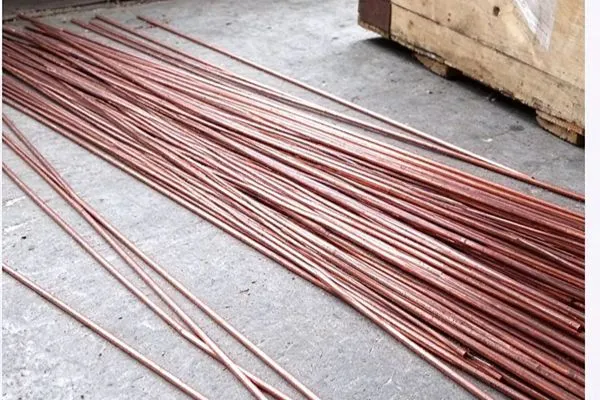
C18000 Copper Rod Properties: Strength, Conductivity, and Hardness
Strength and Hardness Range
A C18000 nickel chromium silicon copper rod in the aged condition reaches 550–760 MPa tensile strength and 90–100 HRB hardness. Both values shift with temper and diameter, so the mill test certificate for your lot is the controlling document. Hardness matters on a welding line because tips deform under force, and a tip that holds its shape keeps the weld nugget size steady. It also governs wear in mold inserts, where abrasive resin scrapes the surface every cycle. Chromium and nickel silicide particles help in sliding contact as well. Ask for hardness readings on the diameter you plan to buy, since large bars can differ from small ones.
Conductivity and Thermal Conductivity
For a C18000 nickel chromium silicon copper rod, conductivity runs 45–60% IACS, and thermal conductivity is about 190 W/m·K at 20°C. In a spot welding electrode, electrical conductivity limits resistive heating inside the body, and thermal conductivity moves heat from the tip into the cooling water. The 45% IACS figure is the Class 3 floor, so a lot that tests below it falls out of class. For that reason, I advise buyers to request measured conductivity for each batch rather than a typical value. We run conductivity verification and eddy current testing on every batch, and you can state in the RFQ which results you want on the paperwork.
Softening Resistance Up to 475°C
A C18000 nickel chromium silicon copper rod keeps its structure up to about 475°C. Welding tips heat and cool repeatedly, and once a tip passes its softening point, it flattens. This is called mushrooming. The contact area grows, current density drops, the weld weakens, and the operator must dress or replace the tip. A higher softening temperature delays that process. Above 475°C, over-aging lowers hardness, so keep service temperature below that limit. Pair this number with a trial on your own weld schedule, because water flow, electrode force, and coating type all change tip temperature.
C18000 Copper Rod vs Alternative Copper Alloys
Compared with C17200 Beryllium Copper
C17200 beryllium copper reaches much higher strength than a C18000 nickel chromium silicon copper rod, with tensile values above 1,000 MPa in hardened tempers, but its conductivity usually sits in the 20s % IACS. C18000 gives up peak strength and gains roughly double the conductivity. For current-carrying arms, shanks, and clamps, that trade often favors C18000, while a highly stressed part may still need C17200. Health controls also matter. OSHA's beryllium standard, 29 CFR 1910.1024, sets an 8-hour exposure limit of 0.2 µg/m³ for airborne beryllium, and a beryllium-free rod removes that burden from machining. JYDS also supplies C17200, so we can match each part to the right alloy.
Compared with C17500 and C17510
C17500 and C17510 are beryllium-containing copper alloys that also fall in RWMA Class 3, so they are the closest comparison for a C18000 nickel chromium silicon copper rod. Their conductivity sits in a similar range. The choice often comes down to beryllium policy, price, and contract wording. C18000 offers a beryllium-free option at lower material cost in many applications, though its conductivity may run slightly lower, so compare certified values. This substitution is not permitted where a drawing or customer contract explicitly specifies a beryllium copper grade. Check the contract before you switch, and get written approval from the customer.
Compared with CuCrZr
Compared with a C18000 nickel chromium silicon copper rod, CuCrZr offers higher conductivity, commonly 75–85% IACS, with lower strength. RWMA places it in Class 2, so it does not satisfy a Class 3 specification. It fits jobs where current capacity and heat removal matter more than hardness, such as lightly loaded electrodes. If your tips mushroom early on high-force welds, a harder alloy such as C18000 may last longer. If welds fail from heat buildup, a more conductive alloy deserves a trial. Match the alloy to the failure you see on the line, and measure results over a full production run.
How to Select and Apply C18000 Copper Rod
Define Measurable Requirements First
Start with numbers. Write down minimum conductivity, hardness, tensile strength, and operating temperature. Then list the load: current, contact pressure, vibration, thermal cycling, and duty cycle. Add the machining plan, since this C18000 nickel chromium silicon copper rod machines at roughly 20–30% of free-cutting brass, so plan on carbide tooling and good coolant. Set dimensional needs next: diameter, h9 or h10 tolerance, straightness, surface finish, and cut length. Give pits and scratches a stated limit. Before bulk approval, test samples from the same diameter and lot type as production, and keep those readings as a baseline for later batches.
Welding and Automotive Applications
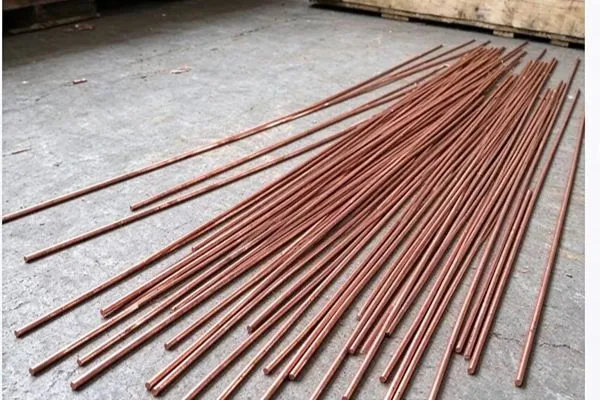
Body-in-white lines use electrode caps, shanks, arms, and fixtures that need hardness and conductivity together. A C18000 nickel chromium silicon copper rod suits resistance welding tips, wheels, fixtures, and electrode arms, including projection and flash welding. Battery lines also use resistance welding for tabs and busbars, so process engineers there review similar data. When an automaker has a zero-beryllium policy, a beryllium-free rod simplifies the material list and the EHS review. Electrode life depends on coating, force, and cooling, so I do not quote one figure for every line. Run a side-by-side trial against your current electrode, count welds per tip dress, and plan for about two to three months of validation.
Mold, Die Casting, and Electrical Uses
Mold shops use the C18000 nickel chromium silicon copper rod for core pins, cavity inserts, hot runner parts, and cooling inserts, where hardness resists abrasive resin and thermal conductivity pulls heat from the surface. Die casting plunger tips are another use. In electrical work, the rod suits high-strength connectors, heavy-duty switchgear parts, and motor short-circuit rings that carry current under mechanical strain. For molds, compare thermal conductivity against your current insert and run a trial mold before you commit to a project; this often takes one to two months. Share operating temperature, current, contact pressure, and cooling layout with us, and we will provide application-specific recommendations.
Buying C18000 Nickel Chromium Silicon Copper Rod from a Qualified Supplier
What to Put in the RFQ
A complete RFQ gets a faster, more accurate quotation for C18000 nickel chromium silicon copper rod. Include the alloy designation and standard, diameter, length or cut size, quantity, annual demand, and temper. Add mechanical targets, minimum conductivity, tolerance, surface condition, testing, packaging, destination, and Incoterms. Price depends on copper and alloy costs, volume, diameter, tolerance, cutting, packaging, and freight, so compare total landed cost instead of unit price alone. Say whether you want standard stock rod, a custom diameter, or cut-to-length parts. We also offer precision machining, and a drawing lets us confirm every requirement before production.
Supplier Checks and Batch Testing
Ask any supplier for evidence. Look for ISO 9001:2015 certification, batch traceability, an EN 10204 3.1 certificate with chemical and mechanical data, and defined inspection steps. At JYDS, each batch of C18000 nickel chromium silicon copper rod goes through ICP-OES chemistry analysis, eddy current testing, conductivity verification, hardness and grain size checks, and dimensional inspection. The beryllium-free alloy meets RoHS and REACH requirements. We bring more than 25 years of copper alloy production experience, including beryllium copper, and our plant includes in-house vacuum induction melting. Request samples, check the certificate against your own readings, and set a controlled specification before the first large order.
Delivery and Shipping to the United States
Delivery speed affects a production line as much as price. We dispatch stock C18000 nickel chromium silicon copper rod within 3–5 days, and custom orders take 15–20 days. Our site sits near the Shenzhen and Hong Kong ports, and we pack rods in anti-rust, moisture-proof export packaging. Shipping terms include FOB, CIF, and DDP by sea or air, plus DHL, FedEx, or UPS for small lots. U.S. buyers who want one landed price can choose DDP. We hold more than 500 tons of raw materials and standard profiles in stock, which supports repeat monthly orders or an annual supply agreement.
Common Selection Mistakes to Avoid
Most problems start with the paperwork. Buyers pick a rod by commercial name without checking the standard, compare strength without checking conductivity, or ignore how temper and diameter change properties. Vague tolerance, inspection, or certification wording leads to disputes and rejected shipments. The lowest price can raise total cost through uneven properties, machining waste, early electrode wear, and batch rejection. Another frequent error is assuming a replacement alloy behaves like the old one without testing. Attach a drawing and purchase specification to every RFQ for C18000 nickel chromium silicon copper rod, and judge suppliers on documentation, consistency, and lifecycle cost.
Conclusion
C18000 nickel chromium silicon copper rod sits in the middle of the copper alloy range. It delivers 550–760 MPa tensile strength, 90–100 HRB hardness, 45–60% IACS conductivity, and softening resistance up to 475°C, which meets the RWMA Class 3 floor without beryllium. C17200 offers higher strength with lower conductivity, C17500 and C17510 are the closest low-beryllium comparisons, and CuCrZr offers higher conductivity with lower strength. Aging develops the properties, so temper and diameter on the certificate matter. Good selection depends on measured requirements, certified batch data, a trial on the real weld schedule or mold, and a complete RFQ. Applications range from resistance welding electrodes to mold inserts and switchgear parts.
FAQ
1. Can C18000 replace beryllium copper?
In many RWMA Class 3 uses, yes. The rod meets the floor of 45% IACS and 90 HRB and contains no beryllium. Parts that depend on C17200 strength need a trial first, and contracts that name a beryllium copper grade need customer approval.
2. What conductivity should I specify?
This rod runs 45–60% IACS. Specify a minimum of 45% IACS for Class 3 work, and request measured readings for each batch so a lot never falls below the floor.
3. Does the rod need heat treatment after machining?
No. We supply it in the aged, mill-hardened TF00 condition, so it works straight from the bar. Stress relief is optional after heavy machining. Use carbide tooling and coolant.
4. What is the maximum working temperature?
Keep service temperature below 475°C. Beyond that point, over-aging lowers hardness, and electrode tips begin to flatten sooner. Check water flow and force, since they change actual tip temperature.
Request a C18000 Nickel Chromium Silicon Copper Rod Quotation from JYDS
Send your drawing, diameter, quantity, and conductivity target to JYDS at js01@jstongcai.com.cn, and our team replies within 2 hours. As a factory-direct C18000 nickel chromium silicon copper rod supplier, we offer stock rod, custom cutting, precision machining, and sample evaluation, with an EN 10204 3.1 certificate for every batch. Visit becualloy.com for product details.
References
1. ASM Handbook, Volume 2: Properties and Selection: Nonferrous Alloys and Special-Purpose Materials, ASM International, 1990.
2. Copper and Copper Alloys, ASM Specialty Handbook, ASM International, 2001.
3. ASM Handbook, Volume 6: Welding, Brazing, and Soldering, ASM International, 1993.
4. Welding Handbook, Volume 3: Welding Processes, Part 2, 9th Edition, American Welding Society, 2007.
5. Occupational Exposure to Beryllium and Beryllium Compounds, Final Rule, U.S. Occupational Safety and Health Administration, 2017.
6. EN 12163: Copper and Copper Alloys – Rod for General Purposes, European Committee for Standardization, 2016.
Online Message