
Nov 20, 2026
C18200 Chromium Copper Rod: Chromium Content and Alloy Performance
You already know how frustrating it can be to buy C18200 chromium copper rod for tools, electrodes, or switchgear parts. There is no such thing as a norm on one of the spec sheets. Someone else uses a plate standard for round bar. A third leads to a specification for beryllium copper that is not related to chromium copper. To clear that up, I wrote this guide using the right standards as a guide, real test data, and the questions that buyers really ask before they buy something every month.
Direct answer: C18200 chromium copper rod is a copper-chromium metal that hardens through precipitation. It has about 0.6% to 1.2% chromium and the rest is copper. After being treated with a solution and aged (TF00 temper), it has a tensile strength of 380–520 MPa, a hardness of 65–85 HRB, at least 80% IACS conductivity, and can keep these properties up to about 500°C. That's not ASTM B224 (strip) or ASTM B196 (beryllium copper); it's RWMA Class 2 (AWS J1.3), ASTM B441, EN 12163/CW105C, and DIN 17666.
Before they ask for a sample, buyers look at these facts first:
- Chromium range: Most mills certify 0.6% to 1.2% chromium against ASTM B441 or EN 12163/CW105C. Copper makes up the rest, along with small amounts of nickel, silicon, or iron, depending on the heat. If the certificate shows something outside of this range, you should do a second chemical test on the whole thing before you accept it.
- When buyers ask for electrode stock or contact bars, they should set a minimum of 80% IACS at a certain test temperature. This is because conductivity below that level usually means the batch hasn't been aged long enough or hasn't been properly dissolved.
- Hardness window: The normal HRB range of 65 to 85 is too broad to show real differences between rod diameters and ageing cycles. Instead of giving each rod a single number, I suggest dividing it into smaller bands based on section size.
- Service temperature: C18200 stays strong up to about 500°C when used continuously, which is much higher than the 200°C point at which plain ETP copper starts to soften and lose its strength under load.
- Risk of mixing up: C18200 and C18150 look the same after being cut and tag-less. This is the main quality issue I hear from people who buy both types of electrodes from the same shop.
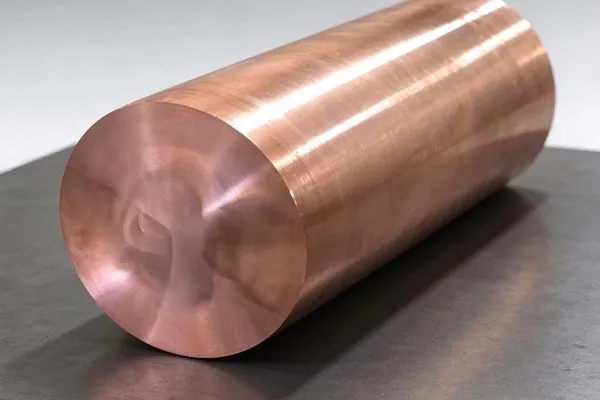
Before putting in a purchase order, these five points cover most of what a buyer or process engineer needs to know. The sections that follow go over the supporting data.
Every month, my team at JYDS sends both C18200 and C18150 rod to electrode fabricators. This article shows what we actually test, not just what a catalogue says. You can email our technical team at js01@jstongcai.com.cn to get batch-tested C18200 chromium copper rod with a clean certificate. They can confirm the chemistry, temper, and lead time before you place an order for a sample.
What Is the Chromium Content in C18200 Chromium Copper Rod?
C18200 alloy definition and material scope
Copper-chromium alloy C18200 is known by its UNS number C18200. It is also known as CDA 182, DIN 2.1291, and CW105C. It is mostly shipped as round rod, bar stock, or lengths that are cut to order from 2.5 mm to 250 mm in diameter. There is zirconium added to C18150, but it is not pure copper. It is also not a beryllium copper grade like C17200 or C17500. Each of those metals is good for a different kind of problem, and if you mix them up on paper, the wrong stuff will show up on your dock.
C18200 chromium and copper chemical composition
The following table shows the numbers that are usually approved against ASTM B441 and EN 12163/CW105C. These are the two standards that control chrome copper rods and bars.
| Element | Typical or specified range | Function |
|---|---|---|
| Copper | Balance, typically ≥98.7% | Carries the electrical and thermal load |
| Chromium | Approximately 0.6%–1.2% | Forms precipitates that raise hardness and heat resistance |
| Other elements | Specification-dependent trace limits | Control impurities that can lower conductivity |
An empty range on a datasheet for a C18200 chromium copper rod doesn't mean that's what's in your rod. I always tell new buyers to ask for the mill test certificate (MTC) that is linked to the heat number on their shipment and not a generic alloy fact sheet that was copied from a catalogue page.
How to verify C18200 composition
I tell every buyer who runs the C18200 and C18150 in the same shop to follow these steps for verification:
- For the specific heat number on your delivery, ask for the certificate of analysis or MTC instead of a standard version from a previous shipment. This is because the chemistry and ageing response can vary slightly between melts, even from the same supplier.
- Check that the packing list, the tag, and ideally something stamped or coloured on the bar itself show that it can be tracked by heat or lot. This way, if a mixed pallet gets to your feeder line, it will be caught right away.
- When you place your first order with a new provider or after making any changes to the recipe, make sure you get XRF or optical emission spectroscopy results on a sample from the real shipment.
- In the lab, check the results against the limits set by ASTM B441 or EN 12163/CW105C. Do not check them against a general "chromium copper" standard that does not name a real chromium range.
When shops skip this step, they weld with the wrong grade for weeks before anyone notices that the tip wear pattern doesn't look right.
How Does Chromium Content Affect C18200 Alloy Performance?
Chromium's role in strengthening copper
As the solution of a C18200 chromium copper rod is treated, the chromium breaks down into the copper matrix. As it ages, it comes back out as tiny bits that stop dislocations from moving inside the metal. That's how the hardness and strength of the metal go up so quickly from the solution-annealed state to the fully aged TF00 temper. It's not the same as cold working alone, which is why chromium copper stays hard at temperatures where pure copper that has only been cold worked would just anneal and soften.
Chromium content versus conductivity
It's not always true that more chromium means more strength for free. When there is too much chromium or not enough control over elements like iron and silicon, conductivity drops below the 80% that IACS buyers expect. The way the metal was heated is just as important as the chemistry in this case, because a bar that hasn't been aged long enough can test low on both hardness and conductivity. Instead of relying on the chromium percentage alone to guess how well something will work, I suggest writing a minimum conductivity value into your purchase order that is linked to a clear temper and test temperature.
Risks of interpreting chromium content alone
The amount of chromium on a certificate only gives you part of the story. What changes the final numbers are the grain structure, the time and temperature of ageing, the cold work done before ageing, the surface condition, and even the direction in which a tensile sample is cut. Even if the rod has the perfect amount of chromium, it might fail a second hardness test if the ageing cycle was cut short. That's why I tell buyers not to settle for a single good number but to ask for full sets of data, including chemistry, heat, conductivity, hardness, and tension results.
What Are the Key Mechanical and Physical Properties of C18200?
Mechanical properties of C18200 rod
| Property | Typical value | Why it matters |
|---|---|---|
| Tensile strength | 380–520 MPa (TF00) | Determines load capacity in electrode arms and contact structures |
| Yield strength | Roughly 300–450 MPa | Sets the point where permanent bending or mushrooming starts |
| Elongation | 8%–20% depending on diameter | Affects how the tip deforms before it cracks |
| Hardness | 65–85 HRB (TF00) | Predicts wear resistance under repeated electrode pressure |
| Fatigue performance | Application-dependent | Governs life under cyclic welding loads |
| Shear strength | Application-dependent | Matters for press-fit and swaged contact designs |
Because these numbers change based on the order's standard, diameter, and length of time it has been aged for a C18200 chromium copper rod, I never give a buyer a single number without knowing their exact requirements. A 10mm bar and a 100mm bar that were both made at the same temperature will not age the same way. This is because the core of the bigger bar cools and heats more slowly during treatment.
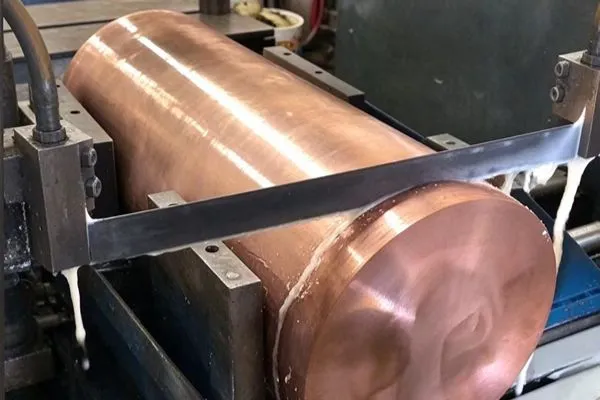
Electrical and thermal properties
If a buyer wants conductive parts, they should ask for the following fields on the datasheet: electrical conductivity in % IACS or MS/m; thermal conductivity in W/m·K (usually around 324 W/m·K at 20°C for TF00 C18200); electrical resistivity; and density when cooling-channel or thermal-expansion calculations are important. If any of these are blank on a quote, it means that the supplier hasn't tested that heat yet.
C18200 temperature resistance and hardness
Pure annealed copper starts to soften around 200°C when it is under constant load. This is a big problem for electrodes that get hot when they are hit with short bursts of current. As long as the stress level, duty cycle, and cooling design are right, the aged TF00 condition of C18200 will keep its strength and hardness up to about 500°C. On the shop floor, hardness alone is a good screening check, but it should never be used instead of a full tensile or fatigue test on a key part.
How Does C18200 Compare with C18150 and C17200 Copper Alloys?
C18200 versus pure copper rod
| Criterion | C18200 chromium copper | Pure copper |
|---|---|---|
| Strength | Higher after aging | Lower, especially once annealed |
| Hardness | Higher | Lower |
| Conductivity | Around 80% IACS | Usually higher, near 100% IACS |
| Wear resistance | Better under repeated contact | Limited in demanding duty |
| High-temperature strength | Holds up near 500°C | Softens near 200°C |
| Typical use | Electrodes, contacts, conductive tooling | Busbars, general conductors |
C18200 versus C18150 / CuCr1Zr
| Criterion | C18200 | C18150 / CuCr1Zr |
|---|---|---|
| Alloying system | Copper-chromium | Copper-chromium-zirconium |
| Conductivity | High, often around 80% IACS | Similar, spec-dependent |
| Strength retention at heat | Good to roughly 500°C | Often better for extended high-heat welding duty |
| Price position | One grade cheaper, typically | Carries a price premium for the zirconium addition |
| Best fit | Standard point welding, moderate duty | Heavy-duty, galvanized steel, or high-repetition welding |
That's the choice a process engineer who is in charge of both grades has to make with a C18200 chromium copper rod. If your welding programme uses soft steel and modest duty cycles, C18200 will generally do the job for less money per kilogram. Because C18150 is more resistant to wear, you may not need to change the electrodes as often if your line is made of galvanised or covered steel that gets very hot. I tell buyers to compare the cost of each weld instead of just the price of the raw materials, because the real number changes more than the quote does because electrode life changes.
C18200 versus C17200 and C17500 beryllium copper
| Criterion | C18200 | C17200 / C17500 |
|---|---|---|
| Strengthening system | Chromium precipitation | Beryllium precipitation |
| Conductivity | Generally higher | Lower in peak-strength tempers |
| Strength ceiling | Moderate to high | Often higher at peak aging |
| Safety handling | No beryllium content | Requires beryllium exposure controls during processing |
| Typical decision driver | Conductivity and heat transfer | Maximum strength or spring force |
Material selection decision rules
Pick C18200 chromium copper rod when both high conductivity and moderate to high strength are important, and when the welding job is normal and not very heavy. Pick C18150 if the duty cycle is mostly high-temperature wear or coated steel welding. If you need more spring force or peak strength than conductivity, choose C17200 or C17500. Otherwise, choose something else. Make sure you can handle beryllium handling needs in your shop.
Why Does C18200 Combine High Thermal Conductivity with Strength?
Copper matrix and chromium precipitation
The copper matrix moves most of the electricity and heat through the rod. Inside that matrix, chromium-rich precipitates act as small barriers that stop dislocations from moving, but they don't stop electron flow like a solid solution with a lot of alloys would. That's the reason why C18200 keeps about 80% of its IACS conductivity while becoming stronger than copper.
Conductivity–strength trade-off
Peak hardness and peak conductivity don't happen at the same time during aging. To get more hardness, you can speed up the ageing process. This may cause conductivity to drop slightly. When you pull back for maximum conductivity, the strength is not high enough to meet the electrode-duty goal. There is no one "best" number on a spec sheet that is always the right answer. That's why I ask buyers which property is more important before I suggest a temper.
When this combination creates value
In resistance welding, the electrodes need to be able to transfer current and resist wear at the same time. This balance is very useful in this case. The same good things happen to electrical contacts that are heated or pressed against. C18200 is better than plain copper or a pure-strength alloy in many situations. It can be used to make heat-conductive dies and tools, as well as conductive clamps and fixtures that carry current under load.
Which Industrial Applications Benefit from C18200 Chromium Copper Rod?
OEM use case
To work, electrode holders, welding tips, electrical connectors, and conductive tooling made from a C18200 chromium copper rod all need the same mix of hardness and conductivity. Before placing an order, OEM engineers should specify the shape, applied load, cooling method, duty cycle, goal hardness, and estimated replacement period. Before any production run, I suggest that you look over the drawings, the material certificate, the dimensions report, and the sample. This is because skipping the sample approval step is the most common reason we see first-time buyers reject goods late in the process.
Distributor and stockist use case
Distributors who carry both C18200 and C18150 need standard round sizes, the option to cut to length, clear packing, and stability from lot to lot so they can confidently resell. The biggest operational risk is that the two grades will get mixed up once the bars are taken out of their original packaging. I tell wholesalers to ask for proof of origin on every drum, keep C18200 and C18150 on different racks, and never put mixed heats back into one bin, even if they have to quickly fill an order.
End-user and plant use case
When maintenance teams replace worn electrodes, fixtures, and conductive wear parts, they should look at the old part and compare its current-carrying capacity, cooling path, wear rate, and machining needs to the new one. The best way to tell if a new supplier's rod works the same as the old one is to use a trial batch run in real production settings instead of just a lab bench test.
Case study: fixing a mixed-batch problem for a 28-ton electrode buyer
An electrode maker in the Midwest of the US came to us because their car line had bad weld quality for three weeks because of a package that had both C18200 chromium copper rod and C18150 rods in the wrong places. Once the mill tags were taken off during cutting, their process engineer couldn't tell the grades apart. We put heat-number-specific colour tags on the ends of the bars, split bin locations by grade, and sent out a different MTC packet for each package that was linked to each PO line item. Over the next 14 months, the plant received about 28 tons of C18200 and C18150 orders. During that time, there were no grade mix-ups, and the IACS conductivity difference between batches stayed within ±1.5% of the 80% target. That kind of result comes from both the metal itself and how well the paperwork is done.
Application limitations and risk controls
When the design needs to have the highest spring strength, the best resistance to wear, or the most specific corrosion resistance, C18200 is not the right choice. Then you should look at C17200/C17500 or a special metal. Before switching your full production volume, test a sample, do a thermal analysis on the actual shape of the part, and watch it run for a certain amount of time. This will lower the general application risk.
How Does Heat Treatment Improve C18200 Hardness and Strength?
Solution treatment and quenching
At a high temperature, solution treatment breaks down the chromium into the copper matrix. Then, a controlled quench keeps the chromium in a state where it is supersaturated. Temperatures, soak times, and cooling rates should always follow a qualified, recorded cycle instead of a quick recipe taken from a different metal. These should depend on the allowed process and the thickness of the bar.
Aging and precipitation hardening
The chromium-rich precipitates that give the strength gain are made by ageing. A bar that is under-aged will be softer and weaker. Most TF00 product falls in the medium strength range that buyers ask for, which is where a peak-aged bar sits. A bar that has been over-aged may lose some of its strength, but it may gain flexibility or long-term stability, which is important for parts that will be used at high temperatures for a long time.
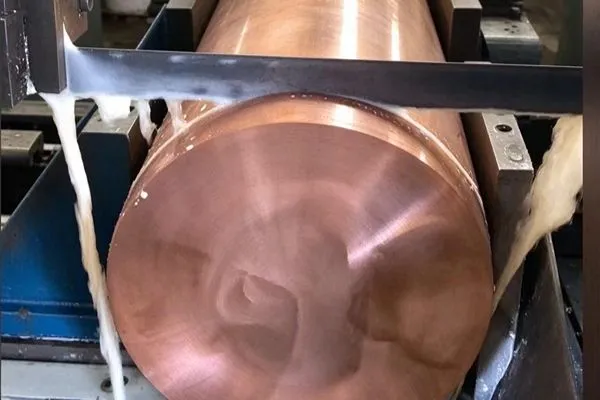
Heat-treatment verification
It's best to check the hardness of a C18200 chromium copper rod after it has stabilised at room temperature, not right after it has been quenched, because readings taken too soon can be wrong. You should also check the conductivity again, since it changes with the precipitation state. Tensile testing, metallography, and dimensional checks are all part of a full qualification package. Any claim of heat treatment should be backed up by furnace calibration records that identify each batch.
How Does Chromium Content Influence Electrical and Thermal Conductivity?
Electrical conductivity of C18200
Report the conductivity in % IACS or MS/m, and make sure the certificate makes it clear what the test temperature was and the sample orientation (longitudinal vs. transverse). The amount of chromium, the control of impurities, and the type of ageing all affect the number. C18200 has lower conductivity than pure copper, but it usually reads higher than beryllium copper in a high-strength temper. This is why OEM engineers choose it for parts that carry both mechanical and electrical load.
Thermal conductivity and heat dissipation
When it comes to welding electrodes, dies, and heat sinks, thermal conductivity is very important because a part that can't lose heat quickly enough will soften more quickly after being used over and over. At room temperature, C18200 moves heat away from the weld zone well, at about 324 W/m·K. The design of the cooling channel, the finish on the surface, the joint pressure, and the contact resistance all have an impact on how heat is lost in real life, just like the number for bulk conductivity does.
Recommended conductivity specification
In a clear purchase order for a C18200 chromium copper rod, the minimum electrical conductivity, a target thermal conductivity (if needed), the test method and temperature, the required temper, and the amount of variation that is okay between lots should all be written down. Also, it should say what will happen if a lot doesn't fall within that range: resample, reject, or adjust price. That way, there won't be any disagreements when the shipment arrives.
What Factors Affect C18200 Machinability and Service Life?
Machining factors
How easy something is to machine depends on its temper, stiffness, tool shape, feed rate, cutting speed, and the coolant used. Sharp carbide tools usually work well with C18200, but settings taken straight from a pure copper job are often too harsh and cause too much heat or burrs. Before setting full-rate machining parameters, I suggest doing a short production test on new stock. This is especially important when switching between suppliers or heats.
Service-life factors
What really determines how long a C18200 part lasts in the field is the contact pressure and current load on the part, the welding current and cycle frequency if it's an electrode, how well the working face cools down, how many times the temperature changes during the duty cycle, and how much surface wear there is from friction or contamination. Finally, electrode treatment and alignment are critical. Even a well-made rod will wear out quickly if the equipment around it stops being adjusted.
Common risks and mitigation
| Risk | Likely consequence | Mitigation |
|---|---|---|
| Wrong alloy identification | Premature wear or overheating | Verify chemistry and heat-number traceability |
| Incorrect temper | Hardness or conductivity miss | State temper (TF00) directly on the PO |
| Mixed material lots | Inconsistent process results | Require physical segregation by grade |
| Poor cooling design | Faster softening and wear | Review thermal load before finalizing geometry |
| Incomplete documentation | Disputes at receiving or audit | Require full MTC and inspection records every shipment |
How to Select the Right C18200 Chromium Copper Rod Specification?
C18200 rod specification checklist
Make sure you have these things in writing for a C18200 chromium copper rod before you ask for a quote: the UNS designation C18200, the product standard (RWMA Class 2/AWS J1.3, ASTM B441, or EN 12163/CW105C), the limits for chromium and copper chemistry, the diameter and length with a straightness tolerance for automatic feeding equipment, the temper (TF00), the minimum electrical conductivity, the tensile and hardness targets, the inspection requirements, and the heat-number traceability on the packaging. People who buy automatic electrode feeders often forget to check the straightness tolerance. This is because bars that are out of tolerance quickly block the feed lines.
Supplier capability and evaluation
Before comparing prices line by line, you should look at how well a seller can actually produce or source goods. Make sure they can show mill or factory traceability, keep lab access for chemistry, hardness, and conductivity testing, offer both standard and custom sizes, and have a clear process for inspection and fixing problems. Ask how they handle export paperwork for your area, and make sure they give you clear lead times instead of hazy claims.
JYDS (Dongguan Jiaye Dingsheng Precision Casting & Forging Co., Ltd.) has been making chromium copper since 1997. We do all of the steps ourselves, including vacuum melting, precision rolling, and heat treatment, instead of hiring outside help for any of them. We keep more than 500 tons of copper alloy in stock near the ports of Shenzhen and Hong Kong. This lets us ship stock sizes in 3–5 days and custom-cut orders in 15–20 days. For every batch that leaves, there is a full MTC that covers chemistry, hardness, and conductivity. If needed, there are also EN 10204 3.1 certification and RoHS/REACH compliance documents.
Procurement, compliance, and documentation factors
| Procurement factor | Questions to specify |
|---|---|
| MOQ | Is it based on weight, piece count, or heat size? |
| Lead time | Ex-stock, made-to-order, or heat-treatment dependent? |
| Pricing | Copper-index linked, fixed, or time-limited quote? |
| Incoterms | EXW, FOB, CIF, or DDP, clearly defined? |
| Payment terms | Different for samples versus production runs? |
| Documentation | MTC, CoA, inspection report, packing list, origin docs included? |
| Customization | Cut-to-length, special tolerance, or custom packaging available? |
Standards, quality verification, and compliance
Before you send a drawing to be made, make sure you understand the rules. As for the US market, ASTM B441 is the right reference set for chrome copper rod, while EN 12163/CW105C or DIN 17666 is the right one for European standards. RWMA Class 2 (AWS J1.3) is for welding electrode duty. Stay away from any datasheet that talks about ASTM B224 because that standard only talks about copper alloy plate and strip, not round rod. Also, stay away from any datasheet that talks about ASTM B196 because that standard only talks about beryllium copper rod and has nothing to do with chromium copper chemistry. ISO 9001 certification is proof of a quality management system that works, not just a certain grade of alloy. For shipments going to the EU, you need to ask for REACH and RoHS declarations directly, since they aren't always included on copper products. The CE mark only goes on finished goods that are regulated, not on raw copper rod by itself.
Conclusion
C18200 chromium copper rod is a good compromise between the low conductivity of pure copper and the high strength needed for a welding tool or a conductive structure part. The real precipitation hardening is caused by its 0.6% to 1.2% chromium content. However, the exact numbers you need rely on the heat, ageing cycle, thickness, and the standard that governs your order. When strength is more important than top conductivity, compare it to pure copper. When heavy-duty or coated-steel welding raises the temperature load, compare it to C18150. And only compare it to C17200/C17500 when spring force or peak strength are more important than conductivity and beryllium handling issues.
FAQ
1. What is C18200 chromium copper rod?
Copper-chromium alloy C18200 is sold as round rods or bars. It has the natural conductivity of copper plus more strength, hardness, and wear resistance after being treated with a solution and aged to the TF00 temper.
2. What is the chromium content of C18200 copper?
C18200 usually has between 0.6% and 1.2% chromium and the rest is copper. Check the exact number against the mill test certificate that is linked to your unique heat number, never a value from a catalogue.
3. Is C18200 more conductive than beryllium copper?
As long as the temper is strong, yes. In general, C18200 has better electrical and thermal conductivity than peak-aged beryllium copper. However, the exact difference depends on the grade and temper of beryllium you're comparing it to.
4. What is the difference between C18200 and C18150?
The metal C18200 is a binary copper-chromium alloy. C18150 adds zirconium to the mix to make it stronger and less likely to wear down at higher welding temperatures, but it typically costs more per kilogram.
5. Is C18200 suitable for resistance-welding electrodes?
Yes. C18200 is good for standard-duty resistance welding electrodes and related tools that need to be hard, conduct electricity well, and resist moderate wear. Current, pressure, cooling, and good maintenance still have a big impact on how long an electrode lasts.
6. Can C18200 chromium copper rod be heat treated again after purchase?
When standard TF00 stock is shipped, it is ready to use right away. After buying the material, if you hot-forge or heavily cold-work it, a repeat solution-and-aging cycle will bring it back to its original hardness and conductivity goals.
7. What documents should buyers request for C18200 rod?
Before you accept a shipment, make sure you have a mill test certificate that includes a chemical analysis, mechanical test results, conductivity data, dimensional inspection report, heat number, packing list, and any RoHS or REACH declarations that are needed.
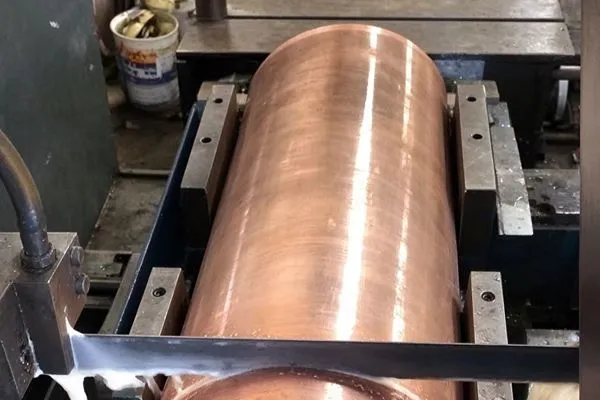
Ready to Lock In Batch-Tested C18200 Rod Before Your Next Production Run
Mixed grades and vague hardness windows cost real money once they reach your feed line, not just paperwork headaches. JYDS supplies C18200 chromium copper rod with verified chemistry, TF00 aging, and segregated inventory that never touches our C18150 stock. As a direct C18200 chromium copper rod manufacturer based near the Shenzhen and Hong Kong ports, we can confirm diameter, straightness, and conductivity data before you commit. Email our team at js01@jstongcai.com.cn with your target diameter, temper, and volume, and we'll send a quote with full MTC documentation attached.
References
1. ASTM International, "ASTM B441-18 Standard Specification for Copper-Chromium Alloy Rod," 2018.
2. American Welding Society, "AWS J1.3, Standard for Resistance Welding Electrodes and Accessories," 2023.
3. European Committee for Standardization, "EN 12163:2016, Copper and Copper Alloys – Rod for General Purposes," 2016.
4. Copper Development Association, "Alloy Data: C18200," 2024.
5. European Chemicals Agency, "Understanding REACH," 2024.
6. ASM International, "ASM Handbook, Volume 2: Properties and Selection of Nonferrous Alloys," 1990 (reference edition).
About the author
Yang has spent over 12 years working directly with electrode manufacturers and switchgear OEMs on copper alloy selection, heat-treatment verification, and mill-certificate review. He works alongside JYDS's melting and rolling teams to resolve chemistry disputes, hardness rechecks, and standard-reference errors that show up on customer drawings before they reach production.
Online Message