
Nov 18, 2026
C95400 Aluminum Bronze Plate: Welding and Fabrication Guide
If you manage four factors, C95400 aluminum bronze plate can be effectively welded and fabricated: plate condition, joint cleanliness, heat input, and the inspection plan. Sawing, TIG or MIG welding, and carbide machining are all good, but you need a defined method for each stage. For plates with thickness above 25 mm, preheating is recommended to avoid cracking. Machinability rating is approximately 60; therefore, tooling and speeds are important. This book describes how I propose engineers and buyers inspect properties, prepare joints, cut and machine plate, choose the grade, and develop a purchase specification that will stand up in production.
Why Welding and Fabrication Require Special Control for C95400 Aluminum Bronze Plate
Properties to Verify Before You Fabricate
The numbers on the certificate are the beginning of every fabrication plan. C95400 aluminum bronze plate includes a minimum of 83.0% copper, 10.0–11.5% aluminum, 3.0–5.0% iron, and up to 1.5% nickel. Typical mechanical properties are a minimum tensile strength of 586 MPa, a minimum yield strength of 221 MPa, elongation of at least 12%, and a hardness range of 170–195 HBW. Density is 7.45 g/cm³, which is useful in calculating plate weight for freight and handling. I would recommend using the mill certificate within these limits and then comparing before any cutting. Chemistry and hardness findings tell whether the plate fits your design. A mismatch identified at receiving is much cheaper than one detected after welding.
Thickness, Temper, and Casting Route
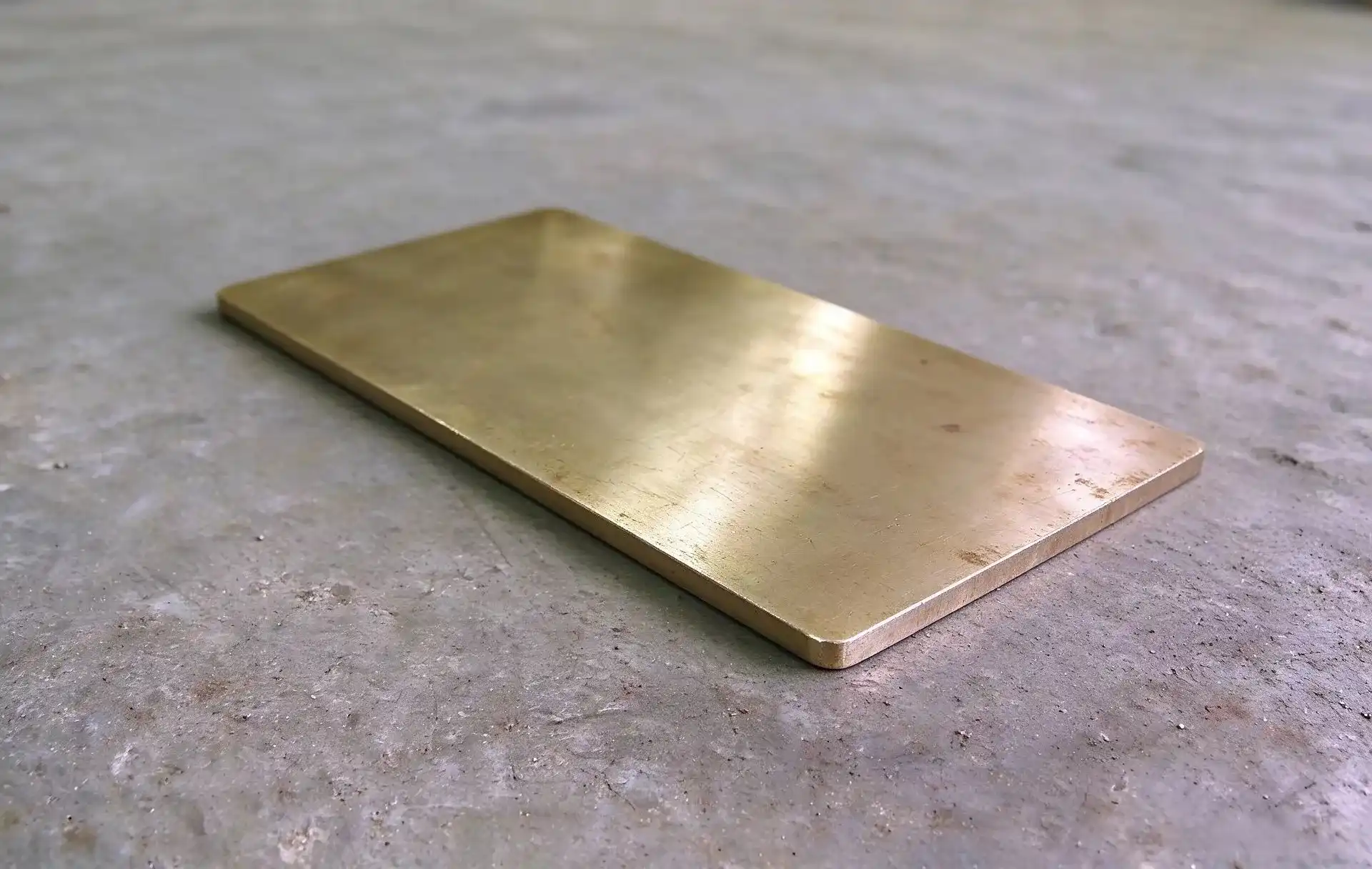
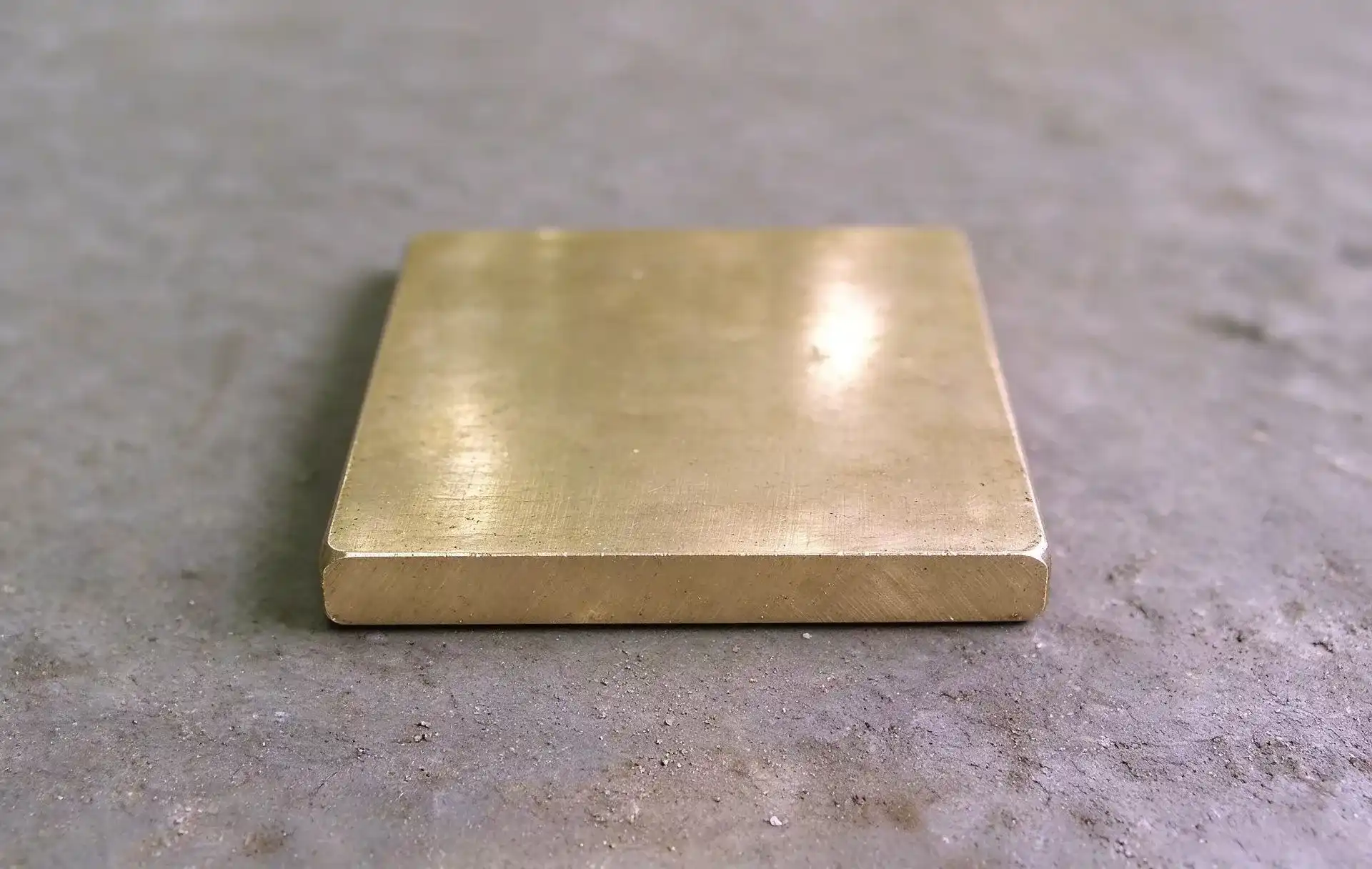
The thickness and condition of a plate affect its behavior. The precise thickness window is confirmed in writing before quotation. Our C95400 aluminum bronze plate is available in thicknesses from 10 mm to 200 mm, sawn or precision honed to your width and length. The material is delivered as cast or heat-treated by quenching and tempering. Quenching and tempering increases hardness and tensile strength, and hence the two conditions should never be on the same standard line. ASTM B505 is for continuous castings, whereas ASTM B148 is for sand castings. On the purchase order, name the condition, standard, and thickness, and ask for the same language on the 3.1 certificate. That practice precludes the mixing of as-cast and heat-treated plate in one batch.
Internal Soundness and Ultrasonic Testing
Shrinkage porosity in the core of thick cast sections may be concealed and only revealed by welding or final machining. That's why ultrasonic testing is a common request for hefty C95400 aluminum bronze plate. Finished items are tested for tensile strength, hardness, and ultrasonic testing, as well as liquid penetrant examination, while incoming material is tested by OES or ICP analysis. With your order documentation, ask for the ultrasonic findings and agree on the acceptance level before commencement of production. This is of most importance for bridge bearing slide plates, heavy wear plates and die inserts where after the final cut a concealed gap may be left behind.
How to Prepare and Weld C95400 Aluminum Bronze Plate
Joint Preparation and Surface Cleanliness
Aluminum bronze develops a hard aluminum oxide layer, and that film will trap porosity if it is left in the joint. Use stainless or bronze brushes devoted to C95400 aluminum bronze plate to clean the groove and adjacent surface to a brilliant metal. Oil, moisture, paint, and cutting fluid are wiped off. Keep carbon steel tools and grinding wheels away from the plate. Embedded iron particles may contaminate the weld. Before striking an arc, check fit-up and carve a groove that will allow the torch complete access. Record the heat number of each plate so that the completed weld may be traced back to its certificate.
Process Choice, Preheat, and Filler Metal
C95400 aluminum bronze plate is suitable for TIG and MIG welding. TIG provides tight root control on narrow portions and repairs; MIG deposits metal quicker on thick plate and lengthy seams. Plates above 25 mm thick should be pre-heated to reduce the possibility of cracking. Your approved welding technique includes the correct temperature, interpass limit, and shielding gas. Aluminum bronze filler wires are usually the first option, AWS A5.7, but the ultimate decision is determined by the process qualification record. Pressure, marine, and safety-sensitive items need to have a certified technique and qualified welders before manufacturing can commence. I usually urge customers to try a trial joint on offcut from the same heat.
Defect Prevention and Weld Inspection
The most common faults include porosity, cracking, absence of fusion, oxide inclusions, distortion, and local hardness change. Minimize them by using a balanced weld sequence, consistent heat input, cleaning thoroughly between passes, and monitoring the temperature. The kind of inspection depends on the project: visual and dimensional inspection of each weld, liquid penetrant inspection for surface fractures, and ultrasonic or radiographic inspection if interior quality is important. The heat-affected zone can be evaluated using hardness or metallurgical checks. Keep the records together and associate each completed piece with the heat number, welding technique, welder qualification, consumable batch, and inspection results. That file saves time on customer audits.
Cutting, Forming, and Machining C95400 Aluminum Bronze Plate
Sawing and Waterjet Cutting
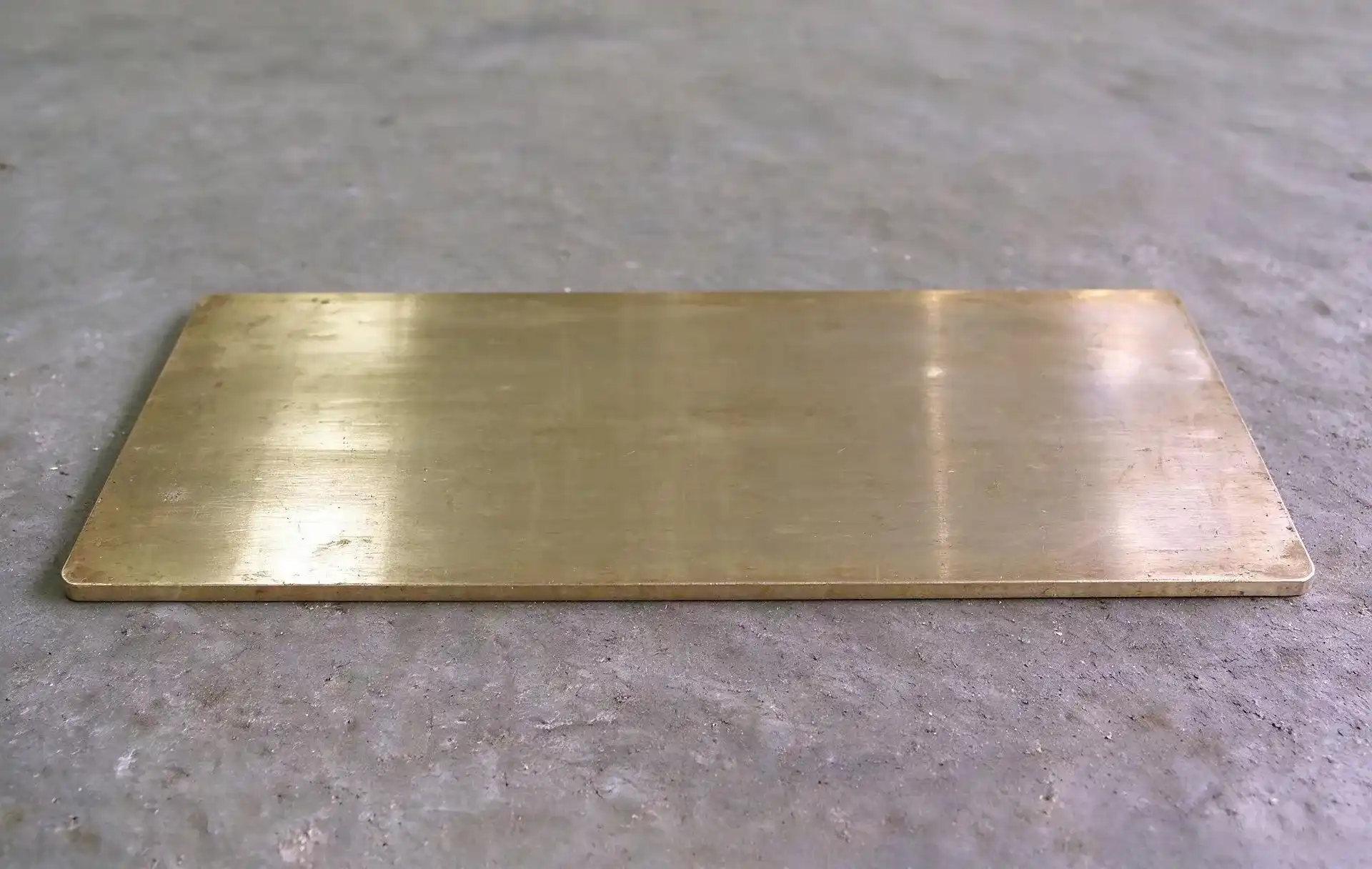
Cold cutting procedures produce no heat damage and leave a clean edge. Most thicknesses 10 mm to 200 mm are band sawn or circular sawn. Waterjet cutting is used for profiles with tight corners. A thorough inspection of thermal cutting is required, as the heat might affect the edge condition. Specify cut sizes by drawing, not by weight alone, and add a machining allowance so the finished part cleans up. At JYDS, we saw C95400 aluminum bronze plate to custom width and length and can offer it precisely ground. A clean cut list also helps to check thickness and stock availability before you commit to a trial purchase.
Machining with Carbide Tooling
The machinability rating is about 60 (with free-cutting brass at 100), meaning this alloy cuts slower than free-cutting brass. Use carbide tools and stiff setups, and low cutting speed. Keep feed constant so as not to rub and work-harden the surface by the tool. Flood coolant and careful chip management will preserve finish and reduce burrs. The shops frequently complain that this slows down production, and I understand the problem. The solution is long life. A stamping die insert or guide plate made from gall-proof aluminum bronze (bearing bronze) versus steel might allow for longer maintenance intervals that balance the increased machining time.
Forming, Flatness, and Finishing
C95400 is a casting alloy and has an elongation of at least 12%; therefore, heavy cold forming is seldom the correct way. Most purchasers cut and mill C95400 aluminum bronze plate to final form rather than bend it. If a design does need forming, check it with your supplier beforehand, since edge cracking and springback are genuine possibilities. The flatness is important for sliding surfaces and die seats. So ask for flatness and surface finish on the design and leave stock for final grinding. Polishing is an option if the application calls for a smooth bearing face. Deburr all edges prior to assembly to preserve mating parts.
Selecting C95400 Aluminum Bronze Plate by Application
Heavy Wear Plates and Bridge Bearings
Heavy machinery slideways, gibs, guide rails, and bridge bearing slide plates support huge loads at modest sliding speeds. Here, the key properties are 170–195 HBW hardness, ≥586 MPa tensile strength, and low friction against steel. Aluminum bronze will survive stress and abrasive wear without breaking and will cut maintenance in heavy sliding use. But in this industry, buyers typically consider three things: batch hardness and strength, thickness and cut accuracy, and hardness limitations after heat treatment. State all three for C95400 aluminum bronze plate and whether you want as-cast or quenched-and-tempered plate.
Die Inserts, Marine Liners, and Pump Parts
The resistance of the alloy to galling on steel sheet is an advantage for stamping die inserts and guide plates. It resists saltwater, brackish water, cavitation, and erosion; therefore, it is well-suited for marine hardware, shipbuilding plates, and valve and pump wear plates. The alloy generates a protective oxide coating, and the copper presence prevents biofouling. It’s also non-sparking, which is good for oil and gas safety gear. For maritime work, verify galvanic compatibility with the surrounding steel or stainless components. Inquire early about any classification approval your project needs. We provide an EN 10204 3.1 certificate with each shipment.
Comparing C95400 with Neighboring Grades
Grade swaps should be driven by design data, not chemistry or pricing. C95500 has more nickel and is often used for greater strength applications, whereas C95800 is a nickel-aluminum bronze commonly used for saltwater duty. C93200 bearing bronze is used for lesser loads and higher speeds, and C95400 for heavy loads at low speeds. Stainless steel and naval brass meet additional design requirements. First, if you are considering a substitution, check calculations, weldability, product form, certification, and service history. If it is a heavy load sliding plate, I would start with C95400 aluminum bronze plate, and only go to a higher grade if the load case necessitates it.
Buying C95400 Aluminum Bronze Plate and Avoiding Costly Mistakes
Writing a Complete Purchase Specification
A clear specification eliminates most disagreements. For C95400 aluminum bronze plate, include UNS C95400, the applicable standard (ASTM B148, ASTM B505, ASME SB148, or DIN EN 1982), condition (as-cast or quenched and tempered), thickness with tolerance, breadth, length, flatness, surface finish, hardness, and quantity. Add necessary test reports, including ultrasonic findings and an EN 10204 3.1 certificate. Your design should be consistent with grade names such as CuAl11Fe4 and EN CC331G. Ensure testing, cutting, packing, and freight are quoted on the same basis so bids can be compared directly. Standard stock products are sent in 3-5 days. Quotations are provided within 24 hours.
Common Mistakes to Avoid
There are many mistakes that are repeated throughout projects. Buyers want every C95400 aluminum bronze plate to be the same and mix as-cast and heat-treated lots. Fabricators weld without a certified method, use contaminated brushes, or match the plate with incompatible metals. Buyers order by total weight, leave out cut-to-drawing details, and have poor fit-up and excessive machining. If batches are inconsistent, flatness is poor, or documentation is lacking, the lowest unit price might be more expensive. Price includes technical assistance and quality control. A vendor that responds to sketching queries prior to cutting preserves your timetable.
Final Checklist Before Release
I suggest a quick review before taking the plate into production. Engineering verifies alloy, standard, condition, chemistry, mechanical characteristics, hardness, machining allowance, and welding technique. Quality ensures traceability of heat number, certifications, thickness, flatness, surface condition, and weld inspection records. Procurement will look at supplied cost, stock status, lead time, packaging, shipping conditions, and export papers. We transport by air or water and do customs declarations for clients in North America, Europe, and Southeast Asia. This checklist completes design, manufacturing, quality, and purchase before the first cut.
Conclusion
Verified material, regulated methods, and precise documentation are essential for successful manufacture of C95400 Aluminum Bronze plate. To be certified are composition, hardness 170 to 195 HBW, tensile strength ≥586 MPa, thickness, and condition of as-cast or quenched and tempered. Heavy portions should be ultrasonically tested. Clean joints, preheating above 25 mm, TIG or MIG welding under a competent process, and adequate inspection decrease weld flaws. Low machinability rating is handled by carbide tooling and cutting to drawing instructions. C95500, C95800, C93200 - Service circumstances, such as sliding wear, saltwater exposure, and die duty, govern grade selection. A full buying specification will avoid most mishaps.
FAQ
1. Can C95400 aluminum bronze plate be welded?
Yes. TIG and MIG both work. Preheat plates thicker than 25 mm to reduce cracking risk, clean the joint to bright metal, and follow a qualified welding procedure.
2. How machinable is this alloy?
The machinability rating is approximately 60. Use carbide tooling, low cutting speeds, steady feeds, and good coolant.
3. Does the plate need heat treatment?
No, it performs in the as-cast state. Quenching and tempering raises hardness and tensile strength for demanding uses, so state the condition on your order.
4. Which documents ship with the plate?
Each order includes an EN 10204 3.1 certificate covering chemical composition, mechanical test results, and dimension inspection data.
Request a C95400 Aluminum Bronze Plate Quote from JYDS
Send your drawing, thickness, quantity, and condition to JYDS at js01@jstongcai.com.cn, and our team will reply with a quotation. As a C95400 aluminum bronze plate supplier with more than 25 years in precision copper alloy production, we cut plate to your drawing, supply EN 10204 3.1 certificates, and ship standard stock within 3–5 days.
References
1. ASTM International, ASTM B148 Standard Specification for Aluminum-Bronze Sand Castings, 2018
2. ASTM International, ASTM B505/B505M Standard Specification for Copper-Base Alloy Continuous Castings, 2018
3. American Welding Society, AWS A5.7/A5.7M Specification for Copper and Copper-Alloy Bare Welding Rods and Electrodes, 2007
4. ASM International, ASM Handbook, Volume 2: Properties and Selection: Nonferrous Alloys and Special-Purpose Materials, 1990
5. European Committee for Standardization, EN 1982 Copper and Copper Alloys: Ingots and Castings, 2017
6. European Committee for Standardization, EN 10204 Metallic Products: Types of Inspection Documents, 2004
Online Message