
Nov 16, 2026
Can Aluminum Bronze Rod Replace Stainless Steel in Seawater?
Yes, aluminum bronze rod may be a substitute for stainless steel in specified seawater applications, but it is not a generic substitute for 316, duplex, or super duplex grades. It is most suited for pump shafts, valve stems, bushings, and worn parts that are exposed to moving seawater, sliding contact, and cavitation. It’s not as good in stagnant water, sulfide-polluted water, or tasks where a code designates stainless steel. The proper solution relies on temperature, flow speed, load, galvanic coupling, and the standard on your design. This guide analyzes materials, grades, and documentation to make an informed decision before ordering samples.
Aluminum Bronze Rod Properties Relevant to Seawater
How the Alloy Resists Seawater
Aluminum bronze rod is a copper alloy containing aluminum as the primary alloying element, commonly alloyed with iron, nickel, and manganese. The family is around 5-12% aluminum, although each grade has a narrower window. For example, UNS C63000 specifies 9.0–11.0% aluminum. Aluminum in saltwater is covered with a thin, tight oxide coating. If the film is broken by a scratch or collision, it reforms in the presence of oxygen. Iron makes the grain finer and increases toughness. Nickel enhances saltwater resistance and heat resistance. The evidence illustrates why the alloy will operate in pumps and valves for years without any protective covering.
Mechanical Properties to Verify
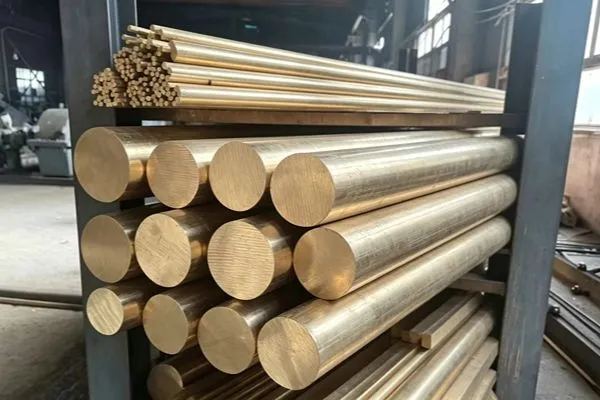
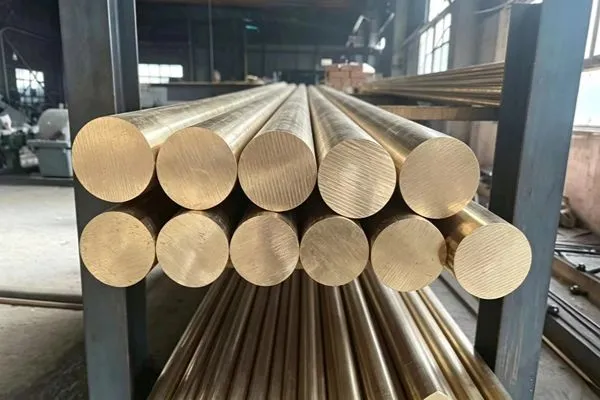
Our aluminum bronze rod is normally 620 to 860 MPa in tensile strength and 190 to 250 HB in hardness, depending on the grade, diameter, and temper. It has a density of roughly 7.58 g/cm 3. Most grades are non-magnetic and non-sparking, which is important in hazardous situations and around sensitive equipment. Such a broad range implies you should never take a general number. Then compare yield strength, elongation, and hardness to your drawing, and compare these values to the heat-specific parameters on the EN 10204 3.1 certificate. Checking a cut end for hardness takes minutes and assures the bar is as per documentation.
Where Seawater Resistance Has Limits
The oxide film requires oxygen and some movement of water. In still water, beneath deposits or in tight crevices, this protection may be lost, and local attack may commence. The initiation of crevice corrosion in nickel-aluminum bronze has been correlated to crevice conditions and microstructure in studies. Copper alloys are also vulnerable to corrosion by sulfide-polluted water, as seen in improperly flushed harbor lines, and abrasive sand increases wear. Nothing here rules out the alloy. It informs you to check the true duty cycle: temperature, speed, solids, and idle time. If the duty is unknown, test with a sample part before placing a complete order.
Aluminum Bronze Rod vs Stainless Steel, Brass, and Silicon Bronze
Compared With 316 Stainless Steel
Type 316 has a pitting resistance equivalent number (PREN) of around 24, which is rather low for warm saltwater. It is subject to crevice attack or pitting beneath gaskets, marine vegetation, and stagnant areas. Aluminum bronze rod is different: it resists cavitation and erosion in moving saltwater, and its multiphase structure resists galling when sections move under strain. Austenitic stainless steel is prone to galling; hence, a bronze bushing or valve seat will frequently survive longer than a stainless one in the same system. Stainless still leads on code acceptability and in certain strength ranges; therefore, we approach the move as a part-by-part choice.
Compared With Duplex and Super Duplex
Super duplex grades have a PREN of 40 or more and extremely high strength; thus, they perform well in cold, rapid, chloride-heavy service. They also cost more and machine harder. If your item requires such strength in a narrow piece, such as a high-pressure component, stainless steel is the best choice. If the item is a bushing, wear ring, or valve stem where sliding, cavitation, and fouling are more important than peak strength, aluminum bronze rod is worth a quotation. It also contains copper to stop marine growth on subsea devices. Price both choices at finished-part cost and decide.
Compared With Brass and Silicon Bronze
Standard brass is seldom suitable for heavy marine components because of dezincification – the loss of zinc in saltwater. Naval brass does include tin to slow down that assault, but still lags below aluminum bronze in strength and wear life. Silicon bronze is also corrosion-resistant and easy to weld, making it suitable for architectural and lightly loaded marine hardware. Aluminum bronze rod has greater load capacity and better sliding, pump, and valve service. If you need to solder a hardware item and moderate strength, silicon bronze may be for you. For a shaft or bushing that will face friction and flow, we often look to a nickel-bearing aluminum bronze.
Aluminum Bronze Rod Grades for Marine Applications
Wrought Grades: C63000, C63200, and C61400
Our high-strength wrought marine grade is C63000 (CuAl10Ni5Fe4, classified with CW307G and DIN 2.0966) and is designated as AMS 4640. This aluminum bronze rod is supplied for shafts, valve stems, and bushings. C63200, a nickel-aluminum bronze, is suitable for harsh marine service and high temperatures. If your drawing specifies C61400, we also supply that grade. ASTM B150, ASME SB150, and EN 12163 cover wrought rod and bar, and each grade has its own composition restrictions. Instead of the 5-12% aluminum family range, check the aluminum, nickel, and iron percentages grade by grade on the MTC.
Cast Grades: C95400, C95500, and C95800
C95400, C95500, and C95800 are cast grades. C95400 is the economic general-purpose selection for gears, bearings, and valves. C95500 has better strength. C95800 is the nickel-aluminum bronze, which has been used for a long time for propellers, pumps, and seawater valves. These grades are not interchangeable and are not the same product as wrought rod. C95400 is not covered by ASTM B150; hence, the cast bar is produced to casting requirements like ASTM B505. When ordering cast aluminum bronze rod, make sure the standard on the estimate and the certificate are the same so your inspector knows what to look for.
Keeping Wrought and Cast Material Apart
One of the main concerns buyers have is that they would get a cast bar when they ordered a wrought bar. And it is a legitimate concern. The grain structure and flow lines illustrate the difference at a cut end, and a retest shows the mix-up. Specify the manufacturing route on your purchase order. Ask for the grade on every heat certificate. If you purchase many grades together (e.g., C63000, C63200, C61400 and C95400), please request separate packages with tags for each grade to avoid erroneous shipping. All shipments from JYDS have EN 10204 3.1 MTC, and we can track it from heat to delivery.
How to Select Aluminum Bronze Rod for Seawater Parts
Start With Service Conditions
Before you choose an aluminum bronze rod grade, write down seawater temperature, flow speed, pressure, solids, idle periods, load and vibration, and mating materials. Then match the task to the grade. C95400 is for general engineering when cost is an issue. Use C63000 for high strength and marine corrosion. For severe seawater service at high temperatures, see C63200. C63000 or C63200 are used for low magnetic or defense work. Non-sparking tools may be made from C95400 or C63000. If you are somewhere in between, our technical staff will provide you with free advice on material choices.
Match Size, Machining, and Cost
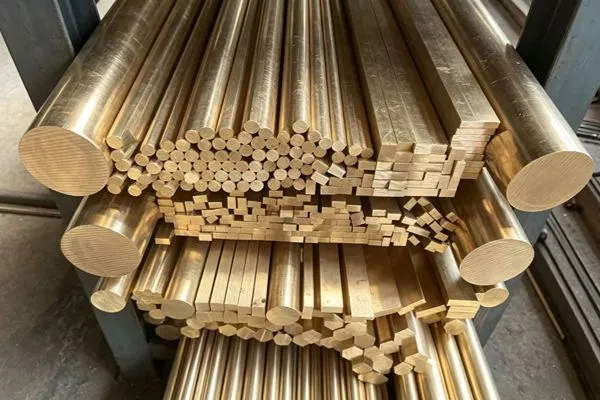
We supply diameters from 5 mm to 300 mm, in lengths of 1000–3000 mm or cut to size, in round, hexagonal, and square profiles. Near-net-shape profiles reduce scrap. Machinability is 20–30% of free-cutting brass, so use carbide tooling and stiff setups. That greater cutting cost buys hardness and wear life, which is the trade-off valve and bushing producers accept. Welding uses TIG or MIG, with preheat and the correct filler. Compare total cost, not only the price per kilogram of aluminum bronze rod. Factor in machining time, scrap, freight, certification, service life, and maintenance.
Typical Marine and Industrial Applications
Aluminum bronze rod is used in marine hardware, propeller shafts, heavy-duty bushings and bearings, valve stems, pump parts, and subsea oil and gas equipment. It is also used for aircraft landing gear components, wear plates, hydraulic gears, and non-sparking safety equipment. The strength of the alloy required differs for the various applications. Pumps need resistance to cavitation, bushings to galling, and hazardous zones to non-sparking behavior. Provide us with a sketch or 3D model showing grade, dimensions, tolerances, quantity, and surface quality. Before shipping, we may turn, centerline grind, thread, or cut keyways.
Risks, Documentation, and Buying
Galvanic and Corrosion Checks Before Substitution
Inspect every piece of metal that contacts the new part. Stainless steel is passive and at the noble end of the seawater galvanic series; therefore, if the stainless area is significantly greater, aluminum bronze may become the anode. The outcome is changed by coatings, fasteners, and electrical isolation, and the galvanic series is covered in ASTM G82. Standard seawater data may not apply in hot, rapid, abrasive, or polluted service conditions. If your project requires stress corrosion or dealuminization data, please advise at the time of requesting a quotation, and we will check what records are available. Only safety-critical modifications need approval after an engineering evaluation.
Documents That Prove the Grade
A good certificate should include: grade, chemical composition, tensile strength, hardness, dimensions, product standard, heat number. Each delivery of JYDS aluminum bronze rods will be accompanied by EN 10204 3.1 MTC, RoHS and REACH papers, and traceability records. We verify composition using OES spectral analysis. Our quality system is ISO 9001 certified. Cross-check findings against the grade-specific tensile and hardness ranges on the MTC. Check grade marking on the bar. If you believe a classification society or design office needs further proof, let us know early so we can explore what is possible within your ship timetable.
When Stainless Steel Is Still the Better Choice
Use stainless steel when a code or standard requires it, when you need duplex level strength in a short piece, or when there is worry about copper leak or exposure to sulfides. For wear, galling, cavitation, erosion, or frequent contact drive failures when life cycle cost is more important than initial cost, specify an aluminum bronze rod. Mixed designs are frequent, for example, stainless pressure parts with bronze bushings and wear rings. For important parts, order samples, analyze test results, and do an engineering check before altering the material in a design.
Buying From JYDS: RFQ, Lead Time, and Shipping
JYDS has been producing copper alloys since 1997, with over 25 years of expertise, and we supply directly from our factories in China. A complete RFQ should include grade, shape, diameter, length, quantity, tolerance, standard, destination, and Incoterms. We quote within 24 hours. Stock aluminum bronze rods ship in 3–5 days; custom orders ship in 15–20 days. We are located near the Shenzhen and Hong Kong ports, enabling fast sea, air, and express shipments. All rods are packed in anti-rust, moisture-proof export packaging. We support CIF, FOB, and DDP terms and handle export customs clearance.
Conclusion
Aluminum bronze rod is a replacement for stainless steel in saltwater when the part is subject to wear, galling, cavitation, and erosion, but it is not a blanket solution. Its aluminum-rich oxide coating protects the surface in oxygenated, flowing water, but stagnant water, fissures, sulfides, and abrasive particles increase danger. It provides a good mix of strength and sliding performance vs. 316, duplex, brass, and silicon bronze, and stainless steel holds the advantage when codes or peak strength prevail. Grade selection is critical: wrought C63000, C63200, and C61400 follow ASTM B150, while cast C95400, C95500, and C95800 follow ASTM B505 or B271. Decisions should be well-founded and based on service circumstances, machining costs, galvanic examination, and certifications that prove grade, composition, and hardness.
FAQ
1. Can aluminum bronze rod replace 316 stainless steel in seawater?
Yes, for selected parts such as valve stems, bushings, wear rings, and pump components that see flow and sliding wear. Review temperature, flow speed, galvanic contact, and code requirements first, because stagnant or sulfide-polluted water raises risk.
2. Which grade should I choose for marine service?
C63000 suits high strength with marine corrosion, and C63200 suits severe seawater at elevated temperatures. C95400 is a cast, general-purpose, cost-effective grade. Match the grade to your load, environment, and the standard on your drawing.
3. What documents come with JYDS aluminum bronze rod?
Each shipment includes an EN 10204 3.1 MTC with composition and mechanical data, plus RoHS and REACH documents and traceability records. Wrought grades follow ASTM B150, ASME SB150, and EN 12163.
Request Aluminum Bronze Rod Quotes From JYDS
Send JYDS your grade, diameter, length, quantity, standard, and destination, and our team will quote within 24 hours. As an aluminum bronze rod supplier with factory-direct supply from China, we provide C63000, C63200, C61400, and C95400, EN 10204 3.1 MTC, and custom cutting or machining. Email js01@jstongcai.com.cn to discuss your seawater application and request samples.
References
1. ASTM International, ASTM B150/B150M, Standard Specification for Aluminum Bronze Rod, Bar, and Shapes, 2019.
2. ASTM International, ASTM B505/B505M, Standard Specification for Copper Alloy Continuous Castings, 2018.
3. ASTM International, ASTM G82, Standard Guide for Development and Use of a Galvanic Series for Predicting Galvanic Corrosion Performance, 2014.
4. ASM International, ASM Handbook, Volume 2: Properties and Selection: Nonferrous Alloys and Special-Purpose Materials, 1990.
5. Schüssler and Exner, The Corrosion of Nickel-Aluminium Bronzes in Seawater, I. Protective Layer Formation and the Passivation Mechanism, Corrosion Science, 1993.
6. Wharton and Stokes, The Influence of Nickel-Aluminium Bronze Microstructure and Crevice Solution on the Initiation of Crevice Corrosion, Electrochimica Acta, 2008.
Online Message