
Nov 25, 2026
How Does C95400 Aluminum Bronze Round Bar Prevent Shaft Seizure?
The copper-aluminum-iron structure of C95400 aluminum bronze round bar stops steel shafts from seizing up because it doesn't bend, stick, or gall against steel shafts. I have been ordering this alloy for production runs of bearings and bushings for more than ten years. The same thing happens with hydraulic, marine, and mining equipment: strength and hardness buy you time before a bearing surface fails, but clearance, lubrication, and shaft hardness still decide what happens. This guide talks about the metals, test data, and source checks that buyers should make to make sure that a production order doesn't turn into a guarantee claim.
As a quick answer, the 170-195 HB hardness and 586-690 MPa tensile strength of C95400 aluminum bronze round bar keep the bearing surface from smearing under load. This lowers the risk of seizures. When metals rub against a hardened steel shaft, the iron-rich parts of the microstructure prevent the sticking wear that causes galling. All of this doesn't take the place of good design work. It's still important that the clearance, lube, surface finish, and orientation are all right for the job.
Before you place an order, there are a few things you should think about:
- C95400 is often used for bushings, wear sleeves, and thrust washers that are running under heavy, slow to moderate speed loads because it is strong, not too hard, and doesn't rub against steel very much.
- Most of the time, the alloy is stronger and lasts longer than tin-based bearing bronzes like C93200. However, for lighter-duty parts, C93200 is still better at being machined and shaped.
- When you use continuous casting under ASTM B505, the bar core is heavier than when you use sand casting under ASTM B148. This is important for the risk of shrinking and pores in large-diameter bars.
- No metal can stop seizures on its own. Dry running, being out of line, and contamination will all hurt C95400 in the same way that they hurt any other bearing material.
Your shop needs UT reports to go with every heat of connect-cast aluminium bronze bar that it gets by the ton. JYDS can look over your drawing and send you a specification sheet with the current stock sizes. Email the technical sales desk at js01@jstongcai.com.cn and let them know what diameter range you're looking for. This way, they can give you a price based on real continuous-cast supply instead of a catalogue size.
How Does C95400 Aluminum Bronze Resist Shaft Seizure?
What C95400 Aluminum Bronze Round Bar Is
Copper alloy C95400 aluminum bronze round bar is made up of about 83–85% copper, 10–11.5% aluminium, 3–5% iron, and small amounts of manganese and nickel. It has the UNS number C95400, the CDA number 954 as a trade reference, and the SAE J462 grade listing. The iron in this alloy makes the grain structure smoother as it hardens. This is the main reason why it is stronger and lasts longer than plain aluminium bronze.
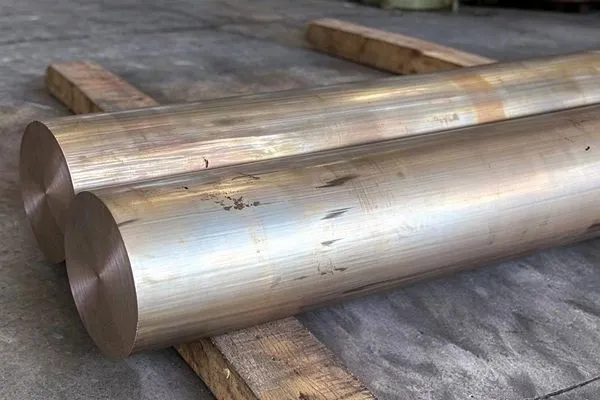
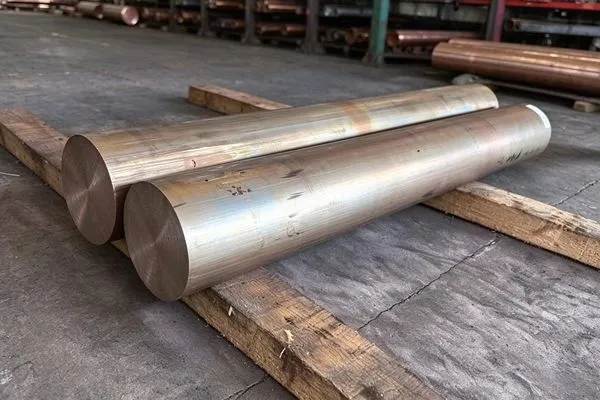
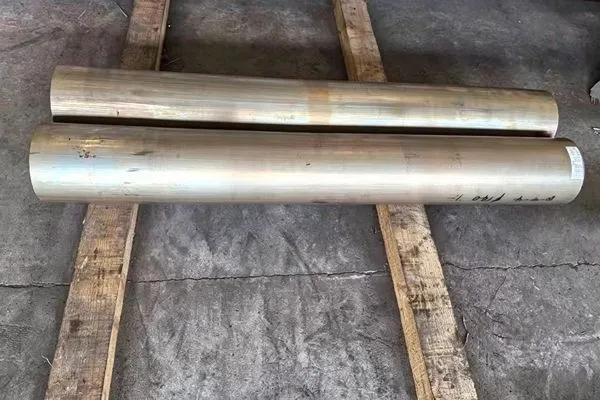
"Round bar" can be produced through several manufacturing routes: hot working and cutting, continuous casting, sand casting, or centrifugal casting. There is a different chance of internal flaws for each method and a different grain structure. People who think all C95400 bar is the same don't check how the bar was made, which is the most important thing to do for bearing service.
How Seizure Develops Between a Shaft and Bearing
A seizure is a sudden rise in the amount of friction between a shaft that is turning and the surface it is bearing. It often starts out small, with just a few points of metal-to-metal contact. As heat builds up, it gets bigger as the surface softens and tiny spots join together. The spots that were welded come loose as the shaft turns, and the torn material cuts into the bearing bore. It's called galling, and it feeds on itself once it starts.
A steel shaft and a bushing, sleeve, or thrust washer made of a softer bearing alloy are the most likely to break. There are four things that can go wrong: too much load on the bearing area, not enough moving space, dirt or grit in the grease, and a shaft that isn't lined up with its case. Even if you choose the right bearing alloy, any one of these four can cause galling.
Why C95400 Can Interrupt the Seizure Process
It's important to have a high load capacity because it keeps the bearing bore from deforming when it's under pressure. When a hole bends even slightly, space goes down and friction goes up. This starts the cycle of heat and welding that we talked about above. The tensile strength of C95400 aluminum bronze round bar is 586–690 MPa, which means it keeps its shape under loads that would flatten lighter bronzes.
Sticking is also slowed down by the iron-aluminum phases in the microstructure of a C95400 aluminum bronze round bar. Steel and bronze don't weld together at the molecular level because of the harder phases in C95400. These phases stop the contact and limit the amount of material that is torn away. It will only work as planned if the casting is good and the heat treatment is right for the part, if it is used. If the bar's core shrinks without being seen, it will break quickly, even if the surface chemistry looks good.
What Properties Make C95400 Suitable for Shaft Bearings?
C95400 Chemical Composition and Equivalent Grades
The chemistry should match the requirements set out in the order, as shown by a mill certificate. Line by line, this is what a buyer should look at.
| Element or designation | Content or verification point |
|---|---|
| Copper | Balance, typically 83.0–85.0% |
| Aluminum | 10.0–11.5%, controls hardness and strength |
| Iron | 3.0–5.0%, refines grain and raises fatigue life |
| Manganese, nickel, other elements | keep residuals within allowable limits |
| UNS designation | C95400 |
| Product condition | As-cast, continuous cast, or heat-treated (TQ50) |
The grades C95500 and C95800 are in the same family as a C95400 aluminum bronze round bar, but C95500 has more nickel and C95800 has a different mix of aluminium. This makes them more resistant to rust or stronger, based on the grade. Without a new chemistry and property check, none of these can be used instead of C95400. A heat number should be attached to each production batch's mill test certificate. This number is what buyers use to track down a bad part and find the exact pour it came from.
Mechanical Properties, Hardness, and Density
For designing bearings, the five numbers that matter are tensile strength, yield strength, elongation, hardness, and density. All five numbers should be on the mill certificate, not just in a sales brochure.
| Property | Typical value | Buyer verification point |
|---|---|---|
| Tensile strength | 586–690 MPa | Confirm minimum vs. certified actual |
| Yield strength | 207–310 MPa | Test method per ASTM E8/E8M |
| Elongation | ≥12% | Gauge length used in the test |
| Hardness | 170–195 HB | Scale, location, and sample diameter |
| Density | ~7.45 g/cm³ | Nominal or supplier-confirmed |
| Thermal conductivity | ~59 W/m·K | Relevant for heat buildup in sliding contact |
It is not the same thing to have a minimum spec value and a certified actual value, but some buyers thought they were. As per ASTM E10 for Brinell hardness, the certificate should show the exact number from the batch that ships. This is also about diameter. At its heart, a Ø300 mm bar cools more slowly than a Ø50 mm bar. This means that strength and grain size can change between sizes from the same production run.
Corrosion Resistance and Temperature Capability
A C95400 aluminum bronze round bar is good for marine and saltwater use because the aluminium in it makes a thin oxide layer on the surface that repairs itself. This layer does well in seawater, salty water, and a lot of different industrial fluids. It doesn't work with ammonia, strong acids, or galvanic coupling with the wrong dissimilar metal, so someone who wants to use C95400 in a chemical process line should make sure the fluids will work with it before they order.
There is more than one number on a spec sheet that tells you what temperature something can handle. The safe working range changes when the load, moving speed, film stability of the grease, and physical stability all change at the same time. The mechanical properties of JYDS's hydraulic cylinder liner and pump bushing orders are stable above 150°C under moderate load. However, that number only applies to bearings that are properly lubricated and have enough space between them; it doesn't apply to bearings that are dry or starved of oil.
How Does C95400 Reduce Friction and Adhesive Wear?
Material Pairing with Steel Shafts
It works best when the shaft is harder than the bearing bore and not softer or the same hardness as the bearing bore. The bronze surface is least likely to gall on a steel rod that has been hardened or case-hardened and then ground smooth. When you pair two soft metals or metals from the same alloy family, there is no hardness gap to stop the contact welding, so the risk of glue wear goes up.
Roughness of the shaft is just as important as hardness. During the running-in time, a surface finish of 0.2 to 0.4 µm Ra on a C95400 core is steady. Rougher shafts shave off the bronze's surface before a film of oil can form.
Friction, Galling, and Wear Mechanisms
There are several different ways that bearings wear out, and you can fix it by figuring out which one is at work. Welding and tearing metal to metal cause adhesive wear. The surface wears away because hard particles cut it. Stress processes that happen over and over below the surface cause fatigue wear. When vibrations happen instead of full spin, tiny movements happen over and over again. This is called fretting.
Because it is strong, the bore geometry of the C95400 aluminum bronze round bar stays stable under pressure. This stops the deformation that causes adhesive wear in the first place. An oval or tapered bore pushes the shaft to one side and breaks the film unevenly. A stable bore helps the film form and stay in place.
Lubrication and Surface Finish Requirements
Before a bearing is put into service, it should be oiled by someone who looks over the design. When a shop orders its first batch of continuous cast bar to make bushings, this is the list I send them:
- Make sure that the type of oil and its thickness are right for the load and speed range. Also, make sure that the additive packages are safe for copper metals, since some sulfur-based extreme-pressure additives can damage bronze surfaces over time.
- Don't leave the machine shop's default finish for the shaft surface roughness; specify it on the plan. uneven roughness between parts leads to uneven wear rates in the field.
- When setting the running clearance, use the predicted hottest temperature instead of room temperature. This is because as the system heats up, thermal expansion lowers the gap.
- Keep the lubricant clean by filtering and sealing it. If there is grit in the lubricant, a boundary-lubrication bearing will quickly become an abrasive-wear bearing.
- Run a planned break-in cycle with less speed and load, then check the bore for scoring before putting the machine to full duty.
These five checks for a C95400 aluminum bronze round bar find the types of failure that material choice alone can't fix. Even if the bearing is made of the right alloy, it will still fail quickly if the finish on the shaft or the lubricant used is bad.
How Does C95400 Compare with C93200 and C95800 Bronze?
Alloy Comparison Table
| Material | Strength and wear profile | Common advantages | Selection caution |
|---|---|---|---|
| C95400 aluminum bronze | High strength, strong wear resistance | Heavy loads, marine service, sliding parts | Confirm product form and machining allowance |
| C95500 aluminum bronze | Higher alloying, higher strength potential | Severe-load, corrosion-resistant duty | Different machining behavior and supply lead time |
| C95800 aluminum bronze | Nickel-aluminum bronze family | Marine propellers, valves, pumps | Verify exact chemistry against drawing |
| C93200 bearing bronze | Lower strength, high conformability | Easy machining, moderate-load bushings | Shorter wear life under heavy load |
| Stainless steel bar | High corrosion resistance | Wide availability, structural strength | Higher galling risk against similar hardness shafts |
C95400 vs C93200 Bronze Round Bar
Because it is softer, C93200, which is sometimes called SAE 660 bearing bronze, is easy to machine and doesn't mind when the shaft is slightly out of alignment compared with a C95400 aluminum bronze round bar. Its softness is also its weakness. In the load ranges that a Ø200 mm connect-cast bar is meant to handle, C93200 wears out and deforms more quickly than C95400. Shops that run light-duty joints at a reasonable speed often choose C93200 because it costs less to make the tools. Heavy press-fit bushings, wear plates, or slow-speed high-load sleeves are often switched to C95400 once tin bronze fails more than once.
C95400 vs C95500, C95800, and Stainless Steel
Adding nickel to C95500 makes it stronger, but it also makes it more expensive and less resistant to corrosion. This makes it better for severe-load valve trim than general bushing stock. C95800 is a nickel-aluminum bronze that is commonly used for ship propellers and seawater pump casings where resistance to cavitation is more important than raw bearing hardness.
Stainless steel bar and C95400 are mostly competing on how well they prevent rust in structural parts that don't move. It is more likely for stainless steel to galle when it meets a steel shaft of the same hardness. This is because two hard metals that are similar in hardness join together more easily than a hard shaft meeting a bronze hole that is not as hard. This is the exact point that many valve and pump buyers make when they compare C95400 to 316 stainless steel for wear rings: when the bronze choice is used with a properly hardened shaft, it tends to have fewer field galling complaints over the same duty cycle.
Why Is C95400 Suitable for Heavy-Load Shaft Applications?
OEM Shaft and Bearing Applications
The C95400 aluminum bronze round bar is used in a small but important group of OEM parts. It is strong enough to be used in hydraulic pump bushings and valve guide sleeves. It keeps heavy-duty wear sleeves on mining conveyor shafts from wearing down. It is used in marine rudder stock bearings and propeller shaft liners because it is strong and doesn't rust in salt water. Gearboxes use it in places where a bronze bore needs to run against a steel gear shaft for years without a lack of lubrication causing the gear train to seize up.
Distributor and Stockholder Requirements
When a distributor buys C95400 bar to resell, they have different needs than an OEM that buys it for one assembly line. What determines whether a distributor can serve a customer the same week or have to give them a four-week lead time? Stock sizes, cut tolerances, and paperwork.
- Standard continuous cast stock usually ranges from Ø20 mm to Ø300 mm. Larger diameters up to Ø400 mm are only available on approved orders and not as open stock, so a dealer should ask the company directly about the wait time for large diameters before giving a customer a quote.
- The tolerance for cut-to-length service should be tight enough that a customer who wants to resell the material doesn't have to trim it before machining. This saves scrap on both ends of the deal.
- Every bar that leaves a building should have a heat number that can be traced back to its original mill certificate. This is because a dealer who can't do this can't back up a customer's guarantee claim.
- When ordering a lot of different diameters in one container, the distributor should check with the supplier to see if the prices are combined for the whole order or if each diameter is priced separately.
How well a distributor and manufacturer work together for years depends on these four things. If they don't, the first warranty dispute could turn into a fight over paperwork.
End-User and Plant Maintenance Scenarios
Because the same drawing is used for many years and many orders, an OEM production line needs chemical processes that can be repeated, mechanical properties that stay the same, and full batch tracking. They need steady stock sizes, tight tolerances for dimensions, and a clear wait time because their customers place orders at the last minute. A plant maintenance team needs short cut lengths that can be quickly turned, clear instructions on how to make the new bushing compatible with the old shaft material, and an inspection report that says the new bushing is the same as the broken one. This bar will behave the same way as the last one, right? That's the real question that all three buyers are asking, though they say it in different ways.
Which Operating Conditions Increase the Risk of Shaft Seizure?
High-Risk Mechanical Conditions
When you load the edge of a bearing bore with a C95400 aluminum bronze round bar, the pressure builds up on a thin strip instead of spreading out over the whole bore surface. This quickly raises the temperature in that area. The grease gap closes before the film has a chance to form because there isn't enough space. Misalignment and shaft runout cause cyclic contact pressure that wears down the bore surface even at average loads that aren't too high. If a bearing's length-to-diameter ratio is off for its load, it either gets too hot (too short) or gets stuck when it's not lined up right (too long).
High-Risk Environmental and Lubrication Conditions
Dry running, even for a short time during a problem with the lubrication system, can cause galling that gets worse after the lubrication system is fixed. A protection coat is worn off faster than most buyers think because of roughness from scale, sand, or weld spatter. When the operating temperature is high, normal lubricants break down and the clearance changes because of thermal expansion. This makes the risk even higher. Corrosive fluids and galvanic contact between metals that are not the same chemically attack the bearing surface. Mechanical wear also works on it physically, and the two together move faster than either one alone.
Risk Mitigation Checklist
Most of the above problems can be fixed before they become field failures by doing a short review before the job starts.
- Check the alloy's stated range against the load, slide speed, and the pressure-velocity value that comes out of it. A PV value that seems fine at steady speed can go up when the speed starts and stops.
- If you want to make sure the shaft is hard, round, and in the right place, use instruments instead of your fingers. Even if the shaft looks straight, it could still be off enough to cause fretting.
- Set the clearance to the highest temperature that the system is likely to reach, and then compare that number to the actual duty cycle instead of just one worst-case guess.
- Add the right level of filter and closing for the working area, and make sure that the check times are short enough to catch early scoring before it spreads.
By following this list before startup, most of the seizure risk factors that a material certificate alone can't catch will be caught.
How Do Hardness and Lubrication Affect C95400 Wear Resistance?
Hardness Matching Between Shaft and Bearing
From reading field reports from bearing shops, I know that the most stable wear pattern with a C95400 aluminum bronze round bar happens on a shaft that is about two to three times harder than the C95400 bore. A shaft that is too soft or too hard will cut straight into the bronze surface, and the damage will worsen with each rotation. There should be hardness test records for both the shaft and the bearing in the production file for any part where a shaft failure would cost a lot to repair. This is because the record is what tells the difference between a materials claim and a design or maintenance problem during a guarantee review.
Lubricated, Boundary, and Dry Sliding
| Regime | Main risk | Design response |
|---|---|---|
| Full-film lubrication | Film breaks down under overload or low speed | Confirm viscosity and clearance match actual duty |
| Boundary lubrication | Adhesive wear and local heat buildup | Use a copper-compatible lubricant and correct finish |
| Intermittent lubrication | Localized seizure during starts and stops | Improve delivery timing and run a proper break-in |
| Dry or contaminated sliding | Fast wear and surface scoring | Reconsider material choice or add an engineered surface |
Wear Testing and Verification
The ASTM G99 pin-on-disc test only gives similar wear data when the load, speed, temperature, and counterface material are all the same from one test to the next (ASTM, 2017). People have bought things and then compared wear numbers from two different labs without checking to see if the test conditions were the same. This didn't tell them anything useful either way. A good wear test report lists the load, speed, temperature, lubricant, counterface, and length of the test next to the result.
How Does C95400 Perform Under High Loads and Temperatures?
Load, Speed, and Pressure-Velocity Limits
A pressure-velocity number for a C95400 aluminum bronze round bar is only meant to help with early design choices. It is not a guaranty that it will work in all situations. It is not the same as a catalogue PV number when there are shock loads, undulating motion, or high spinning speed. Also, static compressive strength and dynamic sliding performance are not the same thing. A bearing that works fine with a static load may not be able to handle cyclic sliding at the same nominal pressure.
Thermal Expansion and Temperature Range
When the temperature goes up, steel and C95400 expand at different rates. This is the reason why a clearance set at room temperature can close up while it's being used. The thermal expansion of a housing, shaft, and bearing bore should all be checked at the same time, not one at a time. Instead of relying on a single maximum temperature number from a datasheet, I suggest applying application-specific temperature validation. This is because load and speed can change how much of a margin that number actually holds.
Corrosion, Cavitation, and Marine Service
Exposure to salt water, cavitation from fast-moving fluids, and galvanic interaction with different metals all have different effects on aluminium bronze compared to exposure to fresh water or air. Once the casting quality and metal chemistry are checked against the weathering requirements of the application, C95400 can be used for certain naval bearing and bushing jobs. Dezincification is a way that some brass alloys fail, but it doesn't work the same way with aluminium bronze, so buyers shouldn't use an inspection assumption from a different alloy family for a C95400 order.
How to Machine C95400 Round Bar for Better Bearing Performance?
Cutting, Turning, and Drilling Considerations
If you want to machine C95400, note that its machinability rating is about 60 (with free-cutting brass at 100). You need sharp carbide tools, controlled feed rates, and a steady flow of coolant. This is more important than when working with softer copper alloys. It is better for both the tool and the final bore roundness that chatter is kept low with rigid workholding. Controlling chips and getting rid of burrs quickly are also important, since burrs left on the edge of a bearing hole will score a shaft when it starts up for the first time.
Dimensional Tolerances and Surface Finish
Instead of a vague "smooth finish" note, a drawing for a bearing-grade part made from C95400 aluminum bronze round bar should show the diameter tolerance, straightness, roundness, concentricity, and a surface finish value in Ra. For press-fit assemblies, the cut length tolerance and end squareness are important. For any bore surface that runs directly against a shaft, porosity or inclusion limits should be given.
Post-Machining Inspection
Before the part leaves the shop floor, it is checked with calibrated micrometres, hole gauges, and surface-finish testers to make sure it fits the drawing. Alignment problems can be found before they happen in the field by checking the fit and contact pattern of the bearing against the mating shaft. Any nonconforming materials, choices to redo, and fix welding should be written down and linked to the batch heat number so that they can be tracked.
How to Select C95400 Aluminum Bronze Round Bar for Shafts?
C95400 Round Bar Selection Checklist
Before committing to a supplier, a buyer should make sure they understand the type of application, the load and speed range, the temperature and corrosion exposure, the required product shape, the diameter and length tolerance, and the mechanical test results they need. Traceability and inspection level should be agreed upon in writing, since promises made over the phone don't help when there is a quality disagreement six months after delivery.
Standards, Certifications, and Compliance Documentation
These are the right standards for continuous cast C95400 aluminum bronze round bar (ASTM International, 2023) and they cover continuous cast copper alloy rod and bar. ASTM B148 is a standard for aluminum-bronze sand castings. It only applies to products that were made by sand casting and not to all round bars in general (ASTM International, 2022). It is best for the buyer to ask the seller directly which standard controls the specific heat and width on the quote, since having both on the same page can make it hard to tell which test requirements actually apply.
A material test certificate should only show the chemistry, mechanical, heat number, and inspection status for the specific batch that was shipped. It shouldn't show an average from previous batches. While ISO 9001 certification is proof that a supplier has a documented quality system, it is not proof that every batch passed every test. This is why the certificate is still more important than the certification. When the finished product needs them, European buyers should ask for REACH and RoHS declarations. Most of the time, CE marking doesn't apply to raw round bar by itself. However, it might apply once the bar is used in finished machinery or pressure equipment.
Supplier Capability and Evaluation
There should be more to a source assessment than just price per kilogram. Before you place your first order for production, I suggest you check these things:
- Make sure the supplier can consistently make the right chemistry and product form across multiple heats, not just on the sample bar you send them to test.
- If you want to know more than just the catalogue standard ranges, ask for data on diameter error and surface finish from recent orders.
- Before you place your first order, ask for batch tracking and a sample mill test certificate. This way, you'll know what kind of paperwork to expect in the future.
- Make sure that UT or some other type of non-destructive testing can be done on large-diameter bars, since the risk of core porosity increases with diameter in any casting process.
- Write down the lead time, minimum order quantity, payment terms, and Incoterms like EXW, FOB, or CIF before the first purchase order is sent out.
If you check these five things about a supplier before you sign a contract, you can avoid most of the quality and documentation problems that come up during a dispute.
Procurement, Cost, and Documentation Factors
Price per kilogram should split the cost of the raw material from the cost of testing, packing, freight, and tax. Putting all of these costs into one number hides where the real cost difference between sellers lies. Before placing a last-minute order, make sure you know the minimum order quantity, how much stock is available, and whether fast production is possible. Payment terms, the scope of the warranty, and how to file a claim for nonconforming material should all be written down. The commercial invoice, packing list, certificate of origin, material certificate, and, if necessary, inspection report should all be sent with the order.
Forged, Cast, and Other C95400 Round-Bar Forms
| Product form | Potential advantage | Main verification point |
|---|---|---|
| Continuous cast | Efficient for large diameters, near-net shape | Porosity, inclusions, shrinkage per B505 |
| Sand cast | Flexible for custom shapes and small runs | Confirm B148 actually applies to the product |
| Forged or wrought | Directional grain structure, added toughness | Availability and exact grade confirmation |
| Machined from billet | Flexible for prototypes and short runs | Material origin and machining allowance |
Quality Verification Before Acceptance
First, the marks, heat number, and information from the buy order should be matched during the receiving inspection. Then, the results of the chemistry and mechanical tests should be checked against the accepted standard. When you get there, you shouldn't just trust the paperwork to tell you what the diameter, length, roundness, and surface finish are. You should measure them yourself. Cracks, laps, porosity, or damage from handling should be photographed and written down. The test method and lab identity should also be checked to make sure they match up with previous shipments. Keeping samples on file is most important for parts that are safety-critical or hard to repair, as a later dispute may need actual proof instead of just papers.
It's better for JYDS to have the right paperwork ready before they ship your next order than after someone complains. This way, they can attach UT scan reports to large-diameter bars or make it clear which ASTM standard applies to your heat. If you want to buy C95400 aluminum bronze round bars, email js01@jstongcai.com.cn with your desired diameter and tonnage, and ask for a quote that names the production route by name.
Conclusion
Because it is strong, hard, and has a texture that doesn't wear away easily when it hits steel, C95400 aluminum bronze round bar lowers the risk of shaft seizure. That doesn't mean it will last a long time on its own. For the alloy's properties to show up in real running performance, alignment, sound casting quality, clearance, and lubrication all need to be just right.
If someone wants to buy C95400 and compare it to C93200, C95500, C95800, or stainless steel, they should use their own load, speed, and temperature numbers instead of a general ranking. Before giving the go-ahead for production, make sure you know which ASTM standard actually applies to the shape of the product, ask for a mill test certificate that is linked to the shipped heat, and request UT scan data on any large-diameter bar that is going into a load-bearing part.
FAQ
1. What is C95400 aluminum bronze round bar used for?
Bushings, wear sleeves, thrust washers, valve parts, pump parts, and marine bearings are all made from C95400 aluminum bronze round bar. Shops choose it when they need strength, resistance to wear, and some corrosion resistance all at the same time.
2. How does C95400 prevent shaft seizure?
C95400 stops seizure by keeping the bore from deforming when it's under load and lowering the wear on an appropriately hard steel shaft. For the alloy's qualities to work in the field, the moving space, alignment, and surface finish of the shaft still need to be just right.
3. What is the difference between C95400 and C93200 bronze?
In general, C95400 is stronger than C93200 and lasts longer when it comes to heavy loads. The C93200 is easier to make and can handle small misalignments better, making it a better choice for moderate-load bearings where cost is more important than peak load capacity.
4. Is ASTM B148 applicable to C95400 aluminum bronze round bar?
ASTM B148 only applies to round bars that were made by sand casting and covers aluminum-bronze sand casts. Instead of referring to ASTM B505, continuous cast bar buyers should check with the seller to see the real production process before thinking that either standard applies.
5. What hardness is typical for C95400 aluminum bronze?
Most of the time, C95400 is between 170-195 HB, but the exact number can change depending on the casting method, heat treatment, and bar diameter. Instead of giving a single number, the buy specification should list the hardness scale, necessary range, test method, and sample location.
6. Is C95400 suitable for marine applications?
Because it doesn't rust in salt water, C95400 can be used in some marine bearing, bushing, and pump parts. Cavitation exposure, erosion-corrosion, and galvanic coupling with nearby metals still need to be looked at separately based on the alloy chemistry and casting quality.
7. How should C95400 round bar be machined?
Since C95400 has a machinability rating of about 60 (with free-cutting brass at 100), you will need sharp carbide tools, controlled feed rates, and a steady flow of coolant. When you're finished with a part, rigid workholding and careful chip control keep the hole roundness and surface finish safe.
Request Your C95400 Specification and UT Inspection Checklist
If your machine shop is scaling from trial cut to a recurring monthly order, the step that saves the most time later is confirming diameter availability and inspection documentation before the first purchase order, not after. JYDS supplies C95400 aluminum bronze round bar under ASTM B505 continuous casting, with stock diameters from Ø20 mm up to Ø400 mm on confirmed order, EN 10204 3.1 mill test certificates, and optional UT scanning on large-diameter sections. Send your target diameter, tonnage, and hardness requirement to js01@jstongcai.com.cn, and ask directly for a C95400 aluminum bronze round bar supplier quote that states the production route and test documentation up front.
References
1. ASTM International. ASTM B505/B505M-23, Standard Specification for Copper Alloy Continuous Castings. 2023.
2. ASTM International. ASTM B148-22, Standard Specification for Aluminum-Bronze Sand Castings. 2022.
3. ASTM International. ASTM E10-18, Standard Test Method for Brinell Hardness of Metallic Materials. 2018.
4. ASTM International. ASTM G99-17, Standard Test Method for Wear Testing with a Pin-on-Disk Apparatus. 2017.
5. Copper Development Association Inc. Aluminum Bronze Alloys: Properties and Applications. 2023.
6. International Organization for Standardization. ISO 9001:2015, Quality Management Systems — Requirements. 2015.
About the author
Yang is a Beryllium Copper Alloy Specialist at JYDS, focused on copper alloy bar specification for bearing, pump, and marine component manufacturers. He has spent over 12 years working directly with machine shops on UT inspection planning, tolerance review, and heat-treatment selection for continuous cast aluminum bronze programs across Asia, Europe, and North America.
Online Message