
Nov 20, 2026
How to Choose the Right Aluminum Bronze Rod Grade
To pick the proper aluminum bronze rod grade, begin with the service conditions, not the price. Match the grade to the saltwater or fluid exposure, load, wear pattern, and product shape. UNS C63000 is the most common base for wrought shafts and valve stems requiring exceptional strength. C63200 is suitable for more severe saltwater and higher temperatures, while C95400 is for general cast work. Then validate the standard, the grade-specific chemistry, and an EN 10204 3.1 certificate. I prepared this guidance using JYDS’s 25+ years in copper alloy manufacturing to assist engineers and customers in making that decision with fewer surprises.
Start With the Application and Alloy Basics
Define the Service Environment Before You Pick an Aluminum Bronze Rod Grade
Before you open a grade chart, write down where the portion will work. Copper alloys are subject to numerous modes of attack by seawater, brackish water, chemical process fluids, and oil and gas service. Also note the kind of load: continuous, cyclic, impact, bending, or sliding. A pump shaft bends and corrodes together. A bushing is largely subject to sliding wear. Add the part function, like valve stem, gear, or propeller shaft. Then specify the diameter, length, tolerance, quantity, certifications, and date of delivery. Your materials engineer and the supplier are dealing with the same facts. A one-page application profile removes most wrong-grade orders.
Aluminum Bronze Rod Properties and Composition
Aluminum bronze rod is a copper alloy with aluminum as the predominant alloying ingredient, generally 5-12% in the family. That’s a broad range; thus, I usually ask for the restrictions of the precise grade. The aluminum generates a thin oxide coating which is self-mending. This protects the surface in seawater and process fluids. Iron refines the grain and imparts toughness. Nickel enhances corrosion resistance in saltwater and at higher temperatures. Manganese increases hot workability. Typical parameters within the family include tensile strengths of 620-760 MPa (for C63000 HR50), hardnesses of 200-250 HB, densities close to 7.58 g/cm³, and machinability ratings of 20-30% of free-cutting brass.
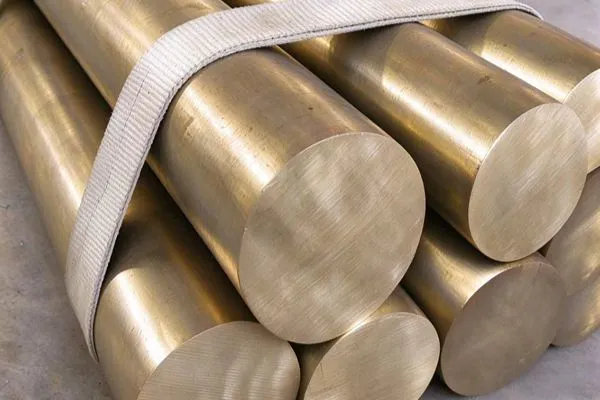
Wrought or Cast: Know the Product Form of Your Aluminum Bronze Rod
The production route alters the grain structure and the test findings. Wrought grades such as C63000, C63200, and C61400 are wrought bars; therefore, a metallographic inspection indicates a worked grain structure. C95400 is a casting alloy. It is cast to standards like ASTM B505 for continuous cast, not the wrought rod standard ASTM B150. Some purchasers fear that a cast bar may be mistaken for wrought stock. That gap will be closed by a written product form on the order, and a grain check on the bar received. Each technique has its place — a cast bar may be suited to a bushing blank while a wrought bar frequently is suited to a heavily loaded shaft.
Compare the Main Aluminum Bronze Rod Grades
C63000 Aluminum Bronze Rod for High-Strength Parts
C63000, also known as CuAl10Ni5Fe4, and AMS 4640 is the nickel aluminum bronze that most pump and marine designers begin with. This grade contains aluminum 9.0–11.0%, nickel 4.0–5.5%, and iron 2.0–4.0% in accordance with ASTM B150. It combines high strength with seawater and cavitation resistance and is near the top end of the 550-800 MPa range. I'd put shafts, valve stems, bushings, and propulsion wear items in front of it. The alloy is mostly non-magnetic with the same designation CuAl10Ni5Fe4 as the European listing CW307G (DIN 2.0966). Check the real chemistry of each heat to these limitations.
C63200 and C61400: Where the Chemistry Shifts
C63200 is a nickel aluminum bronze for more severe saltwater and higher temperature service. C61400 is an iron-bearing alloy containing less aluminum than C63000, which alters the strength and hardness. Both have their own distinct UNS designations (C63200 and C61400) in ASTM B150. If you only see a remark that states “aluminum bronze, Al 5–12%”, it doesn’t tell your store anything, since the combined range masks genuine distinctions between grades. Label the UNS number on each design and request that the supplier label each bar with grade and heat to prevent mixed bundles. If an order has C63000 shafts and C63200 valve parts, break the packing list down by grade and diameter.
Cast Aluminum Bronze Rod Grades: C95400, C95500, and C95800
C95400 (9A) is the general-purpose cast aluminum bronze for cost-conscious engineering and non-sparking tooling. C95500 (9B) is nickel-added and has typical as-cast values of 100-120 ksi tensile and 190-225 BHN. C95800 is a nickel-aluminum bronze, widely used for maritime fittings. All three are cast grades. I quote them to cast standards such as ASTM B505 for continuous casting or B271 for centrifugal casting, not to ASTM B150. A cast bar would be okay for a blank for a bushing, but not for a high-load shaft. Let the drawing and the load dictate the way.
Match the Grade to the End Use
Choosing Aluminum Bronze Rod for Marine, Pump, and Valve Parts
For propeller shafts, pump shafts, valve stems, and valve sleeves in seawater, I use either C63000 or C63200. These parts are subject to chlorides, erosion, cavitation, contact with other metals. The oxide coating and cavitation resistance make the alloy suitable for aluminum bronze duty. Check the galvanic pairing with the metals it will be joining. A bronze part next to a less noble metal might speed up corrosion of the latter. For petrochemical and water-treatment valves, first follow the drawing grade: C63200 for corrosive media, C63000 for high-strength stems. If your class society or design office needs stress-corrosion or dealuminification data, talk to the provider before the order.
Bushings, Gears, and Wear Plates
Aluminum bronze has a multiphase structure with alpha phase and hard kappa phases. This offers it superior sliding behavior and resistance to galling, which is why aluminum bronze rod is used in worm gears, bearing bushes, wear plates, and heavy-load bushings. Hardness 150-240 HB helps prevent wear. For hydraulic guide bushings when cost is a consideration, the C95400 blank is a realistic starting point. Heavier loads are preferable for nickel-bearing grades. Machinability is 20-30% of free-cutting brass, so expect carbide tools and stiff setups. Consider more machining time against service life since a tougher surface will resist sliding wear longer.
Hazardous Areas and Low-Magnetic Uses
Aluminum bronze rod is non-sparking and mainly non-magnetic, suitable for oil and gas hazardous locations, mine safety equipment, and magnetic-sensitive devices. The normal possibilities for non-sparking tools are C95400 and C63000. For low-magnetic and military-related parts, the standard choice is C63000 and C63200. Check the requirement with your safety officer; the grade must be in compliance with the site’s explosion-proof zone requirements. Repairs require care as well. TIG or MIG weld with preheat and with a proper filler wire, such as ERCuAl-A2, and you will not have any cracking. Record the welding and machining notes in the purchase file for the maintenance crew to repeat.
Verify Standards, Dimensions, and Quality Documents
Match the Standard to Your Aluminum Bronze Rod Product Form
This ASTM B150/B150M specification includes aluminum bronze rod, bar, and forms, UNS C61400, C63000, and C63200. The pressure-code equivalent is ASME SB150. C95400 is a cast grade and is not covered under B150; thus, cast bars fall under ASTM B505 or B271. EN 12163 covers copper and copper alloy rod for general uses, which fits European orders. Our wrought aluminum bronze rod is in accordance with B150, SB150, and EN 12163. We quote C95400 per its cast route. Put the standard, UNS number, and product form together on the purchase order, so nobody may substitute a cast bar for a wrought one.
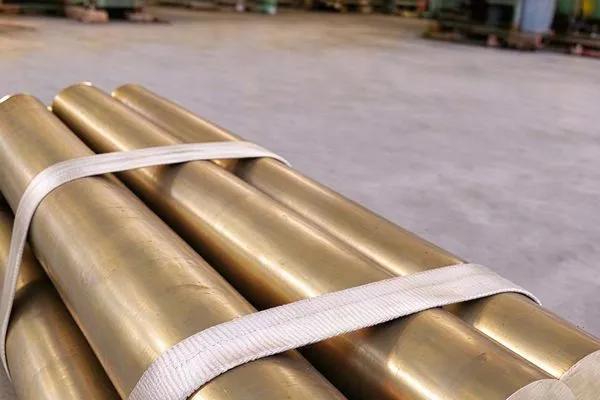
Read the Chemistry and the 3.1 Certificate by Grade
EN 10204 3.1 certificate gives chemical and mechanical results for your actual batch, and is verified by the manufacturer’s authorized inspector, independent of production. Don't compare each item to a blended range of grades; compare it to the bounds of your grade. For C63000, aluminum should be between 9.0 and 11.0%. Next, look at the tensile strength against your need of 550-800 MPa and hardness vs. 150-240 HB. And contemplate a re-test in your own lab. JYDS (Dongguan Jiaye Dingsheng Precision Casting & Forging Co., Ltd., founded in 1997, ISO 9001:2015 certified) employs chemistry control via OES spectrum analysis. We provide 3.1 MTC tracking for each shipment and RoHS and REACH papers. Add grain check for wrought vs. cast for aluminum bronze rod.
Set Diameter, Length, and Finishing Needs
Aluminum bronze rod Ø5.0 to 300 mm, length 1000-3000 mm or cut to desired length. We provide round, hexagonal, and square bars as well as near-net-shape profiles. The value-adding activity comprises CNC turning, centerless grinding, threading, and keyway machining. On the drawing: state tolerance, straightness, surface condition, and machining allowance. Cutting the bar close to your blank length lowers waste and machining time. You may estimate weight per meter from cross-section area times density, roughly 7.58 g/cm^3. Actual weight varies with tolerance. We pack in anti-rust moisture-proof export packing for sea or air transport.
Compare Materials, Quotes, and Aluminum Bronze Rod Suppliers
How Aluminum Bronze Compares With Other Alloys
Tin bronze, silicon bronze, brass, stainless steel, and copper are all suited to distinct tasks. Aluminum bronze rod is recommended for saltwater, strong loads, wear, and anti-galling use. Aluminum bronze is about 7 % IACS. So copper wins when electrical conductivity counts. Brass fits lighter loads yet machines easier. For certain chemical or temperature environments, stainless steel could work. C86300, which comes up in certain searches, is a high-strength manganese bronze, not an aluminum bronze, and outside of our mentioned range. Consider price per kg as well as service life, availability, compliance, and failure risk.
Compare Aluminum Bronze Rod Price on Equal Terms
The price per kilogram is based on grade, diameter, length, tolerance, testing, finish, quantity, and metal markets. Comparing prices is misleading unless you quote with the same grade, standard, certificate, and Incoterm. Added cost of extended lead time, large machining allowance, or missing documentation may be hidden in a cheap bar price. We quote within 24 hours, and stock rods ship in 3-5 days. We provide CIF, FOB, and DDP terms via sea, air, or express courier, which benefits U.S. customers who desire landing cost in one figure. Before you do any comparison, get a written statement of MOQ and lead time from your supplier.
A Simple Selection Sequence for Aluminum Bronze Rod
For each order of aluminum bronze rod, I advise five stages. First, identify the surroundings and loads. Rank strength, corrosion resistance, wear, and machinability. Second, evaluate the key properties. Third, list two or three candidate grades with a brief rationale for each. Fourth, compare certificates and run a prototype for crucial portions. Fifth, balance between price, lead time, and paperwork. Common errors include treating aluminum bronze as a single alloy, picking the greatest strength grade without considering machinability, referring to ASTM B150 for a cast grade, grouping grades without markings and comparing quotations with various specifications. Many customers go through drawing review, sample, then batch order. We facilitate that process with samples before volume.
Conclusion
The first step in selecting the proper grade of aluminum bronze rod is to determine service conditions—fluid, load, wear, and product shape. C63000 is the usual wrought option for high-strength marine and valve parts; C63200 is for more aggressive saltwater and heat; and C61400 has less aluminum. C95400, C95500, and C95800 are cast alloys and are covered by cast standards like ASTM B505 and not ASTM B150. The grade and product form are assured by grade-specific chemistry, 3.1 certificate, and mechanical and grain inspection. Aluminum bronze is better than brass, copper, and stainless steel for saltwater, heavy-load, and wear duty, but machines at 20-30% of free-cutting brass. Quoting on an equal specification basis and having a clear selection procedure will eliminate mistakes and hidden costs.
FAQ
1. What is the difference between C95400 and C63000?
C95400 is a cast grade for general engineering. C63000 is a wrought alloy with higher strength and better marine corrosion resistance.
2. Does aluminum bronze rod need a protective coating?
No. The natural alumina film protects the surface and heals after minor damage, so coatings are usually unnecessary.
3. Can aluminum bronze be welded?
Yes. Use TIG or MIG welding with preheating and a suitable filler wire, such as ERCuAl-A2, to avoid cracking.
4. What tools machine aluminum bronze best?
Use carbide tools and rigid setups, because machinability is about 20–30% of free-cutting brass.
5. Which certificate ships with each order?
Each shipment includes an EN 10204 3.1 MTC with traceability.
Request Your Aluminum Bronze Rod Quote From JYDS
Send your grade, diameter, length, quantity, and standard to JYDS at js01@jstongcai.com.cn, and our team will reply with a quote within 24 hours. As an aluminum bronze rod supplier with 25+ years of copper alloy experience, we supply C63000, C63200, C61400, and C95400 with EN 10204 3.1 certificates. Stock rods ship in 3–5 days, and free material selection advice is included.
References
1. ASTM B150/B150M, Standard Specification for Aluminum Bronze Rod, Bar, and Shapes, ASTM International, 2019
2. ASTM B505/B505M, Standard Specification for Copper-Base Alloy Continuous Castings, ASTM International, 2018
3. EN 12163, Copper and Copper Alloys – Rod for General Purposes, European Committee for Standardization, 2016
4. EN 10204, Metallic Products – Types of Inspection Documents, European Committee for Standardization, 2004
5. Culpan, E. A. and Rose, G., "Corrosion Behaviour of Aluminium Bronzes in Sea Water," British Corrosion Journal, 1979
6. Davis, J. R. (Ed.), Copper and Copper Alloys, ASM Specialty Handbook, ASM International, 2001
Online Message