
Nov 12, 2026
What Is Cube2 Strip Used for in Electronics and Aerospace?
CuBe2 strip — also known as beryllium copper strip, grade C17200, or EN CW101C — is a precision-rolled copper alloy material widely used in electronics and aerospace manufacturing. It delivers tensile strength up to 1,320 MPa after aging alongside electrical conductivity of 22–25% IACS, a combination few other copper alloys can match. Engineers specify CuBe2 strip for connector terminals, relay blades, aerospace spring contacts, and battery spring clips precisely because it holds contact pressure over long service lives without stress relaxation.
Understanding CuBe2 Strip: Definition and Core Features
What Is CuBe2 Strip, Exactly?
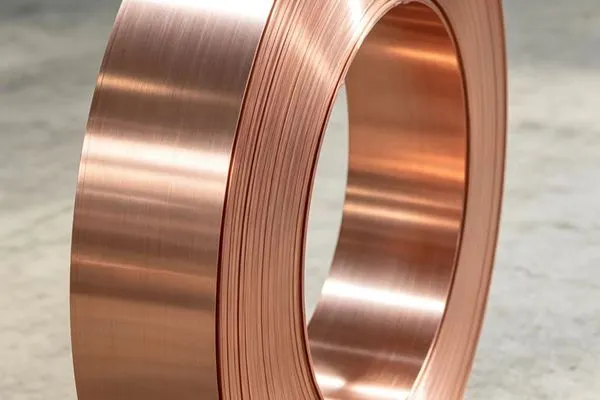
It's called Cube2 strip and is made to meet DIN EN 1654 and ASTM B194, standards. It is the same grade as EN CW101C, DIN 2.1247, UNS C17200, Alloy 25, and RWMA Class 4. Sizes of the material range from 0.05 mm to 3.0 mm thick and can be as wide as 300 mm. It comes in narrow coils or strips that have been cut. The feed needs of high-speed progressive stamping presses, which are used to make springs and connectors, are 100% met by these size ranges.
Chemical Composition That Matters
DIN EN 1654 CuBe2 (CW101C) states that the metal matrix should have Be between 1.80 and 2.00%, Co+Ni at least 0.20%, and Co+Ni+Fe at most 0.60%. ASTM B194 and B196 apply the same 0.60% limit for Co+Ni+Fe. Even though the key chemical limits are aligned, confusion still happens because some outdated data sheets or mixed specifications still circulate. This is important for procurement engineers to know. Before placing an order, always make sure that your drawing refers to the right standard.
Temper Conditions and What They Mean for Stamping
CuBe2 strip is classified into three temper conditions. When metal is annealed (EN R200 or ASTM TB00), it is at its most flexible. This makes it best for complex deep-draw and progressive pressing. Parts are then made stronger over time in-house. Cold-rolled spring tempers like R410, R510, and up to R1130 (ASTM TD02 through TH04) are already hardened from work and can be stamped right away. They don't need to be aged first. When something is aged (H), it has already been hardened by precipitation to 36–42 HRC / 350–420 HV. You can pull on it with 1,110–1,320 MPa of force and stretch it with 950–1,150 MPa of force right out of the coil.
How CuBe2 Strip Solves Industry Challenges
The Stress Relaxation Problem in Miniaturized Connectors
The binding force has to stay the same for more than ten years at temperatures up to 150 °C as the joints get smaller. People who work with phosphor bronze quickly lose their contact pressure when it gets above 100 °C. Above 150 °C, Cube2 strip still has more than 90% of the stress it had at the start. Because of this, it is often used for connections in household electronics and car electronics where other metals can't keep their spring-back.
Die Wear and Batch-to-Batch Inconsistency
The biggest production risk for a pressing plant is having to re-tool after a big change. You have to change the dies every time the thickness or hardness of two coils changes. This can stop a press line for hours. It is possible to fully trace the lots of Cube2 strip that was made in a mill that is certified by EN 10204 3.1. This means that there is chemical and mechanical data for each batch. For engineers to make sure that every coil that comes in fits the allowed process window before it goes into the press. Also, edges that are smooth and don't have burrs make dies last longer and use less scrap.
Aerospace-Grade Fatigue Performance
It is very important to avoid fatigue failure in aircraft connectors and relay blades that are constantly vibrating, like those in electronics racks or devices for putting satellites into orbit. The architecture of Cube2 strip gets stronger through precipitation, which means it can handle bends at high frequencies. Because it doesn't let magnetic fields pass through (<1.001) and can stop sparks, it's even safer to use near sensitive instruments or wire lines that are close to fuel.
Comparing CuBe2 Strip with Other Copper Alloy Strip Options
CuBe2 vs. Phosphor Bronze Strip
Phosphor bronze (C51000, C52100) is cheap and easy to find, but it has a tensile strength of only 700 MPa and loosens its grip on stress quickly above 100 °C. Cube2 strip starts where phosphor bronze ends. Its tensile strength is 1,110 MPa when it is age-hardened, and it stays that strong even when it is heated. It is not a good idea to use phosphor bronze instead of iron for any spring element that needs to work in an engine or space, where temperatures change quickly.
CuBe2 vs. CuCo2Be and CuNi2Be Alternatives
There is 0.4% to 0.7% beryllium in CuCo2Be (C17500) and CuNi2Be (C17510), and they conduct electricity better (40 to 60% IACS) but aren't as strong (600 to 800 MPa). When being able to carry current is more important than spring force, they work well. In the other corner is Cube2 strip. This one is the strongest and springiest, and it works well enough to carry messages and small amounts of power. The plan picture shows the trade-off between conductivity and yield strength. This will help you choose which one to use.
Where Brass and Nickel Silver Fall Short
Nickel silver strip and brass strip are both cheap and easy to shape, but neither is close to 1,000 MPa in yield strength, even when they are very hard. In the accelerated life test data, the gap between the brass and Cube2 strip is easy to see. This is because a connector terminal has to keep a certain insertion force over thousands of mating cycles, or a relay blade has to bend without becoming permanently set.
How to Use CuBe2 Strip Effectively in Stamping Applications
Matching Temper to Your Process
If you pick the right heat before the first test run, you can avoid most printing problems. Use annealed R200 or TB00 to do deep draws, tight bend radii, or to age the part in-house. Choose R410 or R510 if the spring properties of your press runs need to be met right away and you don't need to heat treat the steel after stamping. If you compare the temper code to your drawing before you place your order, you can avoid the main reason why first-articles are turned down.
Safe Handling and Occupational Health
If you know how to handle it right, Cube2 strip in the form of a thick coil is safe. When stamping, on the other hand, small particles are made, so air systems, dust collection, and the right safety gear for breathing are needed. There are rules that operators must follow in OSHA standard 29 CFR 1910.1024 for beryllium. If you want to make something, you should always ask the seller for a Safety Data Sheet (SDS). It is risky to buy from someone who won't give you a full SDS and safe-use directions.
Packaging and Coil Specifications for Auto-Feed Presses
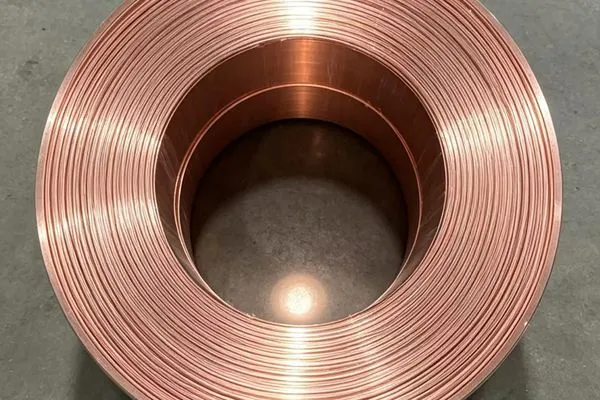
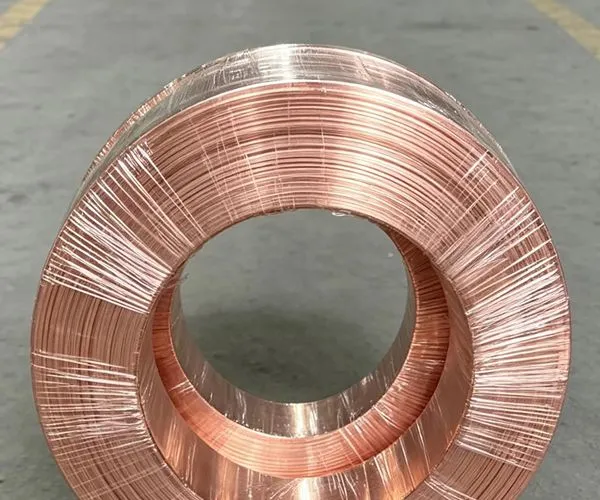
The inner diameter, outer diameter, and weight of the coil all have a direct effect on how easily a split coil feeds through a straightener and into a progressive die. Find out how to package coils in writing before you place your trial order. The surface quality is kept safe during ocean freight with export-grade packaging that doesn't rust or soak up water. Die scoring is less likely to happen when the edges of precision slit coils are smooth and free of burrs. This means that tools last longer between sharpenings.
Procurement Guide: Buying CuBe2 Strip for B2B Clients
Minimum Order Quantities and Trial Sampling
A lot of precision pressing plants test a new Cube2 strip source with a 5–20 kg trial coil to make sure it works before they sign a monthly supply terms. There is a lot less risk in the validation cycle if the seller can send small sample amounts, even 10–100 kg, without a large minimum order number. Stock things from a factory that is well-run generally ship in 3–5 business days. Some custom slit widths or tempers, on the other hand, may need 15–20 days of lead time.
Certifications to Require from Every Supplier
If you get a Cube2 strip from a good company, they should always give you these important papers:
- EN 10204 3.1 Mill Test Certificate: Chemical composition and mechanical test results for each specific batch, not a generic certificate covering multiple heats.
- ISO 9001:2015 quality system certification: Confirms that the manufacturing process operates under an audited management system.
- RoHS and REACH compliance declarations: Required by downstream electronics and automotive OEM customers for product compliance.
- SDS (Safety Data Sheet): Mandatory for any facility stamping beryllium copper alloys.
People who buy gadgets and cars from you in the future will need RoHS and REACH compliance statements to make sure the product is safe.
What to Confirm Before Each Repeat Order
Before you buy anything, make sure that each batch is the same. This is the most important thing to think about once your dies are set and your process has been tried. For every batch of metal they send you, make sure they give you a new EN 10204 3.1 certificate with the same alloy name and temper code as the one on your engineering drawing. If there is a change in the production site, heating furnace, or source of raw materials, your provider should give you a written process change notice (PCN) before you ship.
Conclusion
As an engineer, you might need Cube2 strip (C17200 / CW101C). It is a copper alloy strip that is conductive but not magnetic, and it has a high yield strength and wear resistance. Some copper alloys lose their mechanical properties when they get hot or cold, but this one does. It's used to make battery clips, relay blades, connecting ends, and spring contacts for spacecraft. When choosing a supplier, you should look for ones who are open about any changes to the process and whose tempers are accurate. You should also look for ones that only approve batches. If you do these four things right during the first test run, the press line is much less likely to break down during regular production.
FAQ
1.Can CuBe2 strip be stamped in the annealed state and hardened afterward?
Metal that has been annealed and is either R200 or TB00 is pressed while it is still flexible. It is then aged at about 315 °C for two to three hours to reach its highest tensile strength of 1,110 to 1,320 MPa. For shapes that would break in a stronger heat, this method works well.
2. How does CuBe2 strip compare to phosphor bronze for stress relaxation?
More than 90% of the contact stress in Cube2 strip is still there at 150 °C. Phosphor bronze breaks down quickly above 100 °C.
3. Is CuBe2 strip RoHS compliant?
In its solid form, Cube2 strip does follow the rules for RoHS and REACH. The RoHS does not put any limits on beryllium. For each batch, suppliers should give written statements that they follow the rules.
4. What surface finishes are compatible with CuBe2 strip?
A lot of people have nickel, gold, and tin plates. The surface needs to be properly activated to get rid of the beryllium oxide layer and make it stick well and resist contact.
Source Your CuBe2 Strip Supplier Through JYDS
To work with beryllium copper metals is what JYDS does best and has for more than 25 years. They have more than 500 tons of Cube2 strip in stock. The width of the strip ranges from 0.05 mm to 3.0 mm, and it is in all EN and ASTM temper conditions. Each batch comes with an EN 10204 3.1 Mill Test Certificate. Every order from stock is sent out in 3–5 days, and every order for a custom slit width is ready in 15–20 days. Please email our technical team at js01@jstongcai.com.cn to get a quote or a trial copy of Cube2 strip.
References
1. European Committee for Standardization. DIN EN 1654: Copper and Copper Alloys — Strip for Springs and Connectors. CEN, 2021.
2. ASTM International. ASTM B194: Standard Specification for Copper-Beryllium Alloy Plate, Sheet, Strip, and Rolled Bar. ASTM, 2022.
3. ASTM International. ASTM B196: Standard Specification for Copper-Beryllium Alloy Rod and Bar. ASTM, 2021.
4. Davis, J. R. Copper and Copper Alloys. ASM International, 2001.
5. Occupational Safety and Health Administration. OSHA Beryllium Standard 29 CFR 1910.1024. U.S. Department of Labor, 2020.
6. ISO. ISO 5182: Copper and Copper Alloys — Composition of Resistance Welding Electrodes and Auxiliary Materials. ISO, 2008.
Online Message