
Nov 27, 2026
Why Choose Nickel Chromium Silicon Copper Rod for Tooling?
When a part needs to carry current, move heat, and not wear down, choose C18000 nickel chromium silicon copper rod for tooling instead of beryllium. This precipitation-hardened alloy has a tensile strength of 550–760 MPa, a hardness of 90–100 HRB, and an IACS conductivity of 45–60%. In order to be in RWMA Class 3, it must have at least 45% IACS and 90 HRB. You can keep it stable up to 475°C, which means that electrodes, mold inserts, and clamp parts will keep their shape even after being heated many times. I'll talk about how the alloy works, where it fits, and how to buy it below.
Why Tooling Engineers Are Reconsidering Copper Alloy Rods
The Performance Challenges of Tooling Materials
There are many loads on tooling parts at the same time. Every time it works, the welding electrode touches hot metal, carries a lot of current, and takes clamping force. While resin or flash wears away at its surface, a mold insert pulls heat out of molten metal or plastic. Copper that is pure conducts electricity very well, but it is soft. It changes shape when it's under pressure, and as the heat builds, the electrode tips can puff up. That problem can be fixed with harder alloys, but some of them lose too much conductivity. Copper with beryllium has a good balance, but it comes with some extra rules for how to handle it. As of 2017, OSHA's general industry rule set an exposure limit of 0.2 micrograms per cubic meter for 8 hours. Because of this, many plants now choose not to include the metal in their material lists.
What Is C18000 Nickel Chromium Silicon Copper Rod?
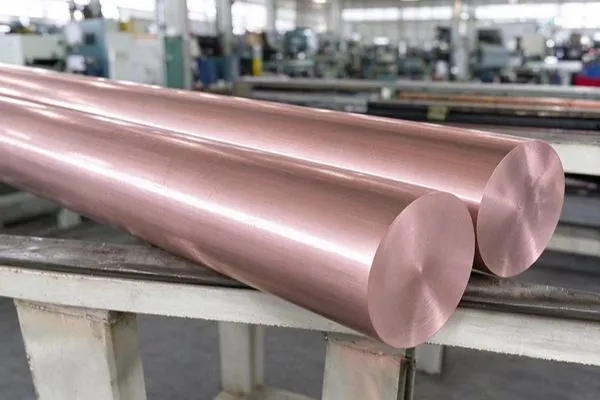
C18000 nickel chromium silicon copper rod is an alloy made of copper that is sold under different names, such as CuNi2SiCr, CDA 180, DIN 2.0855, and CW111C. Nickel makes up 1.8% to 3.0%, silicon 0.4% to 0.8%, chromium 0.1% to 0.8%, and copper the rest. It requires solution treatment and aging to form nickel silicides and chromium phases inside the copper matrix. Though these tiny particles make the matrix harder and stronger, they don't change how well it conducts electricity. JYDS supplies rods in the mill-hardened TF00 temper (solution annealed and aged). No further heat treatment is required. They often pick it because it doesn't contain beryllium and can be used for Class 3 work.
What This Guide Helps Buyers Evaluate
This guide was written to help process engineers, mold designers, and buying teams compare copper alloy rods. You will see what the main features are of C18000 nickel chromium silicon copper rod and how it stacks up against C17510, C18150, C18200, and pure copper. It will also be shown in electrodes, molds, and connectors. I talk about sizes, records of quality, and other things that should be in a request for quotation. I'll stick to information that can be found on a mill test certificate. I think you should test it on your own line before making a full switch because it still depends on your current, pressure, cooling, and duty cycle.
C18000 Copper Rod Properties That Matter in Tooling
Chemical Composition and Alloying Elements
Every element in C18000 performs a specific function. Copper conducts electricity and heat . As it matures, the alloy forms particles of nickel silicide, a mixture of nickel and silicon. It is these particles that give the alloy its strength. Chromium makes the alloy tougher and more able to resist oxidation and wear at work temperature. Alloying elements change their location and reduce the conductivity, hence the composition should be controlled. For each batch of C18000 nickel chromium silicon copper rods produced by JYDS, the chemistry is checked by ICP-OES. The results shall be recorded on the mill test cert. Those results can be reviewed by your environmental, health and safety team and a written statement certifying they are beryllium-free can be requested. This makes compliance easier when a client specifies a zero-beryllium policy.
Mechanical and Electrical Properties
Normal properties of aged C18000 are tensile strength, 550–760 MPa; hardness, 90–100 HRB; and IACS conductivity, 45–60%. At 20°C, thermal conductivity is approximately 190 W/(m·K) and the density is 8.75 g/cm³. Annealed pure copper is defined as 100% IACS, therefore C18000 trades some conductivity for a lot more toughness . RWMA Class 3 must have 45% IACS and 90 HRB minimum. The 45% IACS floor is critical for welding engineers. Values vary with temper and diameter. Consequently, you should have taken hardness and conductivity test results on each lot of C18000 nickel chromium silicon copper rod to determine your own acceptable limits.
Temperature Resistance and Dimensional Stability
The alloy remains stable up to 475°C. The precipitates get coarser and the hardness reduces above that threshold. So I encourage designers to stay below that temperature. It strengthens with time at 400-450 C so that the material does not soften at normal temperatures for welding and moulding. The fine-grained structure also helps the rod retain its shape, even after being heated and cooled several times. C18000 nickel chromium silicon copper rod is typically supplied to h9 or h10 tolerances. Heavy machining is used, and the product must be held to size; stress relief is not necessary. C18000 has a machinability rating of only 20-30% compared to free-cutting brass, so use carbide tools and constant coolant.
Why Choose C18000 Nickel Chromium Silicon Copper Rod for Tooling?
Better Balance Than Pure Copper
Pure copper conducts electricity better yet it breaks down under heat and pressure. C18000 sacrifices some of its conductivity for hardness above 90 HRB. Clamping down keeps the tips, wheels and inserts in shape longer. The chromium and nickel-silicon phases help prevent galling during sliding contact. Heat is still conducted away from the weld edges and mould surfaces with a thermal conductivity of roughly 190 W/(m·K). This maintains cycle times stable and prevents mushrooming. I don't always give the best answer. Pure copper might be appropriate for a bus part that needs to be low stress and conduct electricity well. C18000 is ideal for tooling that is subjected to heat, pressure, and sliding contact.
C18000 vs. C17510 Beryllium Copper Rod
The most common names for beryllium grades on drawings are C17500 and C17510. C18000 is the beryllium-free alternative for many RWMA Class 3 uses.It has comparable high-temperature strength and conductivity to C17500 and C17510, but it costs less and is easier to regulate. Because C18000 conducts a little less than C17500, mold designers should look at the layout of the cooling channels before switching inserts. To meet the needs of a contract, JYDS can provide C17200, C17500, or C17510 beryllium grades. This means that you do not need a second supplier. If you need the strongest beryllium copper rod, C17200 may be a better choice than C18000 nickel chromium silicon copper rod because it can reach up to 38–42 HRC.
C18000 vs. C18150 and C18200 Chromium Copper
Some grades of copper, like C18200 and C18150, are made from chromium and zirconium. They are in RWMA Class 2. They're not as hard as C18000, but they conduct more electricity. It works well where the heat and pressure aren't too high or too low. Because a Class 3 alloy is harder and less likely to soften, it can slow deformation when tips are exposed to high pressure, coated sheet, or hot, high-cycle work. Use certified data for the same temper and size instead of catalog names to compare. As a test for a very important line, put the chromium copper and the C18000 nickel chromium silicon copper rod next to each other. Record tip life in welds per dress and use the same current, force, and cooling.
C18000 Tooling Applications and Design Considerations
Resistance Welding Electrodes and Holders
Most of the time, resistance welding is used. For work on stainless steel and galvanized sheet, the C18000 nickel chromium silicon copper rod can be used with projection and flash welding electrodes, tips, wheels, fixtures, and electrode arms. Body shops for cars and battery lines like how hard it is, how well it conducts electricity, and how it doesn't contain beryllium. It's more important for holders and arms to have mechanical strength and steady current transfer than for tips to be hard, so check the contact surfaces and clamping design. Since life depends on current, force, coating, and cooling, I can't give you a tip-life number until I know when you will be welding. I think you should do a two- to three-month validation trial on your line and keep track of the tip life against your current material.
Mold Inserts and Die Casting Components
C18000 is used to make core pins, cavity inserts, blow mold cores, hot runner parts, and die casting plunger tips for molds. High thermal conductivity pulls heat away from the mold surface, which speeds up the cooling process. The hardness also protects against abrasive resins like glass-filled grades. The main question for a mold shop is how well the cooling works compared to the C17500. Because C18000 conducts a little less, I suggest checking the channel distance and insert wall thickness during the design stage and then making sure with a test mold. If a customer is locked into a certain grade of beryllium, get approval for C18000 nickel chromium silicon copper rod early or order the grade that was agreed upon from the same source.
Connectors, Switchgear, and Automotive Parts
Heavy-duty switchgear parts, electrical connectors with high strength and short-circuit rings for large motors have to withstand a high mechanical load and a high current at the same time. C18000 will not bow under those loads and will hold 45% IACS or better. Contact parts also require a good surface and stable pressure, so be sure to agree on the finish and straightness before you place your order. The same rod can be made into electrode caps, arms and clamps for both car and battery plants. This allows one grade that does not contain beryllium to be utilised for several fittings. Shape the aged C18000 nickel chromium silicon copper rod with carbide tools. Only ask for stress relief if excessive cutting generates stress which reduces tolerance.
C18000 Copper Rod Specifications, Quality Control, and Purchasing Risks
Standards, Grades, and Available Sizes
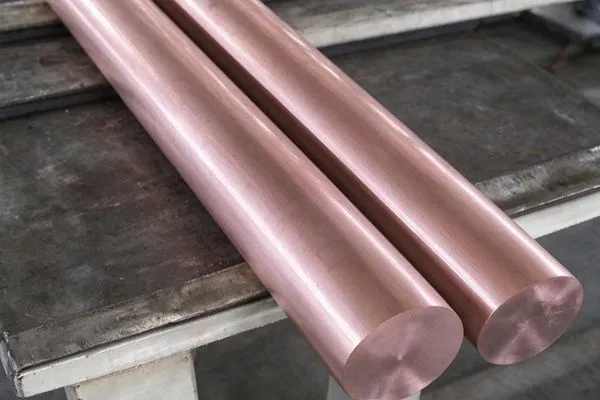
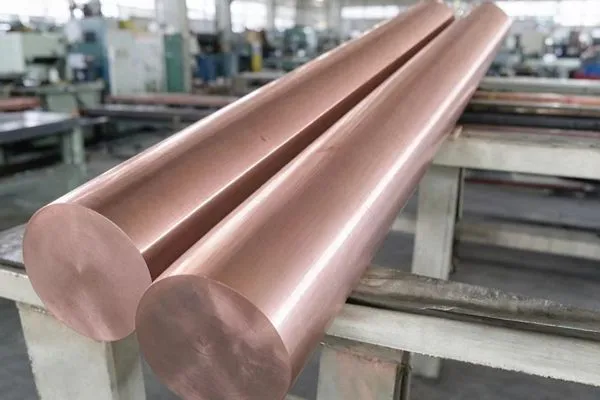
The initial sections of a full order are the name of the alloy and the governing standard. For electrode performance, specify RWMA Class 3 (AWS J1.3) and for rod C18000 EN 12163 CW111C designations. Put in the UNS number, temper and tolerance. JYDS supplies rods in aged TF00 temper with diameters from 2 mm to 200 mm and lengths from 1000 mm to 3000 mm or to your precise length. We provide custom cutting and precision machining. Straightness is required for CNC feeding and lengthy parts . Diameter tolerance is important for machining allowance and press fits . C18000 nickel chromium silicon copper rod, drawing, certificate and purchase order can all match if the specifications are explicit.
Quality Control and Mill Test Certificates
If they ask, buyers can view verification of quality records. JYDS tests are performed on every batch with ICP-OES chemistry, ultrasonic testing for internal defects, conductivity test, hardness and grain size review and dimensional checks. These goods are supplied with EN 10204 3.1 mill test certifications. The quality system is ISO 9001:2015 certified. A relevant certificate will state the rod size, alloy, standard, heat or lot number. The delivered material should match the lot number on the certificate. Welding engineers should specify those restrictions in the order and ask for measured values for each lot of C18000 nickel chromium silicon copper rod to avoid difficulties with hardness below 90 HRB or conductivity below 45% IACS.
How to Request a Quote and Avoid Purchasing Risks
Most buying problems start with a vague order. Before you place one, here are two things to think about:
- Define the application and acceptance limits. State the use, current, pressure, cooling, temper, diameter, tolerance, surface finish, straightness, and quantity. Add the numbers that matter to you, such as at least 45% IACS and 90 HRB, so the certificate can be checked against them line by line.
- Confirm logistics and support. JYDS ships stock items in 3–5 days and custom orders in 15–20 days. Packing is anti-rust and moisture-proof for export, with CIF, FOB, or DDP terms by sea, air, or express courier from near the Shenzhen and Hong Kong ports.
These two stages cover the most frequent risks: believing the alloy's name means it is hard, accepting generic certificates, and overlooking damage incurred during transit. But when machining yield, tip life and freight costs are factored in, the lowest price doesn’t always come out ahead.
Conclusion
C18000 nickel chromium silicon copper rod is an alloy that has no beryllium and has a good balance of hardness, conductivity and heat resistance, and can be used by tooling engineers. It is strong (550–760 MPa), hard (90–100 HRB) and conducts electricity (45–60% IACS) at values that satisfy RWMA Class 3 criteria. It also retains these properties up to 475°C. It doesn't bend or wear as readily as pure copper. It offers comparable Class 3 performance to C17510, though mold designers should review cooling layouts because of slight differences in thermal conductivity. Chromium copper is softer than C18000. It can be utilised for elements such as mould inserts, welding electrodes, connections and switchgear. Each batch must be verified for chemistry, hardness and conductivity for reliable use with clear standards and tests made in real-world working settings.
FAQ
1. Is C18000 copper rod suitable for resistance welding electrodes?
Yes, most of the time. The metal is 45% IACS and 90 HRB, which are the limits set by the RWMA Class 3. It is used for tips, wheels, fixtures, and arms. Do a test with your own current, force, and cooling to make sure it works.
2. How does C18000 compare with pure copper for tooling?
Pure copper is more conductive, but it is also soft. The C18000 nickel chromium silicon copper rod is stronger, harder, and stable up to 475°C. This means that it keeps its shape even when it's hot and the pressure is high. For low-stress parts that need to conduct electricity well, choose pure copper.
3. Can suppliers provide custom C18000 copper rod sizes?
JYDS has diameters from 2 mm to 200 mm and lengths from 1000 mm to 3000 mm. They can also be custom cut, and they can machine them if needed. Items in stock are sent out in 3–5 days, and orders made just for you take 15–20 days. To get a quote on a C18000 nickel chromium silicon copper rod, email your drawing and the number of rods you need to js01@jstongcai.com.cn.
Request a C18000 Nickel Chromium Silicon Copper Rod Quote for Your Tooling Project
Send JYDS your drawing, diameter, quantity, and delivery schedule at js01@jstongcai.com.cn. You can also find out more at becualloy.com. JYDS is a supplier of C18000 nickel chromium silicon copper rods and has more than 25 years of experience with copper alloys. They offer ISO 9001:2015 quality control, EN 10204 3.1 certificates, stock dispatch in 3–5 days, and replies within 2 hours. Before you buy in bulk, ask about a sample or validation batch.
References
1. ASM Handbook, Volume 2: Properties and Selection: Nonferrous Alloys and Special-Purpose Materials, 1990
2. Copper and Copper Alloys, ASM Specialty Handbook, ASM International, 2001
3. Resistance Welding Manual, Resistance Welder Manufacturers' Association, 1989
4. EN 12163: Copper and Copper Alloys – Rod for General Purposes, European Committee for Standardization, 2016
5. Occupational Exposure to Beryllium and Beryllium Compounds in General Industry, Occupational Safety and Health Administration, 2017
6. Welding Handbook, Volume 3: Welding Processes, Part 2, American Welding Society, 2007
Online Message