Sep 28, 2026
How CuCo2Be Plate Delivers High Electrical Conductivity
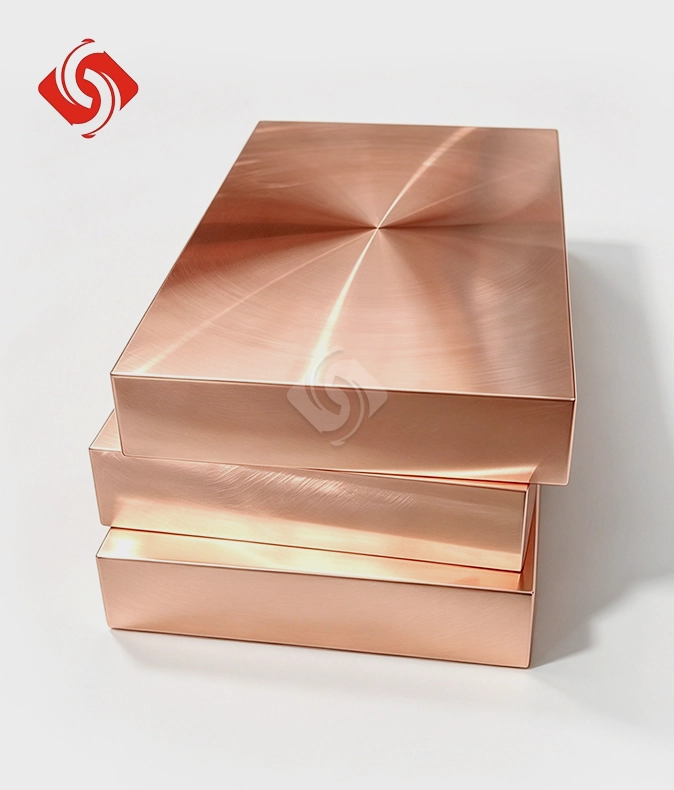
CuCo2Be plate — also known as C17500, DIN 2.1285, or EN CW104C — achieves high electrical conductivity through its cobalt-beryllium precipitation-hardened copper matrix. During age-hardening, cobalt and beryllium compounds precipitate out of the copper lattice, leaving the matrix cleaner and allowing electrons to flow with minimal obstruction. The result is 45–60% IACS conductivity alongside 200–240 W/m·K thermal performance. This combination makes CuCo2Be plate the preferred choice for resistance welding electrode manufacturers who need both current-carrying efficiency and mechanical durability in a single material.
Understanding CuCo2Be Plate and Its Composition
What Is CuCo2Be Plate?
Cuco2be plate is a cobalt-beryllium copper alloy that has 2.40 to 2.70 percent cobalt, 0.40 to 0.70 percent beryllium, and the rest copper. It is known around the world by several grade equivalents, including DIN 2.1285, EN CW104C, UNS C17500, and RWMA Class 3 / Alloy 10. It is made according to ASTM B534 and ISO 5182 standards, and its microstructure is stable and repeatable thanks to solution heat treatment and age hardening (TF00/AT temper). This is something that manufacturers of resistance welding electrodes depend on for consistent electrode geometry and regular dressing intervals.
Chemical Composition and Why It Matters
The exact amount of cobalt to beryllium in the Cuco2be plate is not chosen at random. When metal is rolled or cast, cobalt controls the growth of grains, and beryllium controls precipitation hardening. They work together to make a plate that is 92–100 HRB hard, has a tensile strength of 690–900 MPa, and a yield strength of 550–750 MPa after being aged. For electrode makers, this means a plate that is easy to machine, stays within the same size range after many cleaning cycles, and doesn't grow like softer copper alloys do on galvanized or high-strength steel welding lines.
Manufacturing Process and Quality Control
To make a Cuco2be plate, vacuum induction melting, hot rolling, and a tightly controlled two-stage heat treatment—solution annealing first, then precipitation aging—are all needed. Optical Emission Spectroscopy is used to check the makeup of each batch, eddy-current meters are used to check the IACS, and Rockwell hardness is measured according to ASTM E18. Each plate comes with an EN 10204 3.1 Mill Test Certificate that shows the real conductivity and toughness numbers, not just the normal ranges. This batch-level traceability directly addresses the electrode manufacturer's worry that differences between batches could make electrode life unpredictable.
Why CuCo2Be Plate Excels in Electrical Conductivity
The Metallurgical Mechanism Behind 45–60% IACS
How well copper alloys conduct electricity depends on how many solute atoms are still dissolved in the copper lattice. As atoms dissolve, they scatter electrons and make the resistance higher. The aging process in the Cuco2be plate makes the cobalt-beryllium phases stick together as small, uniform particles instead of staying dissolved. This leaves almost no solutes in the copper matrix, which lets electrons flow as freely as in commercially pure copper. At the same time, the precipitate particles make the copper harder. This balance isn't reached by any other high-hardness copper alloy as well.
Comparison with Other Copper-Based Alloys
The most common type of beryllium copper is C17200 (CuBe2). It has a toughness of 38–45 HRC but only 22–28% IACS conductivity. That trade-off is fine for spring contacts, but it's a problem for resistance welding electrodes because the electrode face gets too hot, which speeds up the softening and mushrooming process. Cuco2be plate has 45–60% IACS, which is about twice as much conductivity as C17200. It also stays hard at ≥90 HRB, which meets the RWMA Class 3 minimum requirements set out in both RWMA Bulletin 16 and AWS J1.3. Cu-Ni-Be alloys are in the middle, but they aren't as good at conducting heat as Cuco2be plate for most welding electrode uses.
Real-World Performance in Resistance Welding
When welding galvanized sheet to auto body-in-white lines at 800 to 1,200 weld cycles per hour, Cuco2be plate electrodes always work better than chromium-zirconium copper electrodes in terms of dressing intervals and overall electrode life. With a thermal conductivity of 200–240 W/m·K, it pulls heat away from the weld face more quickly, which lowers the face temperature and speeds up the softening process. Manufacturers of electrodes say that this directly leads to fewer customer complaints about having to change electrodes too soon and lower downtime costs on production lines, where each minute of delay costs a lot of money.
Benefits and Value Proposition for B2B Procurement
Extended Service Life and Lower Total Cost
Cuco2be plate doesn't soften until it gets to 500–550°C. This means that electrodes made from this plate keep their shape for a lot longer than electrodes made from metals with lower conductivity. This means that electrode makers can offer a better warranty on their products, get fewer returns from customers, and have a clear edge over providers who use standard chromium-copper. At first, the cost of the material per kilogram is higher, but the cost per 1,000 welds, which is what automotive and appliance production lines really care about, is always cheaper.
When B2B buyers move to Cuco2be plate, these are the main performance benefits they always list:
- RWMA Class 3 compliance on every batch: Hardness 92–100 HRB and conductivity 45–60% IACS are verified by MTC, not assumed. Procurement teams can present these certificates directly to their downstream automotive customers without additional testing.
- Stable TF00/TH04 temper consistency: Because the aging cycle is tightly controlled, hardness variation across a plate and between plates from different production runs stays within a narrow band. This keeps dressing depths predictable and reduces scrap from over- or under-dressed electrodes.
- Cut-to-size availability in 10–200 mm thickness: Plates are available sawn or precision-ground to custom widths and lengths, reducing material waste when machining electrode caps, holders, and current-carrying blocks.
Because of these three things, electrode makers can lower the cost of the material they use per piece while still giving their welding customers a better product.
Compliance With International Standards
Cuco2be plate is made using ISO 9001:2015 quality management systems and meets RoHS and REACH environmental regulations. European electrode manufacturers can't skip this requirement when selling to auto OEMs. Declarations about conflict minerals can be found on request. The plate also meets the standards of ISO 5182 and EN 12163. Having a supplier that produces documentation at the EN 10204 3.1 level makes it a lot easier for procurement teams in Italy, Germany, Turkey, or Mexico to meet the audit requirements of their automotive customers.
How to Effectively Source and Procure CuCo2Be Plate
Lead Times, Stock Availability, and Minimum Orders
One real problem electrode makers have is getting materials quickly enough to meet customers' urgent orders from the auto industry. A supplier with more than 500 tons of stock, which includes normal thicknesses of Cuco2be plate, can send out stock things in 3–5 business days. It usually takes 15–20 days to ship custom sawn sizes. Manufacturers of electrodes can keep their internal stock lower with this lead-time profile while still safely keeping customer shipping dates.
Supplier Selection Criteria
Before placing the first order, procurement managers should check the following with a Cuco2be plate supplier:
- Batch-level MTC showing actual conductivity and hardness values — not just nominal specification ranges.
- Confirmation that both TF00 and TH04 temper states are available and that hardness variation within a plate is documented.
- Written confirmation of RoHS, REACH, and conflict minerals compliance for European market requirements.
- Ability to provide small sample cuts (typically 50–200 mm pieces) for trial welding and independent hardness verification before committing to a 1–3 ton first order.
If a supplier can't explain the difference between RWMA Bulletin 16 thresholds and AWS J1.3 formal specification requirements, you should be wary of them. This difference is important when an automotive customer questions the performance of an electrode.
Geographic Logistics and Customs Considerations
Suppliers near important international ports like Shenzhen and Hong Kong can offer a range of delivery options, such as FOB, CIF, and DDP, by sea freight or air express (DHL, FedEx, UPS). Standard export packing that keeps out moisture and rust protects plate surfaces while they're in transit, which is important for checking conductivity when they get there. DDP terms make it easier for electrode makers in Europe or Mexico to clear customs and get rid of any shocks about the landing cost.
Technical Specifications and Handling Best Practices
Full Property Profile of CuCo2Be Plate
The mechanical and physical properties of an aged Cuco2be plate are as follows: tensile strength of 690–900 MPa, yield strength of 550–750 MPa, hardness of 92–100 HRB (about 200–250 HV), electrical conductivity of 45–60% IACS, thermal conductivity of 200–240 W/m·K, and resistance to softening up to 500–550°C. The thickness ranges from 10 mm to 200 mm, and the width and length can be cut to order or precisely ground to a drawing. These conditions are the same as those in ASTM B534 plate grade and the European standard name CW104C.
Handling and Storage Guidelines
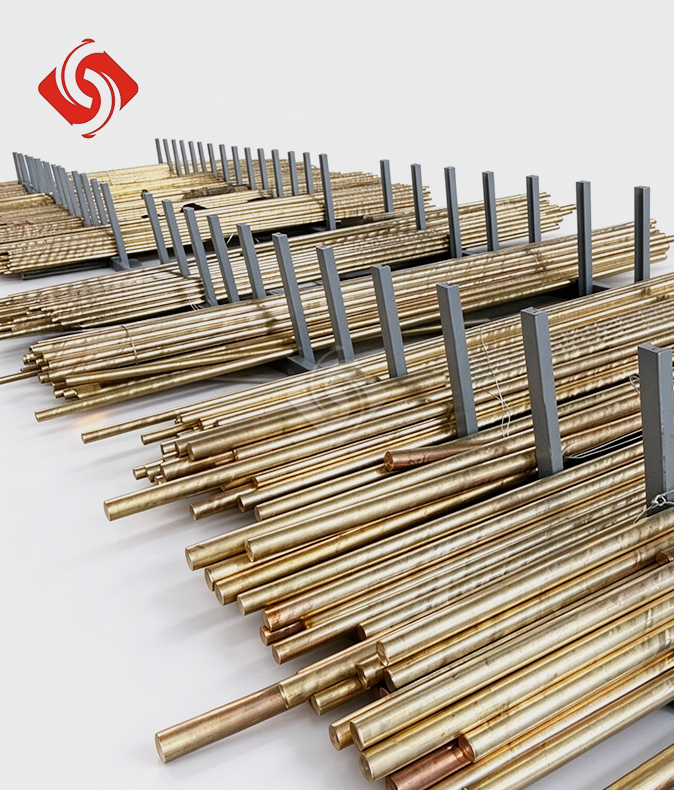
When Cuco2be plate is solid, it doesn't pose a skin hazard when it's being handled normally. The material Safety Data Sheet says that the plate and bar can be moved by hand while following standard safety rules. Plates should be stored flat on flat supports so they don't bend. They should also be kept in a dry place away from acid vapors that could damage the copper surface. Occupational health regulations say that proper workplace ventilation, exposure assessment, and personal protective equipment must be in place before machining, especially grinding or cutting operations that produce fine particles. Reliable suppliers make this point clear in their SDS.
Fabrication and Machining Notes
The old TF00/AT state of the Cuco2be plate works well with carbide tools and slow cutting speeds. It's hard enough to hold electrode cap seats and current block contact faces to tight tolerances without wearing down the tools too much. If the job doesn't need it, don't re-age after machining. If you don't control it, re-aging can change the dimensions and make the hardness go outside the 92–100 HRB target range. If you need to weld or braze during electrode assembly, look at the alloy's thermal profile. Brazing temperatures need to be carefully managed to avoid partial over-aging because the alloy softens at 500–550°C.
Conclusion
Cuco2be plate has a clear and defined place in the world of technology. It provides manufacturers of resistance welding electrodes with the conductivity they need to keep the electrode face from getting too hot, the hardness they need to stop mushrooming, and the thermal stability they need for galvanized and high-strength steel lines. The 45–60% IACS conductivity is not just a marketing number; it is the real result of a mechanism that keeps the copper matrix clean while adding mechanical strength through cobalt-beryllium precipitates that are spread out. Finding the right Cuco2be plate provider is important for makers who need batch-level MTC documentation, stable TF00 temper, cut-to-size plate availability in 10–40 mm, and stock that ships within days. The choice of seller has a direct effect on the electrode's life and customer happiness.
FAQ
1.How does CuCo2Be plate compare to chromium-zirconium copper for welding electrodes?
Cuco2be plate is better at conducting electricity and heat than chromium-zirconium copper. It also doesn't soften as easily when exposed to high temperatures. On coated steel lines, where the face temperature is higher, this usually makes the electrode last longer.
2.Is CuCo2Be plate available in small trial quantities before a full order?
Yes. Reliable providers offer small sample cuts, usually 50–200 mm pieces, for testing welding and checking the hardness on your own. This is how the first-order qualification process usually works.
3.What RoHS and REACH documentation is available?
Cuco2be plate follows the rules set by RoHS and REACH. Certified sellers can give you compliance declarations and conflict minerals statements if you ask them to.
4.What thickness range is standard for electrode manufacturing applications?
Most electrode caps, holders, and current blocks are made in a range of 10–40 mm. The full range of sizes available is from 10 mm to 200 mm, and custom sawn or precision-ground dimensions can be made.
Request a Quote for CuCo2Be Plate from JYDS
JYDS has been making and sending Cuco2be plates to electrode makers in Asia, Europe, and the Americas for more than 25 years. We have over 500 tons of stock on hand, including standard plate thicknesses that can be sent out in 3–5 days. This means that we can handle both pressing orders and planned restocking plans. There is a full EN 10204 3.1 MTC on every plate that goes. To get a datasheet, sample cut, or affordable price from a certified Cuco2be plate provider, email our technical team at js01@jstongcai.com.cn.
References
1. American Welding Society. AWS J1.3: Specification for Materials Used in Resistance Welding Electrodes and Tooling. AWS, 2016.
2. Resistance Welder Manufacturers' Association. RWMA Bulletin 16: Resistance Welding Equipment Standards. RWMA, 2014.
3. ASTM International. ASTM B534: Standard Specification for Copper-Cobalt-Beryllium Alloy Plate and Strip. ASTM, 2019.
4. European Committee for Standardization. EN 12163: Copper and Copper Alloys — Rod for General Purposes. CEN, 2016.
5. Davis, J.R. (Ed.). Copper and Copper Alloys. ASM International, 2001.
6. Smithells, C.J. Smithells Metals Reference Book, 8th ed. Butterworth-Heinemann, 2004.
Online Message
YOU MAY LIKE