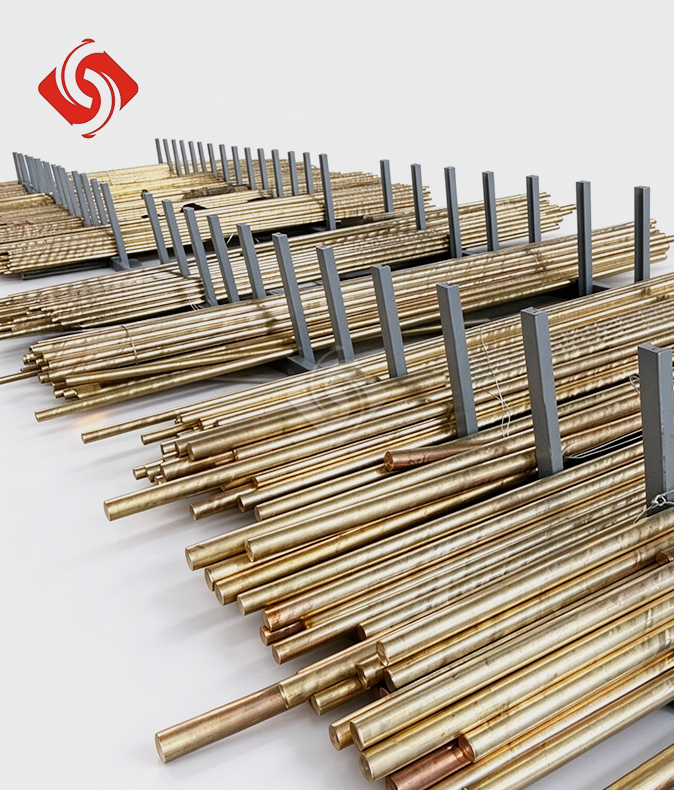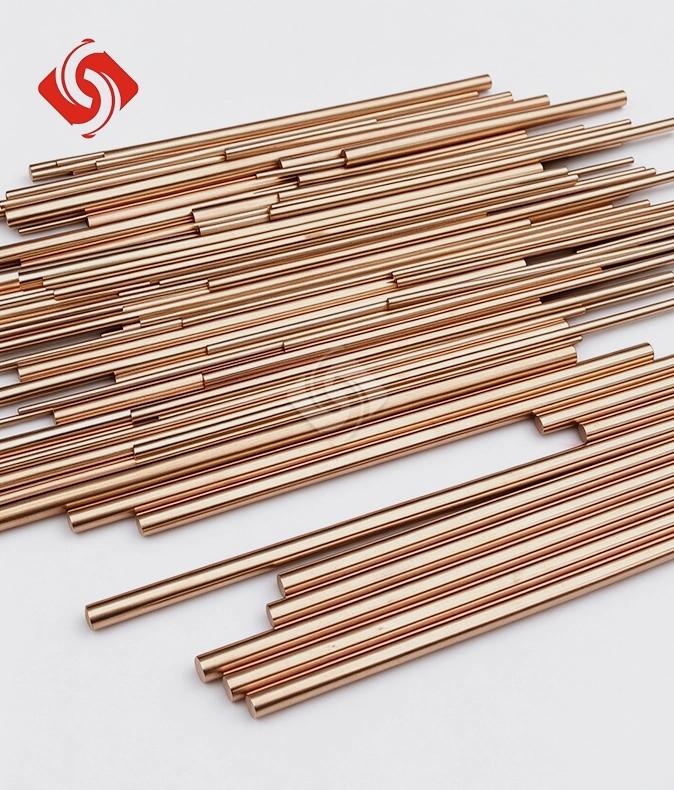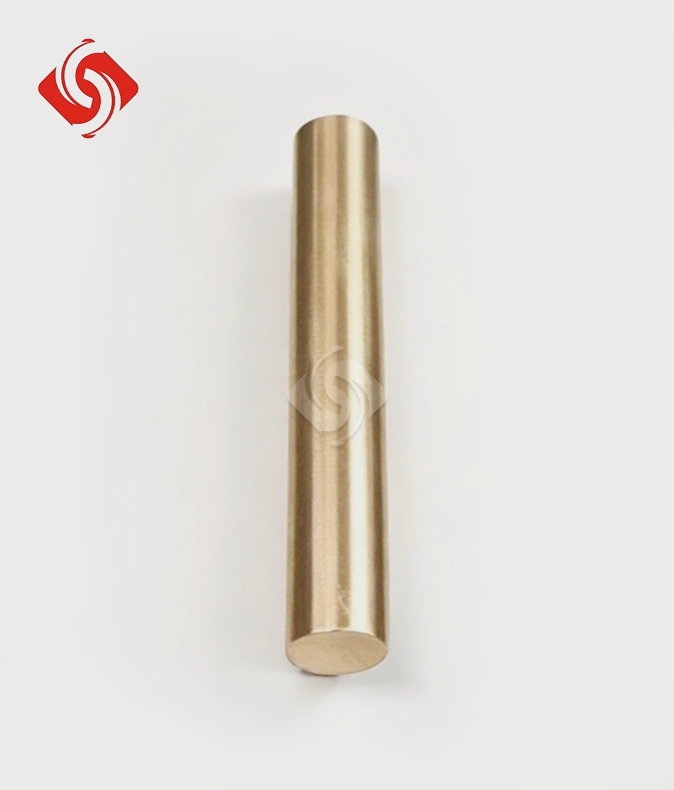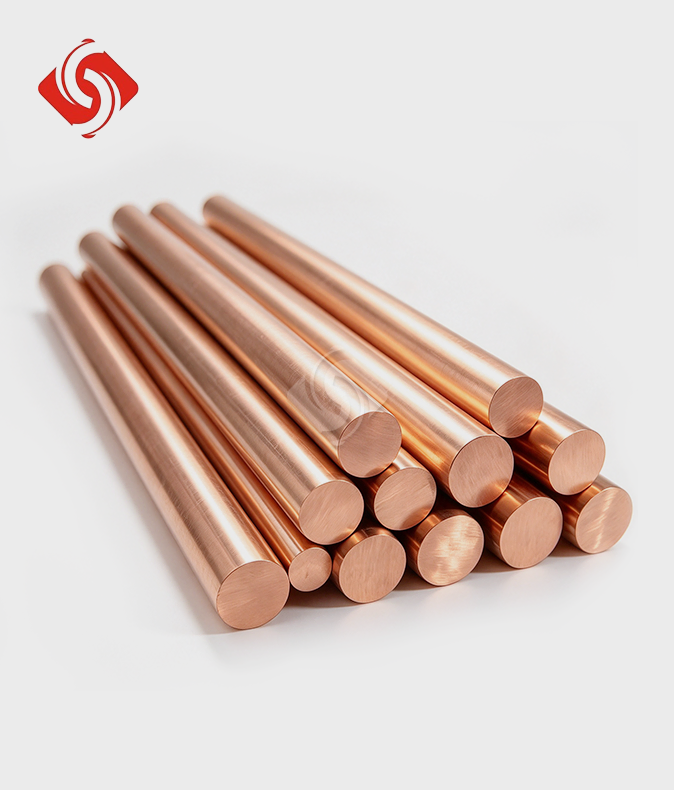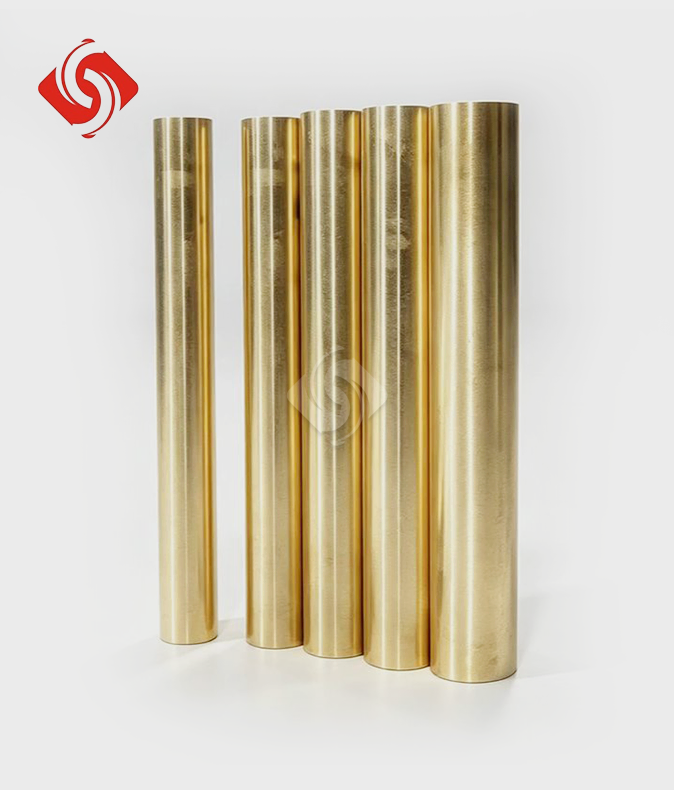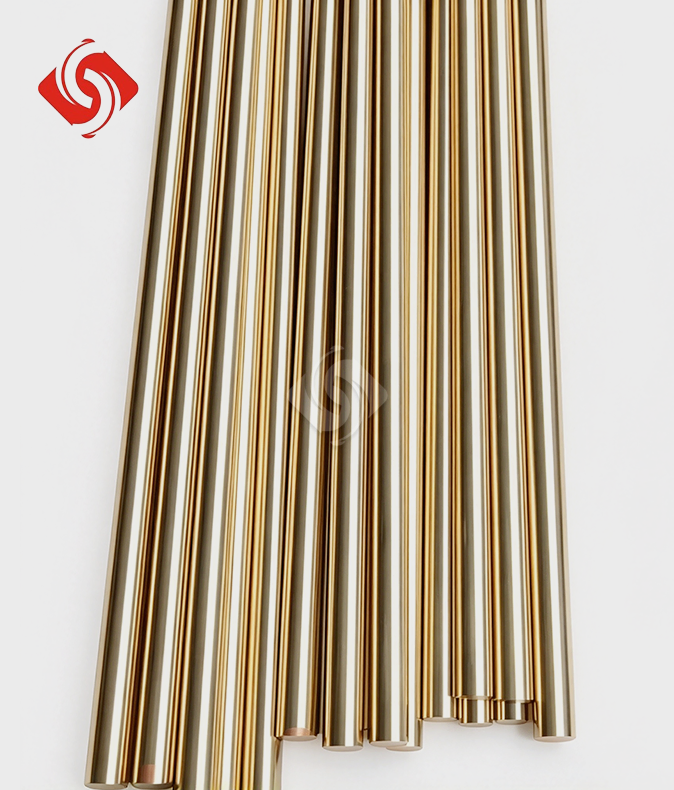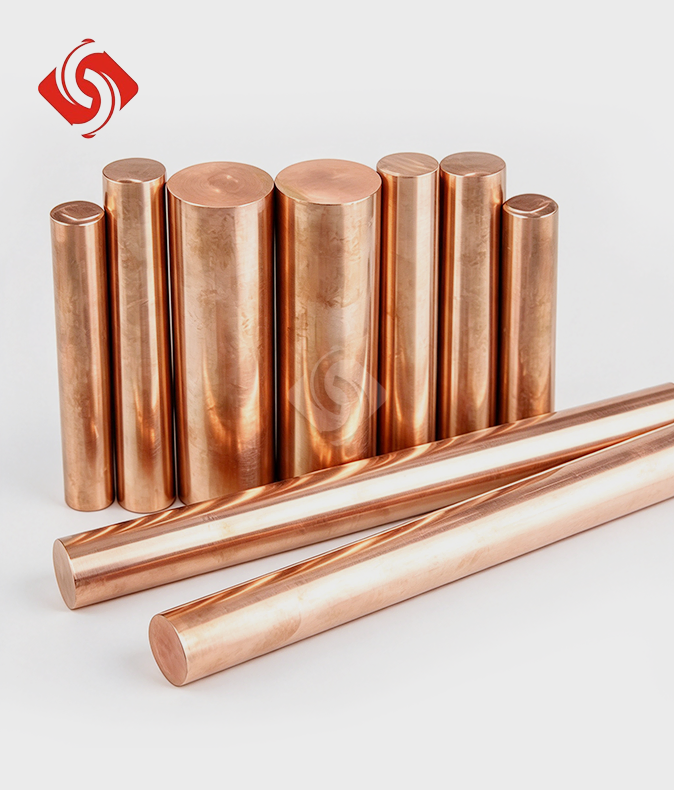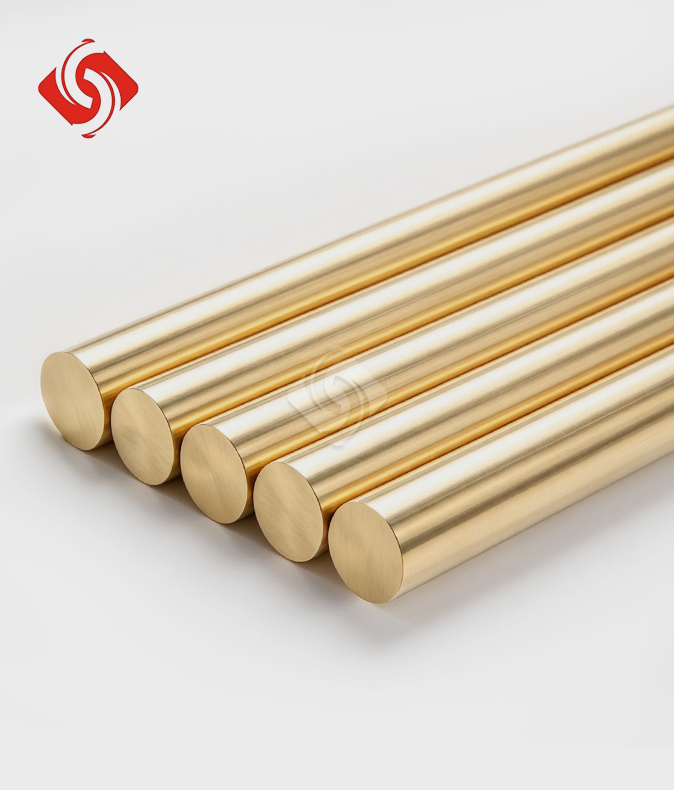
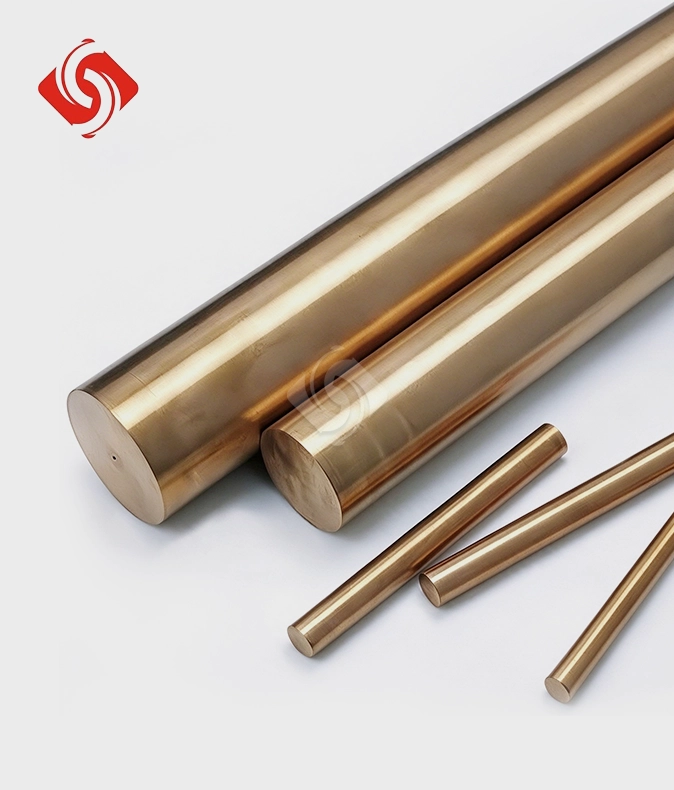
C17300 Leaded Beryllium Copper Rod Astm
Grade Equivalents: UNS C17500 / DIN 2.1285 / EN CW104C / RWMA Class 3
Standards: ASTM B441, ISO 5182
Size Range: Diameter 5mm - 200mm, Custom Lengths and Precision Cut Available
Temper Condition: Solution Heat-Treated & Age-Hardened (TF00)
Core Application: High-Conductivity Resistance Welding Electrodes & Mold Inserts
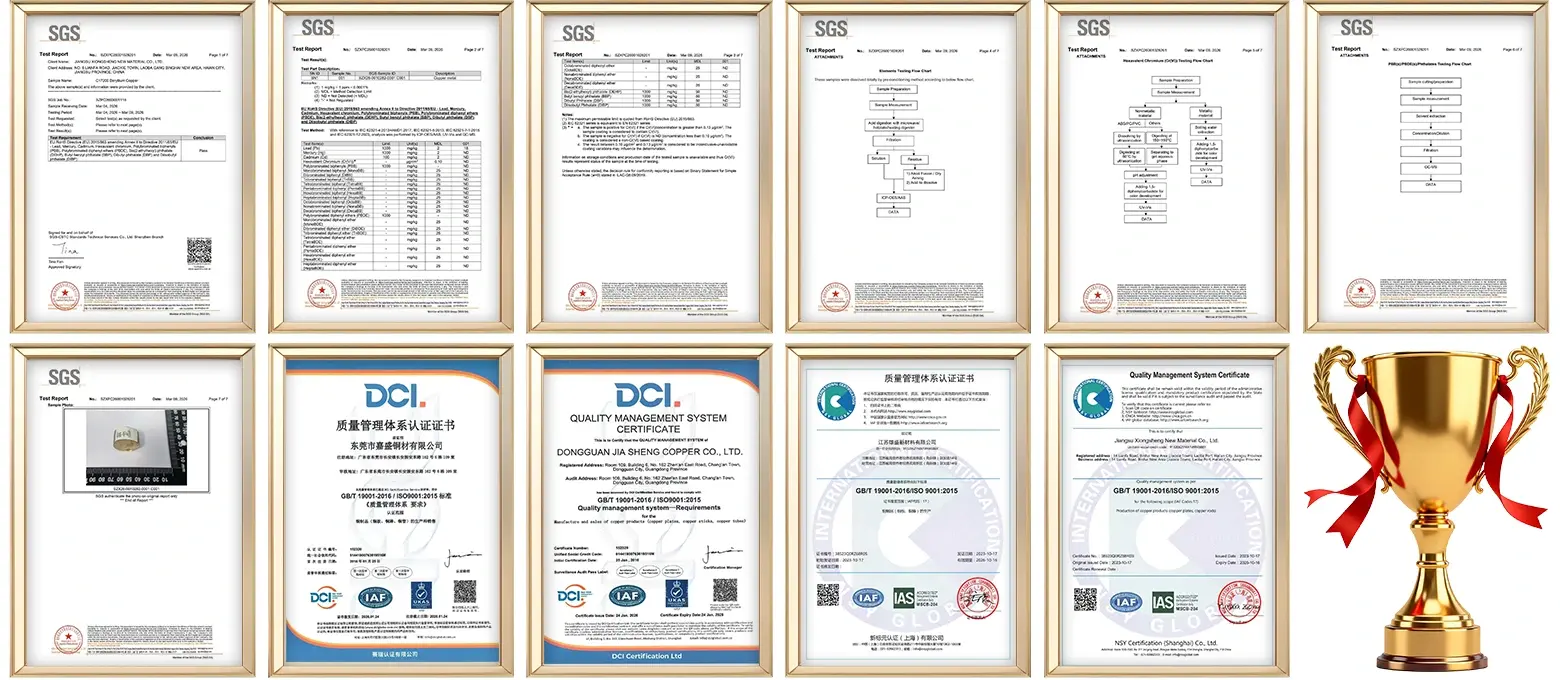
Quality Assurance: ISO9001:2015, RoHS Compliant, MTC 3.1 Certified
Description
C17300 Leaded Beryllium Copper Rod ASTM — High-Speed Machinability with Peak Beryllium Copper Performance
C17300 Leaded Beryllium Copper Rod ASTM is a precipitation hardened copper alloy made to ASTM B196/B196M specifications containing 1.8 to 2.0% beryllium and 0.2 to 0.6% lead. The lead added functions as a chip breaker and gives it a Machinability Rating of 50, far higher than conventional C17200, without compromising strength or conductivity. Age hardening (TH04 temper) gives a tensile strength of 1140 to 1310 MPa and a hardness of C36 to C45 HRC . We have provided this alloy at Dongguan Jiaye Dingsheng with comprehensive MTC documentation from diameters of 5 mm to 200 mm for more than 25 years.
What Is C17300 Leaded Beryllium Copper Rod?
Standard beryllium copper C17200 has high strength but difficult to process at high rates. This issue is immediately solved by C17300 Leaded Beryllium Copper Rod Astm.
The modest addition of 0.2-0.6 % lead causes breaking of chips during cutting. This makes it suitable with Swiss type screw machines and other automated large volume turning equipment.
The result: identical mechanical performance as C17200, but much lower cycle times and extended tool life. This is crucial for manufacturers making precise parts in huge numbers.
Chemical Composition
| Element | Content |
|---|---|
| Beryllium (Be) | 1.80 – 2.00% |
| Lead (Pb) | 0.20 – 0.60% |
| Cobalt + Nickel (Co+Ni) | 0.20% max |
| Cu + Be + Additives | 99.5% min |
The chemical composition is verified by Optical Emission Spectroscopy (OES) during incoming material inspection and again at final release, maintaining beryllium and lead levels within a ±0.05% tolerance threshold.
Mechanical & Physical Properties
| Property | Value |
|---|---|
| Tensile Strength (TH04) | 1140 – 1310 MPa (165 – 190 ksi) |
| Rockwell Hardness (TH04) | C36 – C45 HRC |
| Electrical Conductivity | 17 – 25% IACS |
| Machinability Rating | 50 (vs. Free Cutting Brass = 100) |
| Tolerance Grade | h9 – h10 diameter tolerance |
| Applicable Standards | ASTM B196 / B196M, AMS 4533 / 4534 |
These values apply to the fully age-hardened TH04 temper. Material supplied in Annealed (A) temper can be aged by the end user at approximately 315°C (600°F) for 2–3 hours.
Available Sizes & Supply Conditions
| Parameter | Details |
|---|---|
| Diameter Range | 5 mm – 200 mm |
| Length | Standard or custom cut |
| Temper | Annealed (A), Hard (H), or Age-Hardened (TH04) |
| Surface Finish | Cold drawn or precision ground |
| Documentation | EN 10204 3.1 Mill Test Certificate |
Custom dimensions and precision-cut lengths are available. Hardness and temper conditions can be adjusted based on your downstream process requirements.
Key Performance Advantages
-
Optimized machinability: Stable chip breaking effect lowers tool heat accumulation, supporting high-speed feeding and reducing single-piece processing cost.
-
Stable mechanical performance: Maintains high tensile strength and hardness, resisting deformation under long-term cyclic stress and high clamping force.
-
Practical conductivity: 17–25% IACS conductivity meets the usage demands of precision connectors and sensor conductive parts.
-
Safe structural properties: Non-magnetic and spark-resistant, adaptable for electronic assembly and flammable working environments.
Typical Application Fields
The alloy is widely used in aerospace vibration-resistant precision connectors and switch parts. It applies to 5G communication miniature spring contacts and micro-precision structural parts. It also serves automotive electronic sensors, ECU pins and industrial precision fasteners, maintaining stable performance in complex working environments.

Quality Control Process
All batches pass five major inspections before delivery, including OES component calibration, mechanical tensile and hardness testing, microstructure detection, high-precision dimensional verification and eddy current internal flaw detection. Complete test data and batch traceability reports are provided for each shipment.
Certificate
FAQ
Q1: What is the difference between C17200 and C17300?
A1: C17300 contains lead to improve machinability, while C17200 has no lead. Both have consistent strength, hardness and conductivity after heat treatment.
Q2: Can users conduct secondary heat treatment?
A2: Yes, annealed materials can achieve standard hardness after 2–3 hours of aging treatment at 315°C.
Q3: Is C17300 RoHS compliant?
A3: It meets RoHS exemption standards for copper alloy lead content and complies with relevant environmental regulations.
Q4: Is welding applicable for C17300 parts?
A4: Fusion welding may cause embrittlement, so brazing or mechanical assembly is recommended instead.
Q5: What safety measures are needed for processing?
A5: Equip ventilation equipment and protective tools, and use cutting fluid to control dust particle generation during machining.
Q6: What documents can be provided?
A6: Each shipment is equipped with complete EN 10204 3.1 MTC reports covering composition, hardness and dimensional data.
Contact Us
Send your size specifications and technical demands of C17300 Leaded Beryllium Copper Rod ASTM to js01@jstongcai.com.cn, and we will provide professional quotations and technical support within 24 hours.
Online Message
YOU MAY LIKE