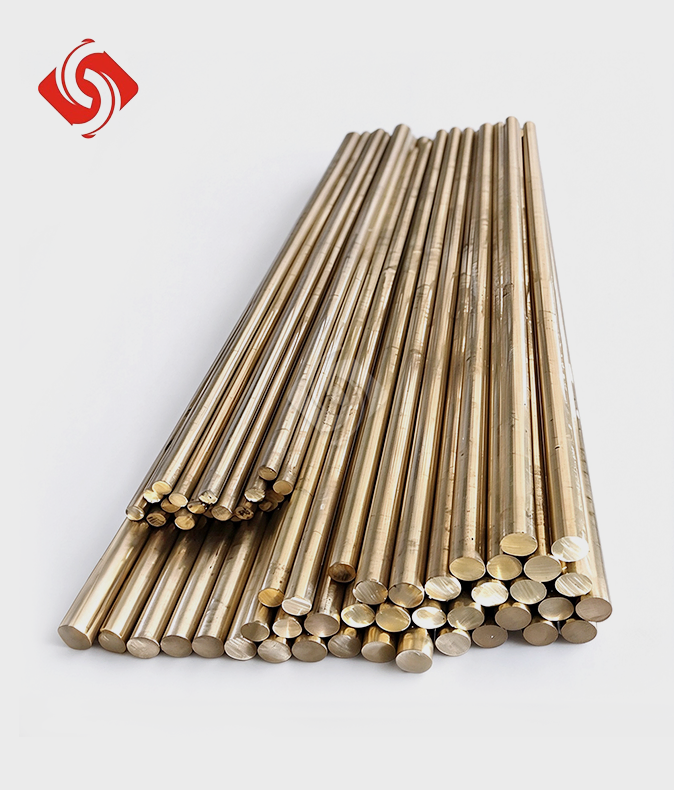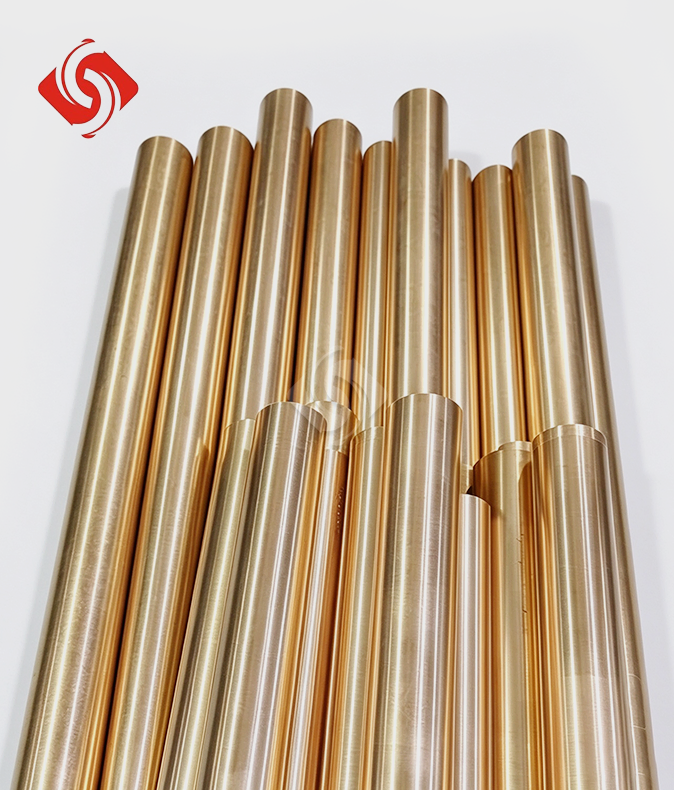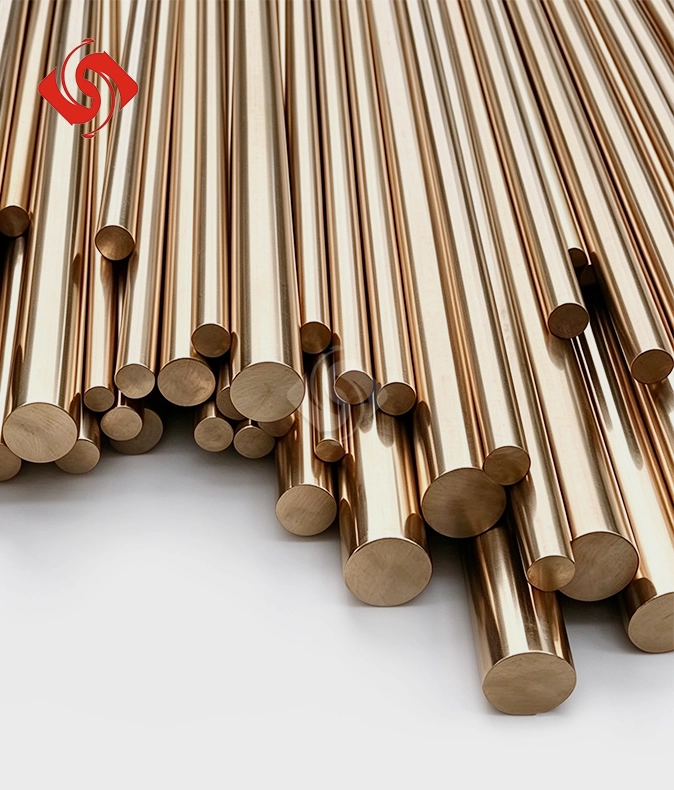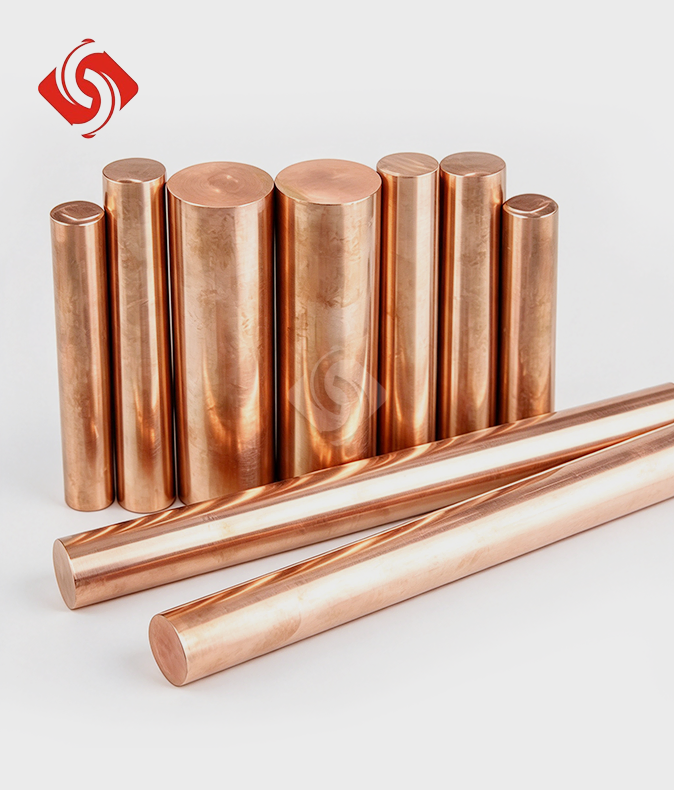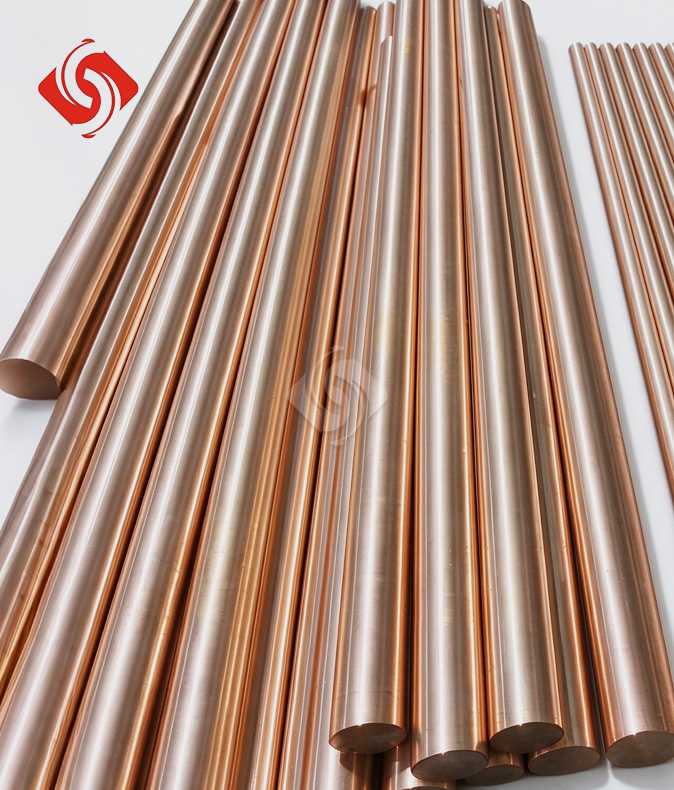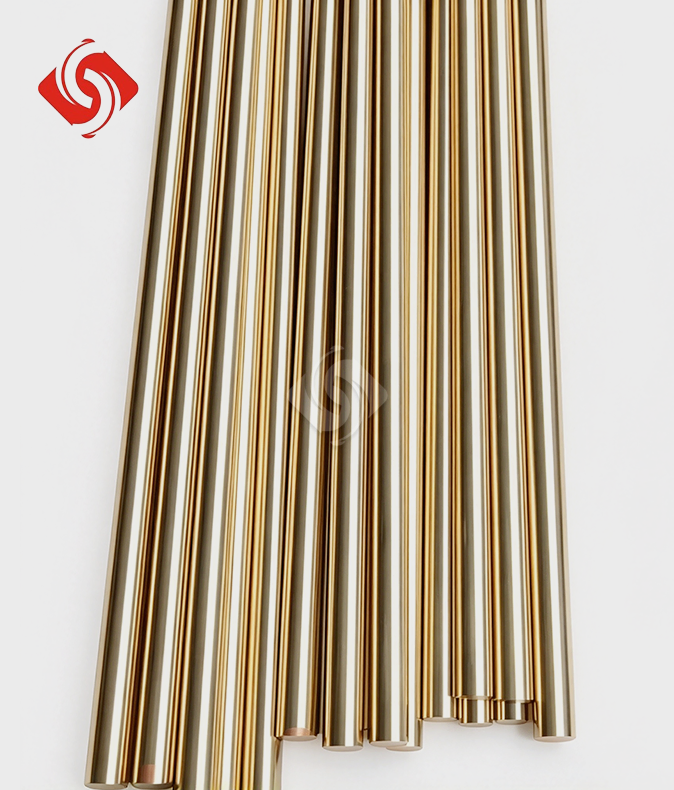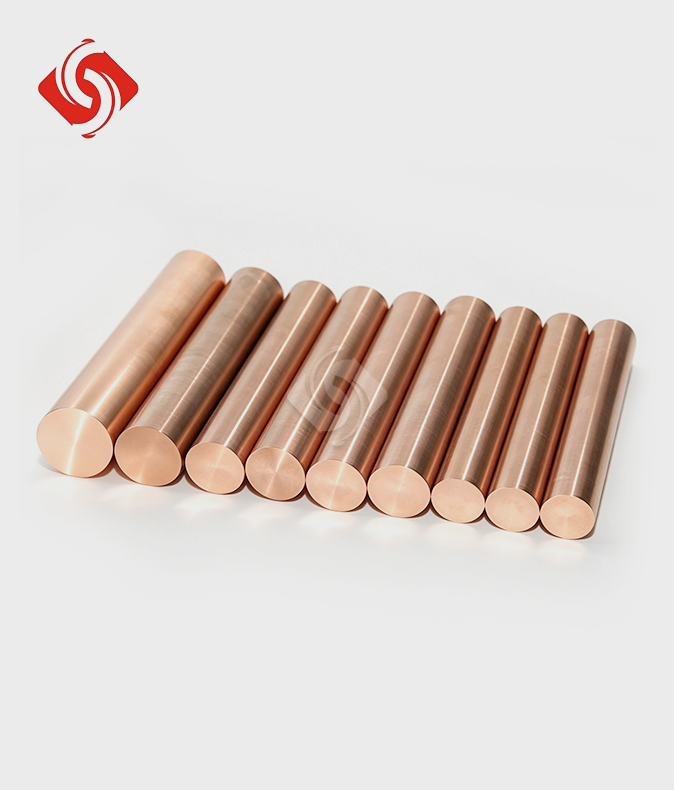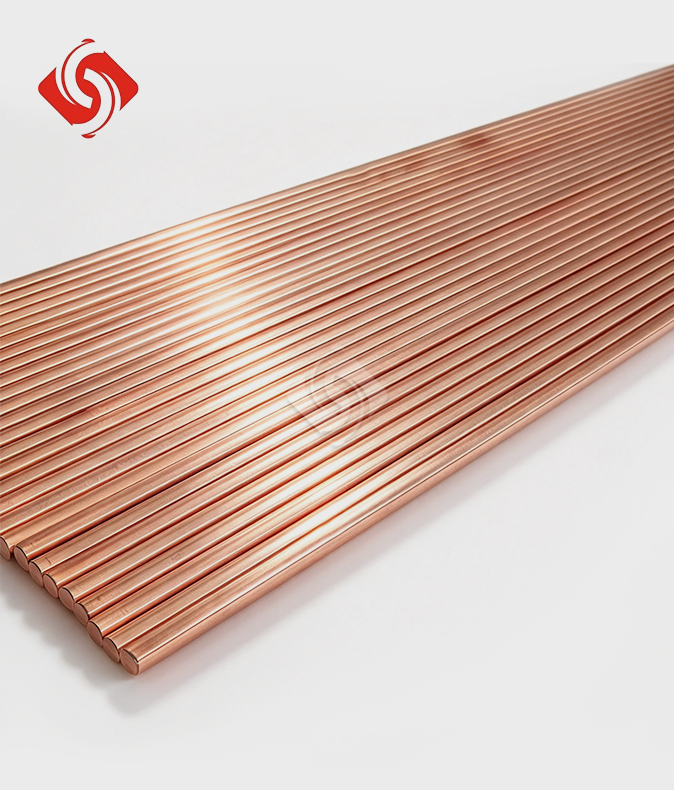
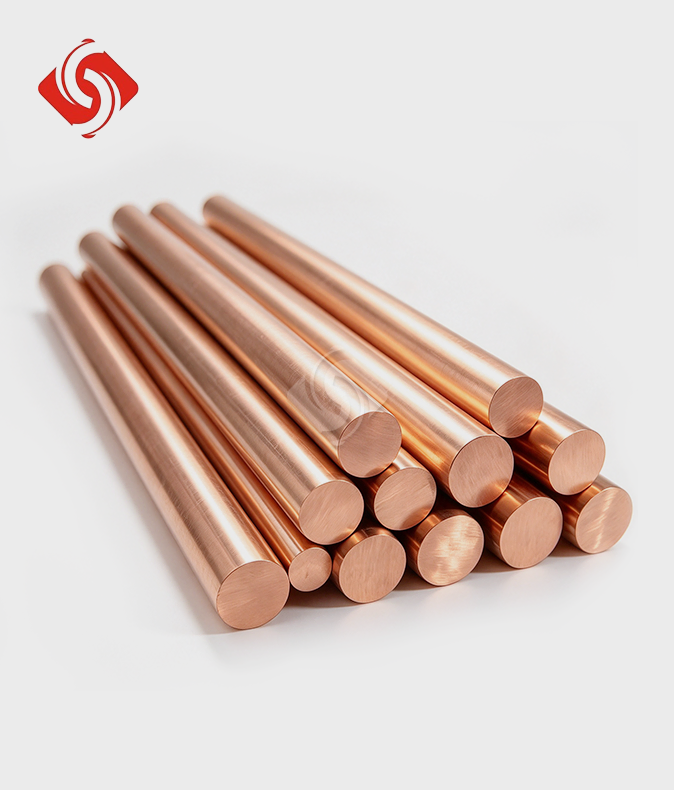
C18000 Nickel Chromium Silicon Copper Bar
Grade: UNS C95400 / CDA 954 / SAE J462 / Aluminum Bronze 9C
Product Standards: ASTM B505 (Continuous Cast) / ASTM B148 (Sand Cast, where applicable)
Size Range: Diameter 20 mm - 400 mm, Cut-to-Length and Custom Machined Bars Available
Supply Condition: As Cast or Heat-Treated, Depending on Size and Application Requirements
Core Applications: Heavy-Duty Bushings, Bearings, Gears, Valve Seats, Wear Plates, and Pump Components
Quality Assurance: ISO 9001:2015, RoHS Compliant, EN 10204 3.1 MTC Available Upon Request
Description
C18000 Nickel Chromium Silicon Copper Bar — RWMA Class 3 Alloy for High-Strength, High-Conductivity Applications
C18000 Nickel Chromium Silicon Copper Bar is a precipitation hardening RWMA Class 3 copper alloy having 2.0–3.5% nickel, 0.4–0.8% silicon and 0.1–0.8% chromium. The solution and ageing treatment are standardised . Tensile strength is 600-800MPa, hardness is 90-100HRB and electric conductivity is 45-60% IACS. Dongguan Jiaye Dingsheng, founded in 1997, is a manufacturer of stable-spec bars with guarantyd dimensional consistency for all industrial purposes using vacuum melting and precision rolling.
What Is C18000 Copper Alloy?
C18000 Nickel Chromium Silicon Copper Bar is intended to alleviate the thermal softening problems of traditional copper alloys under cyclic high-temperature operating conditions. Ordinary copper materials are deformed and unstable after repeated welding and moulding cycles, whereas this alloy retains stable hardness and structural performance at temperatures of up to 500°C.
During the ageing procedure, nickel silicide precipitates are generated which stabilise the internal copper matrix and provide the material wear resistance and fatigue resistance. It is a beryllium free alloy and may be adapted to different standard and environmental friendly industrial circumstances.
Chemical Composition
| Element | Content |
|---|---|
| Copper (Cu) | Balance |
| Nickel (Ni) | 2.0 – 3.5% |
| Silicon (Si) | 0.4 – 0.8% |
| Chromium (Cr) | 0.1 – 0.8% |
Technical Specifications
| Property | Value |
|---|---|
| Standard | ASTM B441, SAE J461/J463 |
| Tensile Strength | 600 – 800 MPa |
| Hardness | 90 – 100 HRB (Rockwell B) |
| Electrical Conductivity | 45 – 60% IACS |
| Thermal Conductivity | ~190 W/(m·K) |
| Max. Operating Temperature | ~500°C (932°F) |
| Supply Condition | Fully Aged (AT Condition) |
| RWMA Classification | Class 3 |
| Machinability Rating | ~20–30% of free-cutting brass |
Key Performance Advantages
High Strength Without Losing Conductivity
Most high strength copper alloys lose conductivity. C18000 is easy to machine and retains over 45% IACS even at maximum hardness, a combination difficult to find in non-beryllium alloys.
Beryllium-Free & Compliant
C18000 has performance similar to beryllium copper (C17200) but without the toxicity issues. It is REACH and RoHS compliant, which makes specification easy for export markets and regulated sectors.
Resistance to Thermal Softening
Ni₂Si precipitates may stabilise the microstructure at high temperature. C18000 tools and electrodes resist deformation, and keep their shape during repeated temperature cycling – decreasing downtime from tip mushrooming or deformation.
Fatigue strength and stress relaxation
The inclusion of Silicon and Nickel enhances resistance to stress relaxation and environmental cracking and is superior to low-alloy coppers and high-zinc brasses under cyclic load circumstances.
Supply condition Ready for use
The bars are delivered in a fully aged (AT) state. Further heat treatment is not necessary unless extensive hot working is carried out subsequent to delivery.
Typical Applications
C18000 bars are widely used where both heat resistance and mechanical load must be managed at the same time.
| Industry | Application |
|---|---|
| Resistance Welding | Electrode holders, welding dies, RWMA Class 3 components |
| Mold Manufacturing | Cavity inserts, core pins, hot runner components |
| Aerospace | High-load bushings, electrical connector components |
| Automotive | Spot welding electrodes, press tooling fixtures |
| Precision Electronics | High-frequency connectors, current-carrying structural parts |
Quality Control Process
Before distribution, all bars undergo an inspection process.
The Spectrochemical Analysis (ICP-OES) Content of Nickel, Chromium and Silicon are tested to tight tolerances. : Slight differences in conductivity and hardness after ageing.
Eddy Current Testing: Non-destructive testing detects sub-surface cracks or inclusions before things arrive on the production floor.
Conductivity Check: Digital conductivity metres are used to check that the necessary % IACS value has been achieved during the precipitation hardening process.
Hardness and Microstructure: The Rockwell B hardness tests and the metallographic analysis reveal a homogeneous fine-grained structure, which is required for consistent machinability and fatigue life.
Dimensional Inspection: Diameter, length are checked to h9/h10 tolerances to accommodate automated screw machines and CNC equipment.
Chemical composition, hardness and conductivity data guaranty perfect traceability. All shipments are provided with a Mill Test Certificate (MTC).
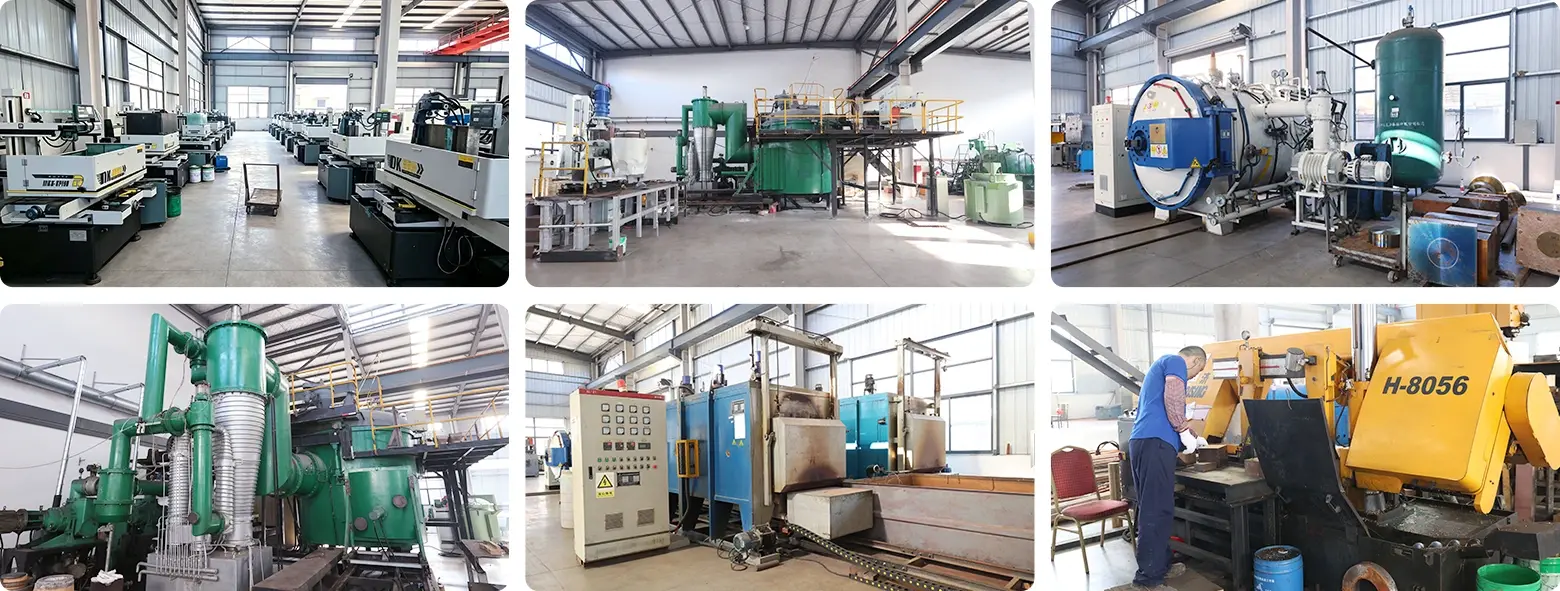
Certificate
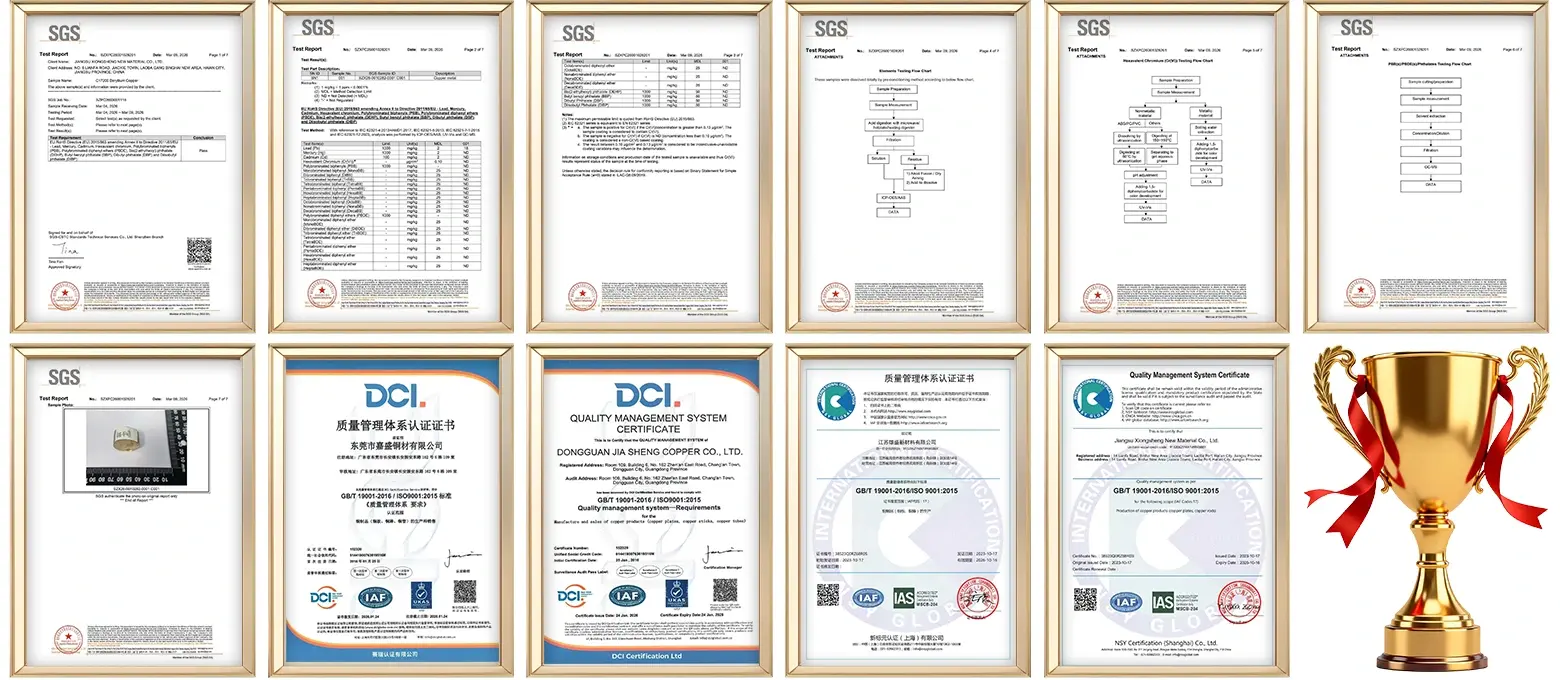
How C18000 Compares to Similar Alloys
| Property | C18000 (Class 3) | C18200 (Class 2) | C17200 Beryllium Copper |
|---|---|---|---|
| Tensile Strength | 600–800 MPa | ~380–480 MPa | 1,100–1,400 MPa |
| Hardness | 90–100 HRB | ~70–85 HRB | 36–45 HRC |
| Conductivity | 45–60% IACS | 75–85% IACS | 22–28% IACS |
| Beryllium-Free | Yes | Yes | No |
| Max. Service Temp. | ~500°C | ~400°C | ~200°C practical |
| RWMA Class | 3 | 2 | — |
C18000 sits in the middle of this range — stronger than C18200, safer than beryllium copper, and more heat-resistant than both.
FAQ
Q1: How does C18000 differ from C18200 Chromium Copper?
A1: C18000 has much greater strength and hardness due to its nickel-silicon composition. RWMA Class 2 C18200 is preferable where conductivity is the main concern. C18000 is Class 3, where strength matters more.
Q2: How easy is C18000 to machine?
A2: It has a machinability value of 20–30% that of free-cutting brass. Good results are achieved with carbide tooling and adequate coolant. Planning will increase tool life by reducing cutting speeds.
Q3: What is the maximum operating temperature?
A3: C18000 retains structural integrity to roughly 500°C (932°F), well beyond that of ordinary copper alloys.
Q4: Do I need to heat treat C18000 after machining?
A4: Bars are delivered in fully aged (AT) state. Unless the material has been substantially hot handled after delivery, no additional heat treatment is necessary.
Q5: Is C18000 resistant to stress corrosion cracking?
A5: Yes. The additions of silicon and nickel increase stress relaxation and environmental cracking resistance over high-zinc brasses and low-alloy coppers.
Get a Quote for C18000 Nickel Chromium Silicon Copper Bar
Send your size specifications and technical demands for C18000 Nickel Chromium Silicon Copper Bar to js01@jstongcai.com.cn. We provide 24-hour quotation service, and in-stock products can be shipped within 3–5 days.