Sep 28, 2026
Cube2 Strip for Connectors: Key Design Factors to Consider
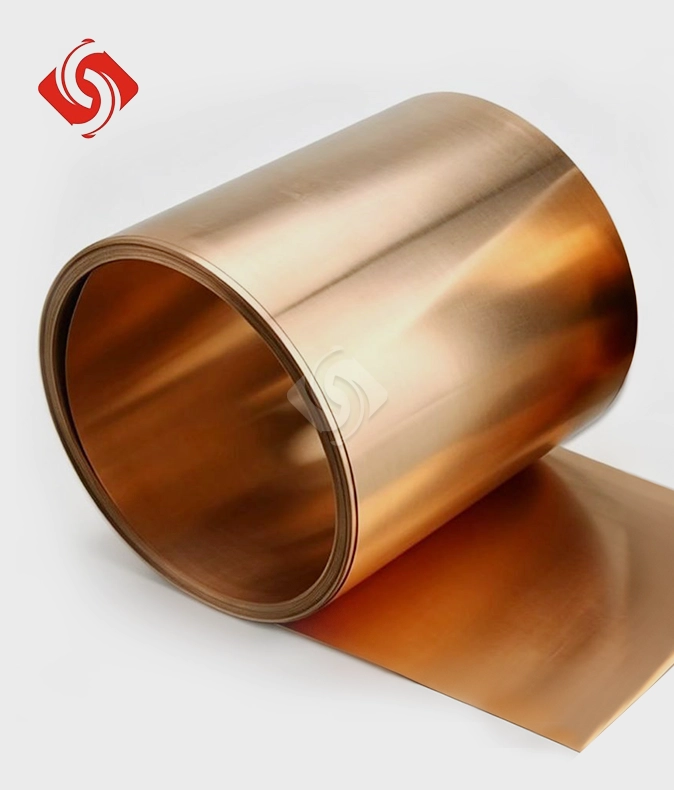
When engineers and procurement managers search for the right material for connector terminals, relay blades, or battery spring contacts, CuBe2 strip — also known as cube2 strip — consistently rises to the top of the list. This beryllium copper alloy (EN CW101C / DIN 2.1247 / UNS C17200) delivers a rare combination of 1,110–1,320 MPa tensile strength and 22–25% IACS electrical conductivity after aging. Whether you run a high-speed progressive stamping line or design miniaturized connectors for automotive electronics, selecting the correct temper, tolerance, and chemical specification of cube2 strip directly determines whether your tooling stays stable or your production line stops.
Understanding Cube2 Strip and Its Role in Connector Design
What Is CuBe2 Strip?
Cube2 strip is a copper-beryllium alloy that hardens through precipitation. It has 1.80–2.00% Be and at least 0.20% Co+Ni. Under DIN EN 1654 (CW101C), the maximum amount of Co+Ni+Fe is 0.50%. The material becomes 36–42 HRC hard and 950–1,150 MPa strong after being aged at a low temperature of about 315 °C. These are numbers that solid copper alloys can't match. The metal is cross-referenced internationally as metal 25, RWMA Class 4, and DIN 2.1247. This means that your drawing callout will always point to the right material, no matter what regional standard your customer gives you.
How Strip Geometry Affects Connector Performance
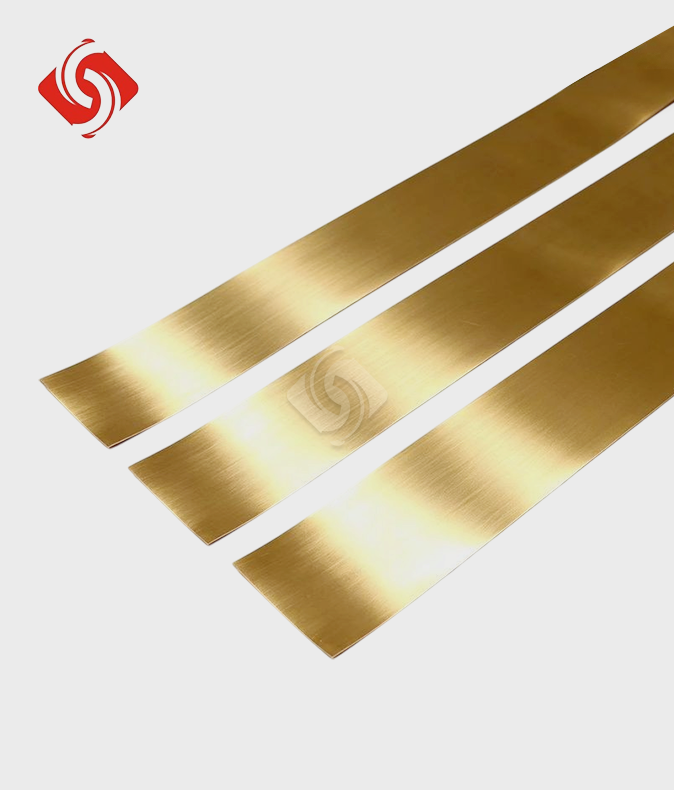
A thickness range of 0.05 mm to 3.00 mm and a width of up to 300 mm cover almost all connector terminal and relay blade shapes that are made today. When press workers switch between coil lots, the most common problem they have is burr-induced die wear. Tight slit-edge quality stops this from happening. Controlling the width of the coil evenly also keeps the spring-back values stable, so you don't have to fix your bending tools between batches.
Temper Variants and When to Choose Each
There are three main groups of conditions for Cube2 strip ships. Annealed temper (R200/TB00) works well for deep-drawn shapes that are complicated and need full ductility before being aged in-house. Cold-rolled spring tempers like R410 and R510 offer a medium level of strength for direct stamping without the need for a furnace step later on. Fully aged (H/TH04) coils come to the press ready and at their hardest point. This makes them perfect for high-volume lines where on-site heat treatment is limited.
Core Design Factors to Consider When Selecting Cube2 Strip
Mechanical Properties and Temper Matching
Getting the wrong temper code for the production route is the most expensive mistake that can be made when buying cube2 strips. Tensile bands are mapped to EN 1654 names like R200, R410, R510, R750, and R1130. It says in ASTM B194/B196 that TB00, TD02, TD04, TH04, TM02, and TM04 all cover the same range but have different names. Both systems need to be clearly described; writing "hard" on a purchase order only leaves the supplier guessing, and your die shop has to deal with spring-back values that aren't always the same.
Electrical Conductivity and Contact Pressure
With an IACS of 22–25% and a thermal conductivity of 105 W/m·K, cube2 strip can handle both sending signals and getting rid of heat in high-density connectors. Just as important is stress relaxation resistance. At 150 °C, well-aged CuBe2 keeps more than 90% of its original contact force, which is something that phosphor bronze can't do above 100 °C. For EV high-voltage terminals and relay contacts that cycle many times when they are under load, this retention property directly determines how long the product will last.
Chemical Composition and Standard Compliance
In order to make sure that every Mill Test Certificate is correct, procurement engineers must check the following composition limits:
- Be content: EN 1654 (CW101C) requires 1.80–2.10%; ASTM B194 / B196 (C17200) requires 1.80–2.00%. These two limits are not the same — specifying the wrong one invalidates the MTC for your customer's drawing.
- Co+Ni+Fe max: Under DIN EN 1654, the limit is 0.50%; under ASTM B194 / B196, the published limit is 0.60% max. Quoting 0.50% to an ASTM-based customer is overly restrictive and can cause unnecessary rejections.
- Co+Ni minimum: 0.20% is required to ensure adequate precipitation response during aging; without this, hardness after heat treatment will fall short of the 36–42 HRC target.
Before the coil goes into the press room, check these three numbers on the MTC. It only takes two minutes and saves weeks of work.
Best Practices for Implementing Cube2 Strip in Connector Assemblies
Qualification and Trial Stamping Protocol
Both the tools and the plan are safe with a structured qualification process. Ask for 5–20 kg test coils with the exact width, thickness, and temper that you want to use. Before you place bulk orders, you should stamp a part that is a good example of the shape, measure the spring-back angle, the insertion force, and the contact resistance, and then lock the temper code and coil specification in your engineering change record. Because die geometry is tuned to certain yield-strength bands, this sequence has to be repeated every time the supplier changes.
Integration with Automated Press Lines
To work with automatic progressive presses, Cube2 strip coils should be wound to a uniform inner diameter and a weight that fits the capacity of your uncoiler. Precision slit coils with a burr height of less than 5% of the width of the strip stop micro-cracking at bend radii as small as 0.1×t, which happens a lot in small SMT connector connections. Weld joints inside a coil need to be clearly marked and placed so that they can be rejected automatically, without having to stop the press.
Quality Control at Incoming Inspection
When a cube2 strip comes in, it should be inspected for thickness across the whole width of the coil, edge-burr under 20x magnification, and conductivity with an eddy-current probe. A spot check for hardness according to ASTM E18 (Rockwell C) shows that the temper is the same as the MTC number. If you keep one test piece for each coil lot in a labeled sample archive, you can fully track it if a field failure investigation is ever opened further down the line.
Comparing Cube2 Strip with Alternative Connector Strip Solutions
CuBe2 vs. Phosphor Bronze
Phosphor bronze (C51000, C52100) is cheaper per kilogram and doesn't need to be handled with beryllium dust. But its yield strength is only about 550–600 MPa, which is about half of that of aged cube2 strip. Also, it loses its stress relaxation at temperatures above 100 °C, which means it can't be used in automotive or industrial relays under the hood. When it comes to tiny joints, the weakness of phosphor bronze is more than just a performance gap because the contact shape can't get bigger to make up for the lower spring force.
CuBe2 vs. Copper-Nickel-Silicon Alloys (C70250, C18000)
Copper-nickel-silicon metals like C70250 and C18000 are getting more attention as beryllium-free options in places where buying rules don't allow it. Their tensile strength is between 700 and 900 MPa, and their conductivity is between 40 and 45% IACS. Compared to CuBe2, they are weaker but carry electricity better. For connectors that need a spring memory of 1,100 MPa in a cross-section of less than 0.3 mm, these alloys are still not good enough. The choice will depend on whether the application can handle a bigger terminal shape in exchange for not having beryllium in the list of materials.
Where Cube2 Strip Remains the Practical Choice
For parts like connector connections, relay blades, aircraft actuator springs, and battery contact plates that need to be both strong and conductive in a thin cross-section, cube2 strip is still the most direct copper alloy material option. It is the only copper alloy that meets the safety standards for both sensitive electrical and explosive settings. Its non-magnetic permeability is less than 1.001 and it doesn't spark.
Procurement Considerations: Acquiring and Using Cube2 Strip
Minimum Order Quantity and Delivery Options
When trying to find new suppliers, procurement managers often run into problems with minimum order quantities. For testing tools, a practical supplier should offer trial amounts of 10–100 kg, and then they should be able to increase to monthly contract volumes of several hundred kg without needing full coil-lot minimums for every order. Items in stock should be sent out within 3–5 business days. Custom-slit or non-standard-width coils, on the other hand, usually take 15–20 days.
Documentation Requirements
Before going into a precision stamping line, every batch of cube2 strip should have an EN 10204 3.1 Mill Test Certificate with the actual chemical analysis results, mechanical test values, and heat/lot number written on it. RoHS and REACH compliance declarations protect your customers who work with consumer electronics and cars. For health and safety rules related to beryllium at work, get the Safety Data Sheet (SDS) and make sure that the air flow in the press room and the safety gear you use meet local rules before you cut the first coil.
Packaging and Logistics
Export-standard packaging that doesn't rust or get wet stops the surface from oxidizing while it's being shipped. This is important because beryllium oxide on the strip surface can make it harder for plating to stick later on. When suppliers are close to big international ports like Shenzhen or Hong Kong, they can offer flexible shipping options like CIF, FOB, and DDP. For large orders, they can use sea freight, and for urgent samples, they can use DHL, FedEx, or UPS express. This gives procurement teams real lead-time flexibility.
Conclusion
Cube2 strip (CuBe2 / CW101C / C17200) is a well-known material that has clear temper families, published chemical limits under both EN and ASTM systems, and measurable mechanical properties that are directly linked to die performance and connector contact force. Making sure the temper code, Be content specification, and Co+Ni+Fe limit are correct on the buy order keeps the tools safe, keeps output stable, and meets the drawing needs of your downstream customer. For stamping plants that make connector terminals, relay blades, or battery spring contacts, the money spent on trial coils, test stamping, and locked specifications pays off because of stability from batch to batch, which means that the tools don't need to be changed.
FAQ
1.What is the difference between EN CW101C and ASTM C17200 for cube2 strip?
Both designations describe the same beryllium copper alloy family, but their Be content limits differ. EN 1654 (CW101C) allows Be 1.80–2.10%, while ASTM B194 / B196 (C17200) limits Be to 1.80–2.00%. When your drawing or customer specifies one standard, the MTC must confirm compliance with that specific limit. Mixing the two on documentation is a common audit finding.
2.Can cube2 strip be stamped and then aged in-house?
Yes. Ordering annealed temper (R200 / TB00) gives maximum ductility for deep-draw or complex bend geometry. After stamping, age the formed parts at approximately 315 °C for 2–3 hours to reach peak hardness of 36–42 HRC. This sequence is standard practice for small connector terminal geometries where forming in the hardened state would crack the material.
3.Does cube2 strip comply with RoHS?
In its solid strip form, cube2 strip is RoHS compliant. Beryllium dust generated during grinding, sawing, or high-speed stamping without adequate extraction requires occupational health controls under OSHA and equivalent regulations. Request a current SDS from your supplier before beginning production.
4.What plating finishes work on CuBe2 strip?
Nickel, gold, and tin plating are the standard finishes for connector applications. The refractory beryllium oxide layer that forms on the strip surface must be removed by proper chemical activation before plating to ensure adhesion. Confirm the activation process with your plating supplier when running cube2 strip for the first time.
5.What is the minimum order quantity for trial purposes?
Reputable cube2 strip suppliers can supply 10–100 kg trial quantities for tooling and process qualification. This allows die shops to validate spring-back, insertion force, and surface quality before committing to a full production contract.
Get Cube2 Strip Samples from JYDS — Direct Factory Pricing, Fast Dispatch
Every coil of cube2 strip that JYDS sells comes from more than 25 years of experience making beryllium copper alloys. We keep more than 500 tons of stock on hand, so we can ship stock things in 3–5 days and answer every question within 2 hours. We can make cube2 strips with a thickness of 0.05 mm to 3.0 mm and a width of up to 300 mm. All of our batches are fully certified by EN 10204 3.1 MTC and follow RoHS/REACH rules. To get a trial sample right away, email your image or specifications to js01@jstongcai.com.cn.
References
1. DIN EN 1654: Copper and Copper Alloys — Strip for Springs and Connectors — European Committee for Standardization (CEN), 1998.
2. ASTM B194: Standard Specification for Copper-Beryllium Alloy Plate, Sheet, Strip, and Rolled Bar — ASTM International, 2015.
3. ASTM B196: Standard Specification for Copper-Beryllium Alloy Rod and Bar — ASTM International, 2015.
4. Donzella, G., & Petrogalli, C. — "Fatigue and Stress Relaxation Behavior of Precipitation-Hardened Copper-Beryllium Alloys" — Journal of Materials Engineering and Performance, 2009.
5. ISO 5182: Resistance Welding — Materials for Electrodes and Ancillary Equipment — International Organization for Standardization, 2016.
6. Davis, J. R. (Ed.) — Copper and Copper Alloys — ASM International, 2001.